Best Art Galleries in St Ives — The Artist’s Guide to Cornwall’s Creative Capital
Last updated: April 2026
I’ve just turned 45 and St Ives has been part of my life for as long as I can remember. My parents used to take me there as a kid — long drives down from the North West, the excitement building as you crossed the Tamar into Cornwall, then that first glimpse of the sea as you came over the hill into St Ives. I remember the harbour, the narrow streets, the smell of the sea and the pasties. I didn’t know anything about art then but I knew St Ives felt different to everywhere else we went on holiday. There was something in the light. Something in the quality of the air. Something that made you want to look more carefully at things.
I understand now, 35 years later and 16 years into a career in the UK art industry, why artists have been coming to St Ives since Turner visited in 1811 and why they’ve never really stopped. The light in West Cornwall is genuinely extraordinary — the way it comes off the Atlantic, the clarity of it, the way it changes through the day. It does something to your perception that’s very hard to describe and completely obvious the moment you experience it.
Lucy, Zach, Nancy and I try to get down to St Ives every couple of years. It’s a long haul from Poulton-le-Fylde but it’s always worth it. The kids have grown up knowing the place — Zach in particular has developed a proper interest in the art scene there which I take full credit for, obviously. This guide is the one I wish existed when I started visiting more seriously as an adult — an honest walkthrough of the best galleries in St Ives for anyone who cares about art, whether you’re buying, looking, or just trying to understand what all the fuss is about.
The fuss, as you’ll discover, is entirely justified.
A Brief History of St Ives as an Art Colony
St Ives didn’t become an art destination by accident. Turner visited in 1811. Whistler and Sickert came in the 1880s. By the early 20th century a significant number of artists had established themselves in the town, drawn by the light, the landscape and the fishing community that gave the place its authentic working character.
After World War Two something remarkable happened. A group of artists including Barbara Hepworth, Ben Nicholson, Naum Gabo, Peter Lanyon and Patrick Heron converged on St Ives and turned it into the epicentre of British Modernism. The St Ives School — as it became known — produced work that changed the direction of British art and put this small Cornish fishing town on the international art map permanently.
Bernard Leach had already been there since 1920, running the pottery he founded with Japanese ceramicist Shoji Hamada that would go on to become the most influential studio pottery in the world.
That history is still completely present when you walk around St Ives today. These aren’t just heritage markers — the galleries, the pottery, the school of painting — they’re living institutions that are still producing and exhibiting work of genuine significance. St Ives isn’t a museum of what British art used to be. It’s one of the places where it’s still being made.
1. Tate St Ives
Porthmeor Beach, St Ives, Cornwall, TR26 1TG
Open daily. Adult admission applies — under 18s free.
Tel: +44 (0)1736 796 226
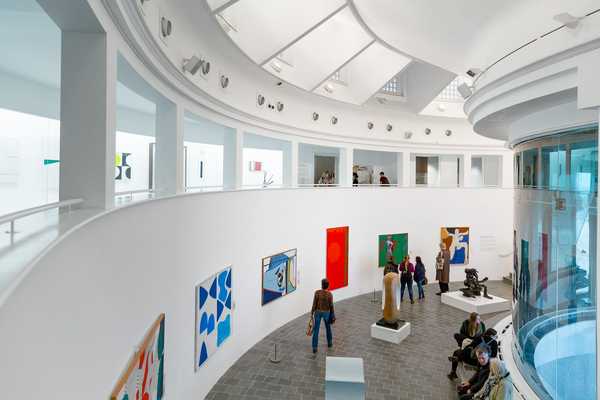
There is nowhere else quite like this in Britain. Tate St Ives sits above Porthmeor Beach — one of St Ives’ most beautiful Atlantic-facing beaches — in a building that was a gasworks before its conversion into a gallery in 1993. The architecture alone is worth the visit: white, curved, luminous, it frames the sea view as deliberately as any artwork on its walls.
Inside you’ll find work by the artists who defined the St Ives School — Barbara Hepworth, Marlow Moss, Naum Gabo, Patrick Heron — alongside a dynamic programme of contemporary and international exhibitions that keeps the gallery feeling alive and relevant rather than merely reverential. The permanent collection is extraordinary but it’s the temporary exhibitions that often provide the most interesting surprises.
The building’s relationship with its setting is part of the experience. Standing in the upper galleries looking out over the Atlantic while surrounded by the work of artists who were themselves looking at exactly that view when they made it — there’s a circularity to that which is genuinely moving if you let it in.
Note — a separate ticket is required for the Barbara Hepworth Museum, though it can be combined. The café is excellent and the views from it are among the best in Cornwall. Book in advance at busy periods.
Who it’s best for: Everyone. Tate St Ives is the anchor of the whole St Ives art experience and there’s genuinely no reason not to go.
→ Plan your visit to Tate St Ives
2. Barbara Hepworth Museum and Sculpture Garden
Barnoon Hill, St Ives, Cornwall, TR26 1AD
Separate ticket required from Tate St Ives.
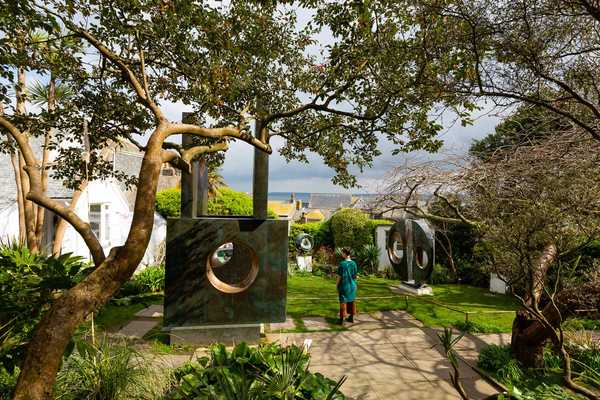
This is the one that gets me every time. Barbara Hepworth lived and worked at Trewyn Studio from 1949 until her death in a fire there in 1975. She specifically requested that the studio and garden be preserved as a museum after her death and the result is one of the most intimate and affecting artist’s spaces I’ve encountered anywhere in the country.
You walk into the garden and her sculptures are there exactly as she placed them — in relation to each other, in relation to the plants, in relation to the light. Her tools are still in the studio. The sense of a working life only recently interrupted is extraordinary and slightly uncanny.
Hepworth is one of the most important sculptors of the 20th century and this is where she did her best work. The forms she developed here — the pierced forms, the relationship between figure and void — you can trace them directly in what you see in the garden. Zach stood in front of one of the larger bronzes for a solid five minutes on our last visit and I didn’t interrupt him. Some things don’t need commentary.
Who it’s best for: Anyone with any interest in modern art, sculpture or the relationship between an artist and their place of work. One of the most important artist’s spaces in Britain.
→ Visit the Barbara Hepworth Museum
3. The Leach Pottery
Higher Stennack, St Ives, Cornwall, TR26 2HE
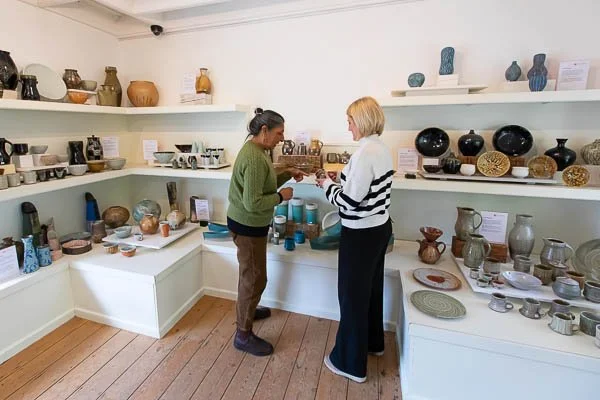
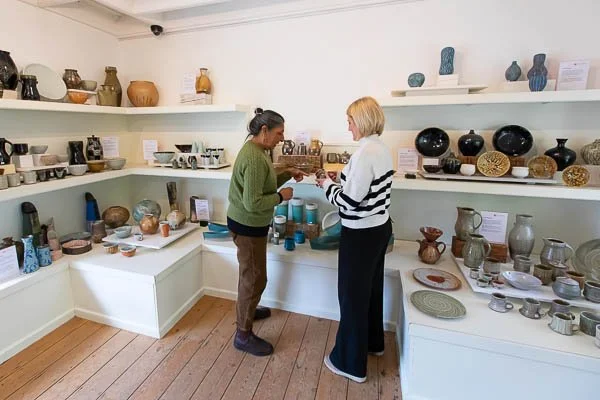
Bernard Leach founded this pottery in 1920 with his friend and colleague Shoji Hamada, bringing together Eastern and Western ceramic traditions in a way that had never been done before. The Leach Pottery is now considered the most influential studio pottery in the world — a claim that sounds hyperbolic until you understand how many of the ceramic artists working today trace their practice directly back to what Leach established here over a century ago.
The original pottery is still there — the clay room, the throwing room with its kick wheels, the Japanese climbing kiln that’s one of the most extraordinary things you’ll see on any art tour of Britain. There’s a museum dedicated to Leach’s life and work, workshops you can visit, and a shop featuring work from over 70 individual potters.
The Leach Pottery is currently undergoing a significant extension which will make it even more impressive as a destination. It remains open throughout. If ceramics is your practice — or if you’ve ever been curious about where British studio pottery comes from — this is a pilgrimage rather than just a gallery visit.
Who it’s best for: Ceramic artists, craft enthusiasts, anyone interested in the intersection of Eastern and Western creative traditions. Also genuinely fascinating for artists in any medium who want to understand how a studio practice shapes an art form.
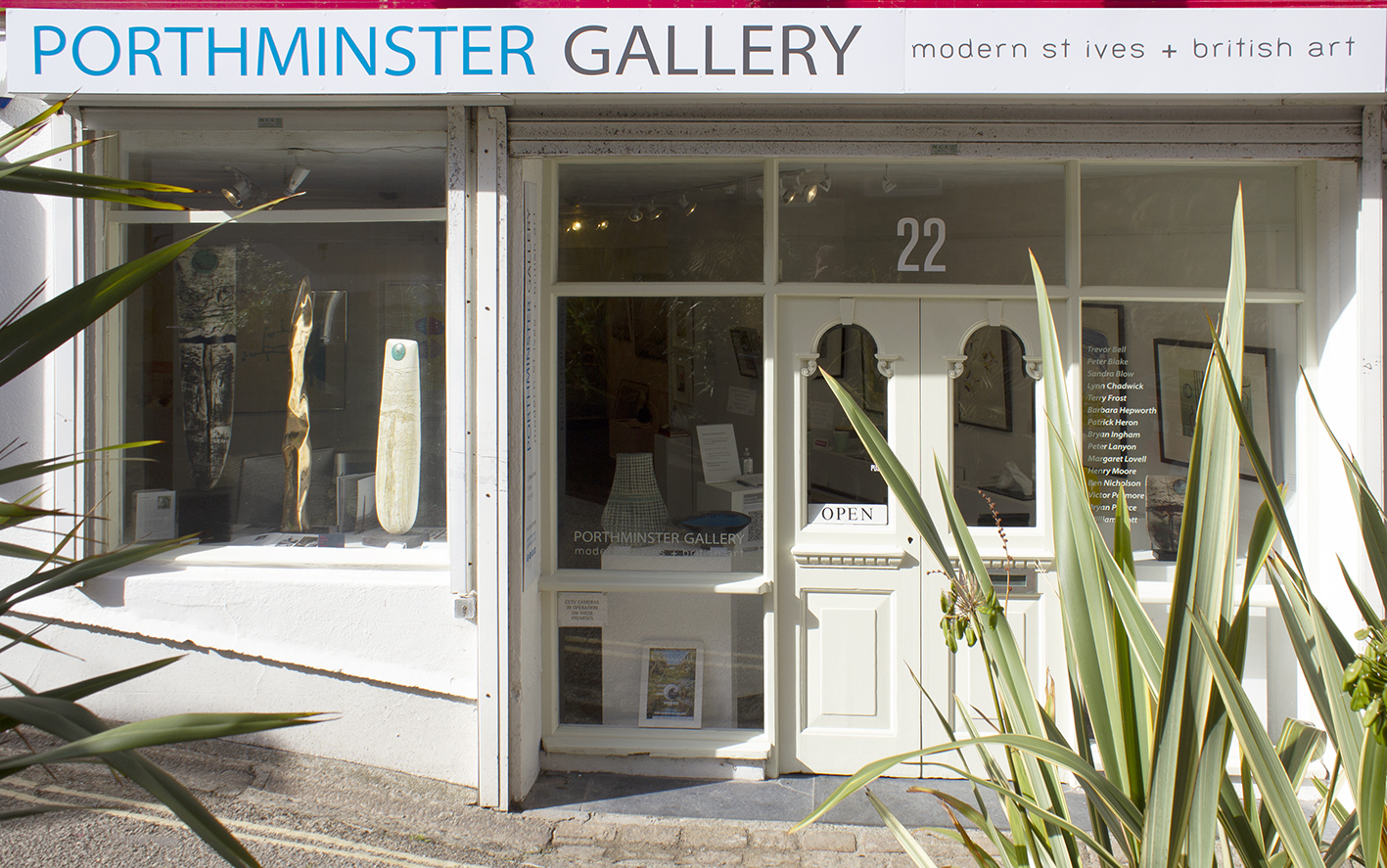
4. Porthminster Gallery
Chapel Street, St Ives, Cornwall, TR26 2LR
Porthminster Gallery is an award-winning commercial gallery that occupies an interesting position in the St Ives art ecosystem — it bridges the heritage of the St Ives School and the contemporary commercial market in a way that few galleries manage convincingly.
The gallery shows work by St Ives, Cornish and British artists alongside collectable Post-War and Modern art — paintings, original signed prints, sculpture and ceramics. The quality is consistently high and the presentation is excellent. If you’re thinking about buying original art in St Ives — and St Ives is one of the best places in the country to buy original art — Porthminster is one of the first places to look.
The staff are knowledgeable and the gallery has a reputation for integrity that matters when you’re spending real money. They also handle the commercial realities of buying art — framing, shipping, finance options — in a way that makes the whole process feel manageable rather than daunting.
Who it’s best for: Art buyers looking for quality contemporary and modern work by artists with genuine connections to Cornwall and the St Ives tradition.
5. New Craftsman Gallery
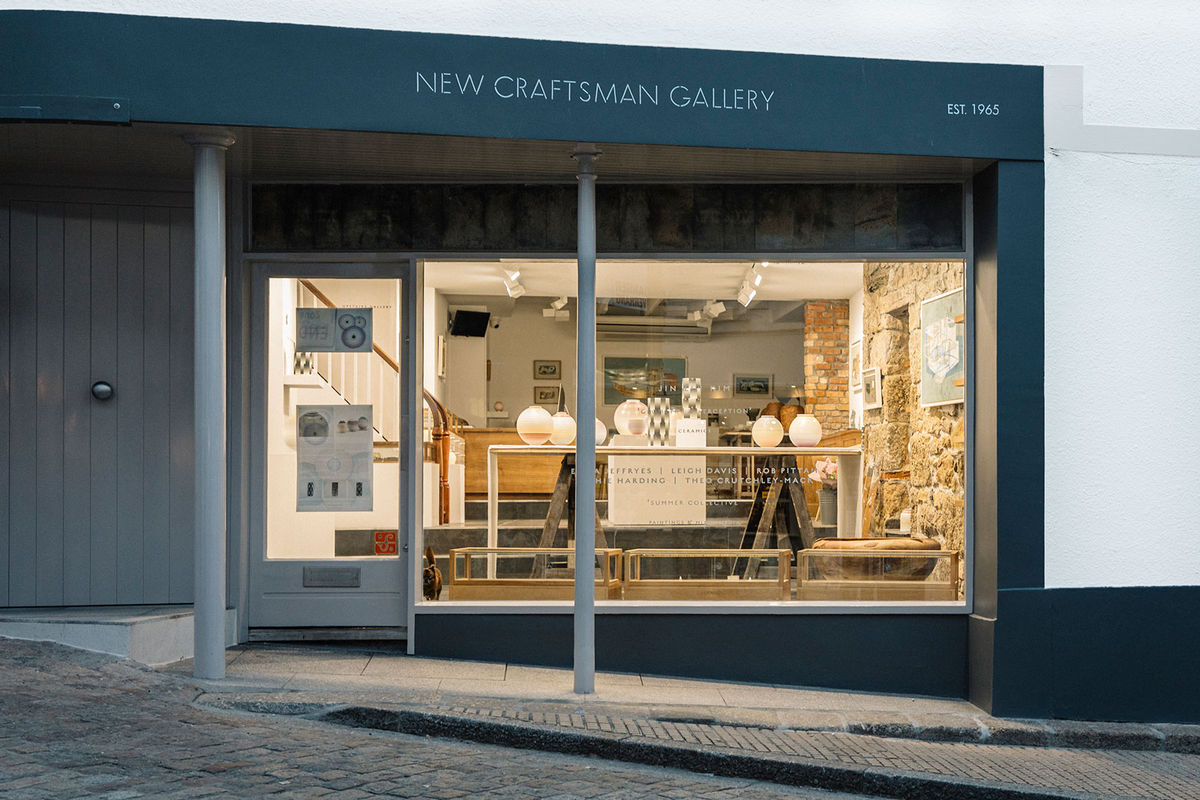
24 Fore Street, St Ives, Cornwall, TR26 1HE
The New Craftsman was founded in 1965 by Janet Leach — Bernard’s wife and a significant ceramic artist in her own right — and in over 60 years it has become one of the most enduring and respected art spaces in the UK. That longevity isn’t accidental. The gallery has a clarity of vision and a quality of curation that has remained remarkably consistent across six decades.
Originally renowned for studio ceramics — Lucie Rie, Hans Coper, Shoji Hamada, Bernard Leach — the gallery expanded to include painting and supported the early careers of St Ives artists including Wilhelmina Barns-Graham, Peter Lanyon, Patrick Heron and Bryan Wynter. Today it occupies a historic building of five light-filled rooms at the foot of the hill leading to the Barbara Hepworth Museum, showing contemporary art and craft of exceptional quality.
This is the gallery I’d recommend to anyone who wants to understand what makes St Ives different to every other art destination in the UK. The continuity between the founding generation of artists and what’s shown here today is tangible. It doesn’t feel like a heritage institution — it feels like an ongoing conversation.
Who it’s best for: Serious gallery visitors who want depth and context alongside quality. Particularly good for anyone interested in ceramics alongside painting.
6. Penwith Gallery
Back Road West, St Ives, Cornwall, TR26 1NL
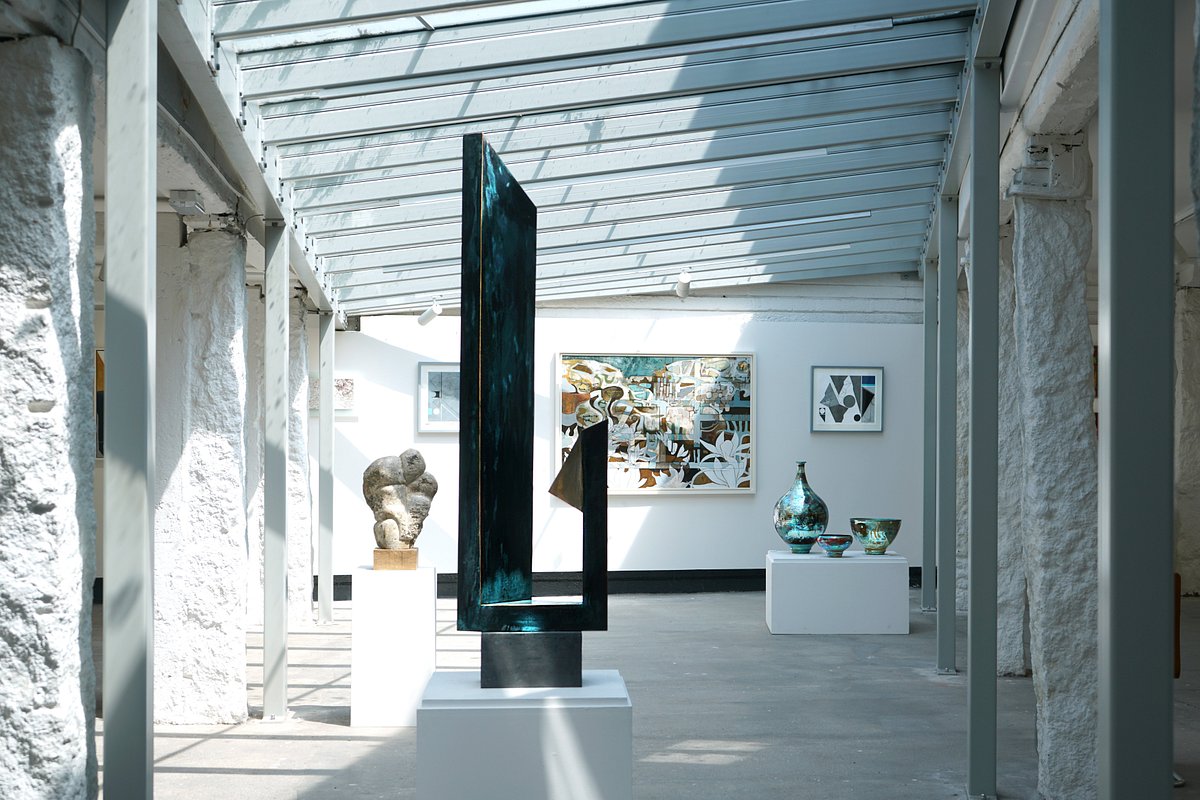
The Penwith Society of Arts was founded in 1949 by Barbara Hepworth, Ben Nicholson, Peter Lanyon, Bernard Leach and Wilhelmina Barns-Graham — a list of names that reads like a who’s who of British Modernism. The society was formed as a breakaway from the St Ives Society of Artists and represented the more progressive, abstract tendency in the town’s art scene.
The gallery occupies a former pilchard factory — which is exactly the kind of building that makes St Ives feel like nowhere else — and contains three public galleries, artist studios, a printmakers’ workshop, a sculpture courtyard and an archive. The combination of historical exhibitions and contemporary work from current society members makes it one of the most complete art spaces in the town.
It’s a slightly less obvious destination than Tate or Hepworth but for anyone with a serious interest in the St Ives School specifically it’s essential. This is where the movement was born institutionally and that history is still palpable.
Who it’s best for: Artists and serious gallery visitors who want to go deeper into the history and continuing legacy of the St Ives School.
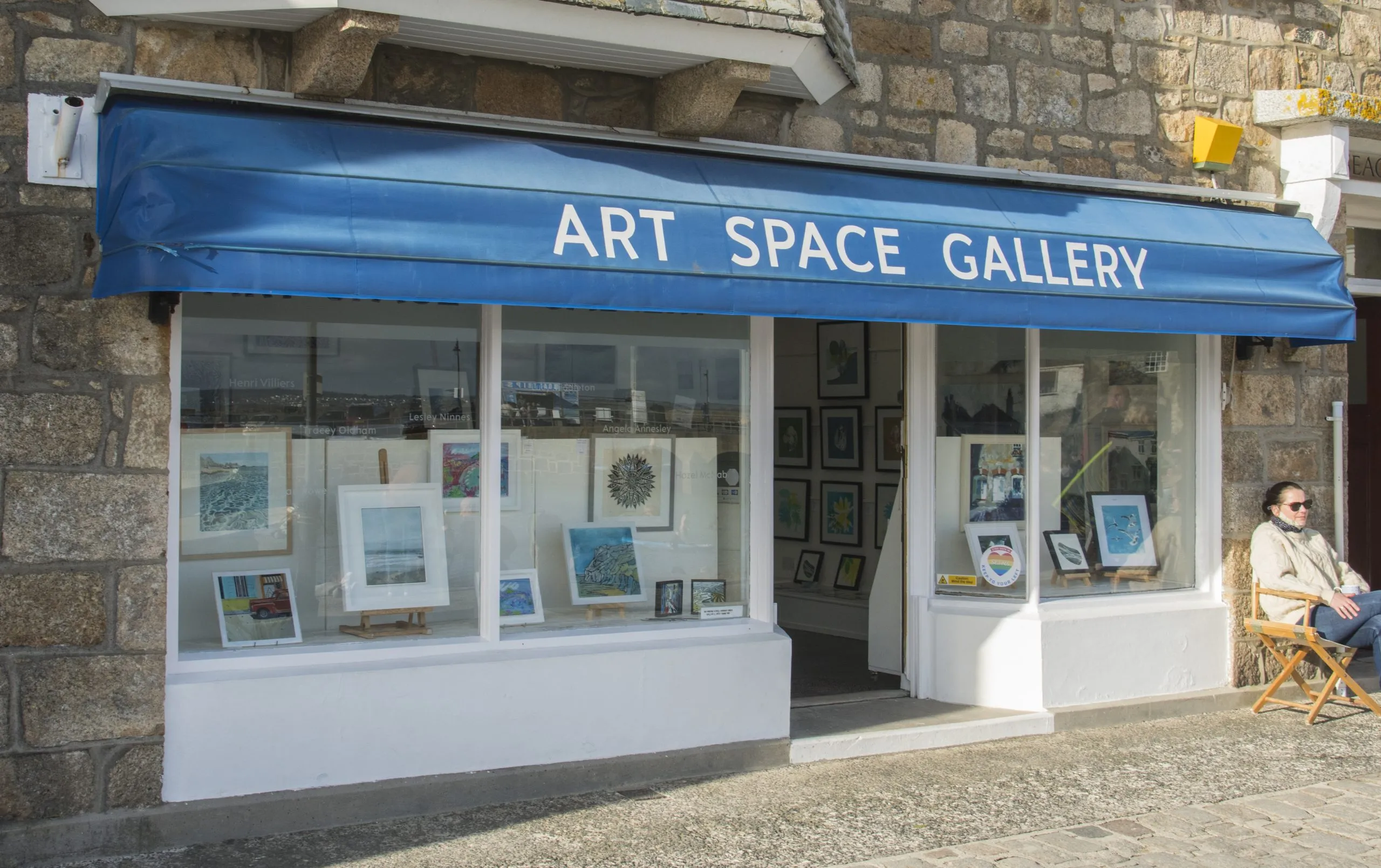
7. Art Space Gallery
The Wharf, St Ives, Cornwall, TR26 1LF
Art Space Gallery is something genuinely different in the St Ives gallery scene — an artist-run cooperative on the harbour that’s been fuelling Cornwall’s creative heart since 2000. Seven local artists working in oils, screenprints, watercolours, carved abstracts, reduction lino-cuts, jewellery and handcrafted books, all showing and often staffing the space themselves.
The prices are refreshingly accessible and the work is full of personality — this is art made by people who live and work in St Ives rather than work imported from elsewhere to capitalise on the town’s reputation. The ever-changing exhibitions guarantee there’s always something new and the artist-staffed model means you can often have a genuine conversation with the person who made what you’re looking at.
For me this is the kind of gallery that gets to the heart of what makes St Ives special — not the international reputation, not the famous names, but the ongoing creative life of a community of artists who actually live there and keep making work regardless of who’s paying attention.
Who it’s best for: Anyone who wants to buy original, affordable work directly from the artists who made it. Also brilliant for a genuine conversation about process and practice.
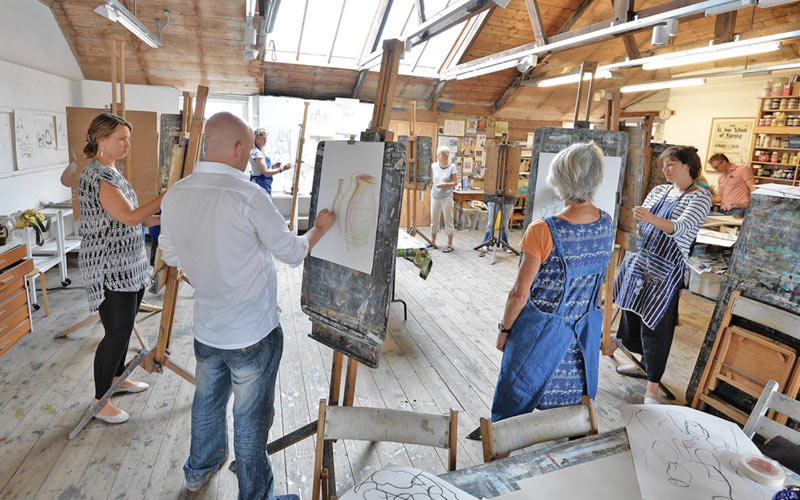
8. St Ives School of Painting
Back Road West, St Ives, Cornwall, TR26 1NL
schoolofpainting.co.uk
If the galleries make you want to paint — and they will — the St Ives School of Painting is where you go to actually do it. Founded in 1938, it’s one of the most respected painting schools in the country, running courses throughout the year in a working studio environment that gives you direct access to the landscape and light that made St Ives famous in the first place.
Courses cover everything from beginner watercolour to advanced oil painting, plein air technique to studio practice. The tutors are working artists with genuine credentials. The setting is extraordinary. If you’ve ever wanted to spend a week painting in St Ives with proper tuition, this is where to do it.
Lucy has long-standing ambitions to do a week here. I have long-standing intentions of joining her. One of these days we’ll actually manage to coordinate the timing with the kids’ school calendar and make it happen.
Who it’s best for: Artists at any level who want to develop their practice in one of the most inspiring painting locations in Britain. Particularly good for plein air painting and anyone who wants to understand the landscape that shaped an entire school of British art.
→ Book a course at St Ives School of Painting
Practical Information for Visiting St Ives
St Ives is at the far end of Cornwall — about 5-6 hours from the North West when we do it, slightly less from London on a good run. The A30 gets you most of the way then the A3074 into St Ives itself.
Parking is one of the most frequently complained about aspects of visiting St Ives and not without reason. The town is tiny and the roads are narrow. The sensible approach is to park at Lelant Saltings or St Erth and take the scenic branch line train into St Ives itself — 12 minutes on one of the most beautiful railway journeys in England, running alongside the Hayle Estuary with the sea on one side. We always do it this way now and it transforms the experience. Nancy in particular loves it.
Allow at least two days if you want to do the galleries properly. Tate and Hepworth alone justify a full day if you’re taking it seriously. The Leach Pottery is another half day. The commercial galleries — Porthminster, New Craftsman, Art Space — can be woven in around the anchor institutions.
Food — the Porthminster Beach Café is genuinely excellent and the views are as good as anywhere in Cornwall. Book well in advance in summer.
Thinking About Selling Your Own Work?
Spending time in St Ives surrounded by galleries — seeing how artists present their work, how pieces are priced, how buyers respond — is one of the most useful things a practising artist can do if they’re thinking about selling their own work. It’s the real world version of the theory.
If that thought is starting to feel serious, we have a comprehensive guide on how to sell your art online covering everything from choosing the right platform to building an audience. And if you’re considering Shopify for your art business or comparing print on demand options, we’ve covered both in detail.
And before you stock up on supplies for a St Ives-inspired painting session back home, check our live deals page — we track prices from all the major UK art retailers throughout the week.
Have you visited a gallery in St Ives that we haven’t included? Let us know in our Facebook community of 15,000 UK artists. St Ives has more good galleries than any single article can do justice to and we’re always looking to add to this guide.