Written by Paul Worrall
Most pencil case guides are written for school students. The top results for almost every pencil case search are dominated by advice about fitting highlighters and rulers into a GCSE pencil tin, and that’s fine as far as it goes — but it’s not the question an artist asks when they’re trying to protect a set of Derwent Chromaflow pencils or transport forty Copic markers to a life drawing session without anything getting damaged. The requirements are different. The case types are different. And the stakes — in terms of what you’re protecting — are considerably higher.
I’ve spent sixteen years in the UK art supplies industry, nearly a decade of it at ARTdiscount where I watched what working artists and illustrators actually bought, and pencil cases and storage come up constanty as a practical question with a surprisingly wide range of useful answers depending on what you’re carrying. Here’s the honest guide — not for students, but for artists.
⭐ Best Pencil Cases for Artists — Quick Picks
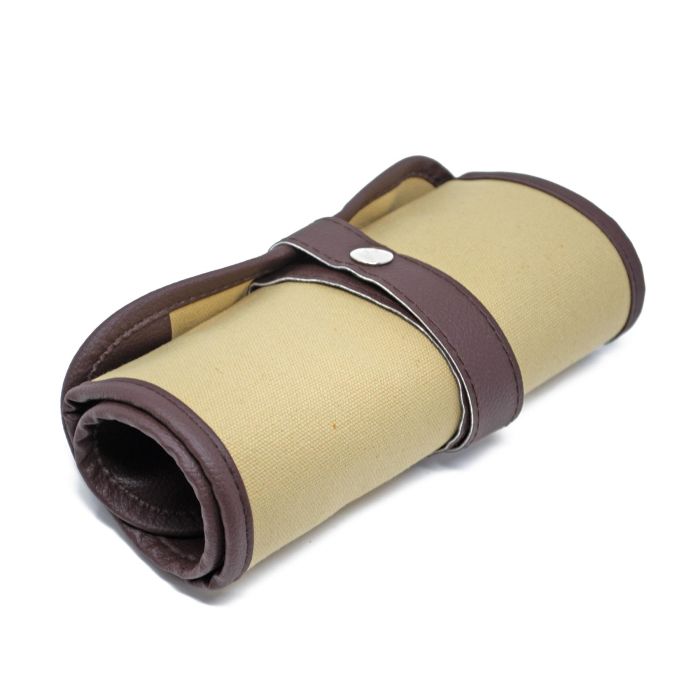
Best roll case for drawing pencils: Canvas Pencil Roll — individual loops protect each pencil, rolls compact for travel, the classic artist’s solution.
Best slot organiser for coloured pencils: 72-Slot Coloured Pencil Case — keeps your full colour set sorted by hue, makes picking the right shade genuinly fast.
Best for mixed media (pens, pencils, tools): Lihit Lab Book Style Pen Case — multiple compartments, stands upright on a desk, the most versatile case for mixed media artists.
Best hard case for protection: Hard Shell Pencil Case — for artists carrying fragile pastels, charcoal or mechanical pencils that can’t afford to be crushed.
Best for Copic markers: Copic Marker Case — specifically designed for marker storage with horizontal slots keeping caps secure.
Best budget option: Canvas Zip Pouch — simple, light, washable, and sufficient for artists who carry a small everyday selection rather than a full set.
The Four Types — Which One Suits Your Practice
The most importent decision before looking at individual products is which type of case actually suits how you work. The four main types for artists each solve a different problem, and buying the wrong type — even an expensive one — is consistently more frustrating than buying a cheaper version of the right one.
A pencil roll is the traditional artist’s solution — a strip of canvas or leather with individual elastic loops, each holding one pencil, that rolls up and ties closed for transport. Excellent protection for individual pencils or pens, genuinly compact, easy to see everything at a glance when unrolled on a desk or outdoor sketching spot. The limitation is capacity — most rolls hold 24-36 pencils comfortably, and they don’t work well for tools of different thicknesses like combining pencils with markers or rulers.
A slot organiser is the preference for coloured pencil artists with large sets — typically a zipped case or folder with individual slots arranged in rows, allowing a full 72 or 120-colour set to be stored in spectrum order and accessed instantly. For anyone who works from a large set of coloured pencils and wants to find the right shade quickly without fishing through a loose pile, a slot organiser is genuinly transformative for workflow. They’re less useful for mixed media or for artists who carry fewer pencils.
A standing pen case — like the widely recommended Lihit Lab Book Style — opens and stands upright on a desk to give you immediate access to everything inside. Multiple compartments separate different tool types. Good for studio use where the case becomes a desktop organiser as much as a transport solution. Less ideal for outdoor sketching or travel where a flat, packed format is more practical.
A hard shell case offers the maximum protection for fragile media — pastels, charcoal, soft erasers, mechanical pencils with exposed leads. The rigid exterior prevents crushing in a bag. The trade-off is weight and bulk, and they typically offer less individual organisation than roll or slot cases.
The Canvas Pencil Roll — The Classic Artist Solution
The canvas pencil roll has been the go-to solution for artists carrying drawing pencils for decades for simple reasons: each pencil has its own loop, nothing rolls around or damages anything else, the whole thing compresses to the size of a large pen when rolled up, and unrolled flat it becomes its own workspace — lay it on a desk or outdoor surface and everything is visible and accessible simultaneously. The Global Art pencil roll consistently earns the strongest independent reviews for this format, holding up to 36 standard wooden pencils in individual elastic loops with a fabric flap covering the pencil leads to prevent breakage and residue transfer.
The honest limitation is that rolls work best for uniform tools — a set of graphite pencils, or a set of Derwent drawing pencils — rather than mixed collections where tools have different diameters. Fitting a fat marker alongside a fine pen alongside a standard pencil in a roll case is genuinly awkward.
The Slot Organiser — Best for Coloured Pencil Artists
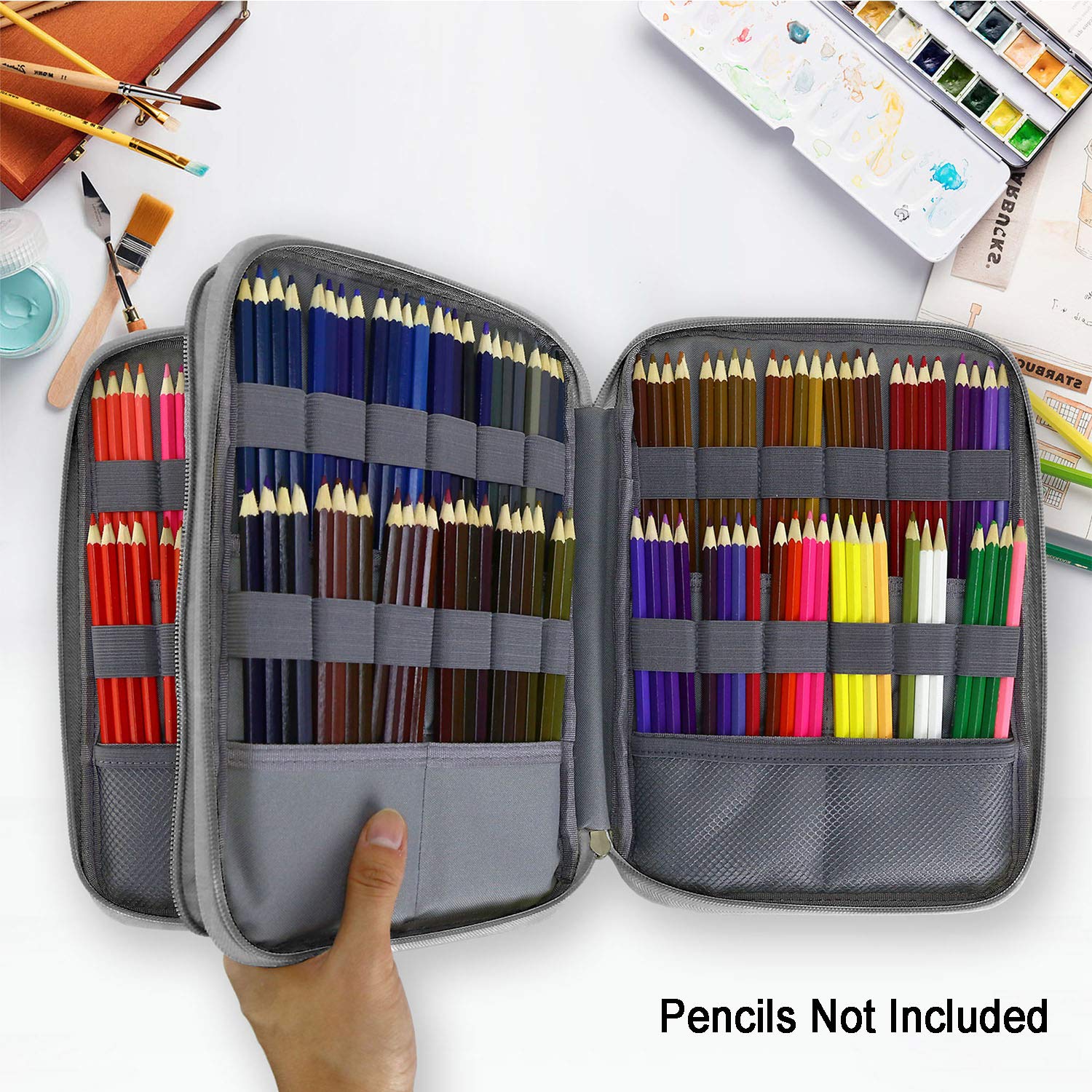
If you work from a large set of coloured pencils — Derwent Chromaflow, Faber-Castell Polychromos, Prismacolor Premier — and you’ve ever spent time fishing through a tin for the right shade, a 72 or 120-slot pencil case is genuinly one of those purchases that changes how enjoyable your practice feels day to day. Arrange your pencils in spectrum order — reds through oranges through yellows through greens through blues through purples — and finding the exact shade you need becomes instantaneous rather than a minor irritation every few minutes.
The three-layer designs that separate pencils across multiple rows are the most practical for large sets, keeping everything visible simultaneously without needing to lift layers to find what’s underneath. Faux leather exteriors hold up better than fabric for daily use and wipe clean easily. For watercolour pencil artists specifically, check that the slots are deep enough to hold shorter, well-used pencils securely rather than allowing them to slide around once they’ve been sharpened down.
The Standing Pen Case — Best for Mixed Media
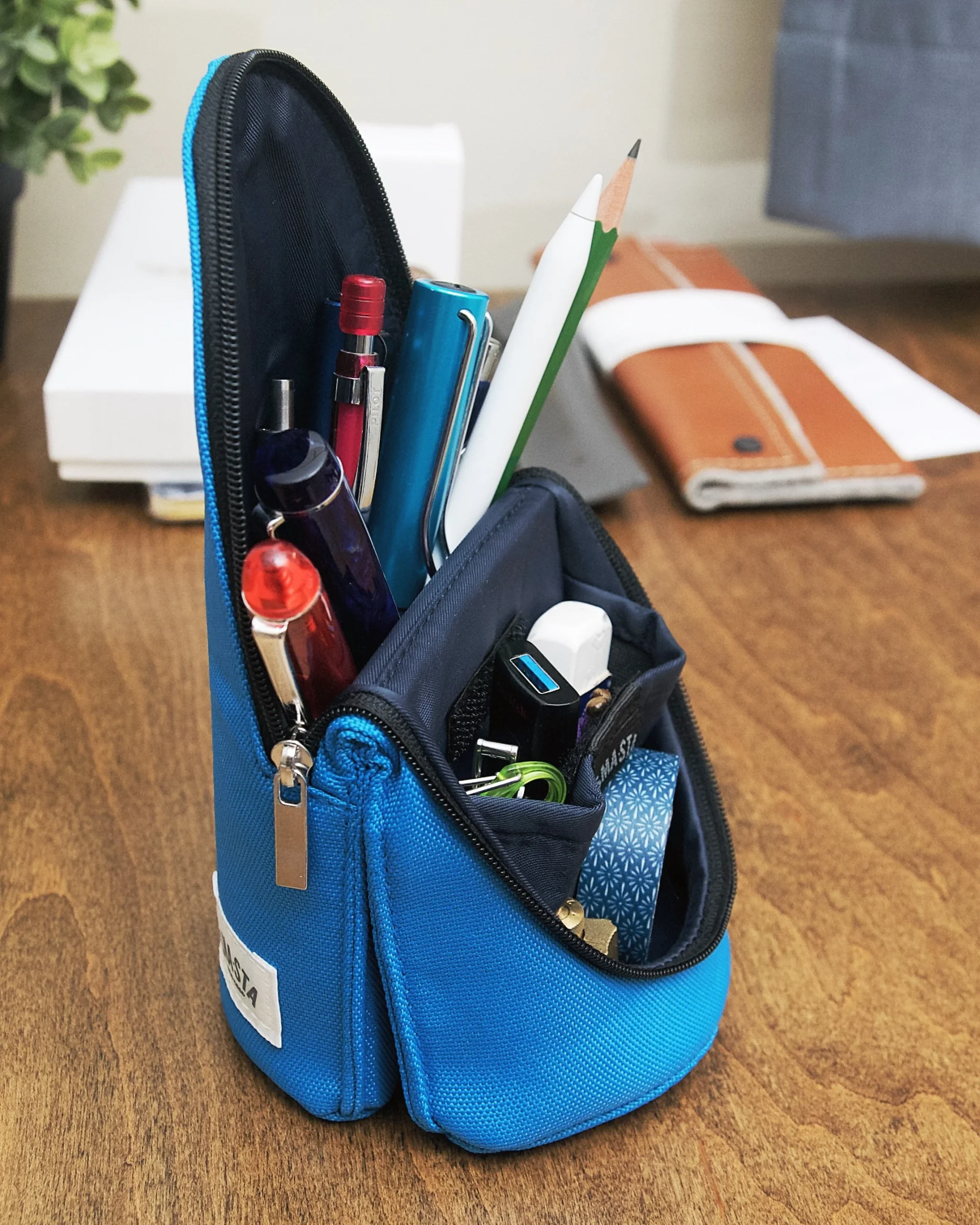
The Lihit Lab Book Style Pen Case is consistently recommended by the stationery community and mixed media artists as the most versatile pencil case available — not because it’s the most specialised, but because it genuinly handles a mixed collection of tools better than anything else. It opens and stands upright on a desk, multiple compartments of different sizes separate pencils from pens from rulers from erasers, and the whole thing zips flat for transport. Artists who carry a combination of pencils, fineliners, brush pens and correction tools find this format considerably more useful than a roll or a slot case that works best for uniform collections.
The Hard Shell Case — Best for Fragile Media
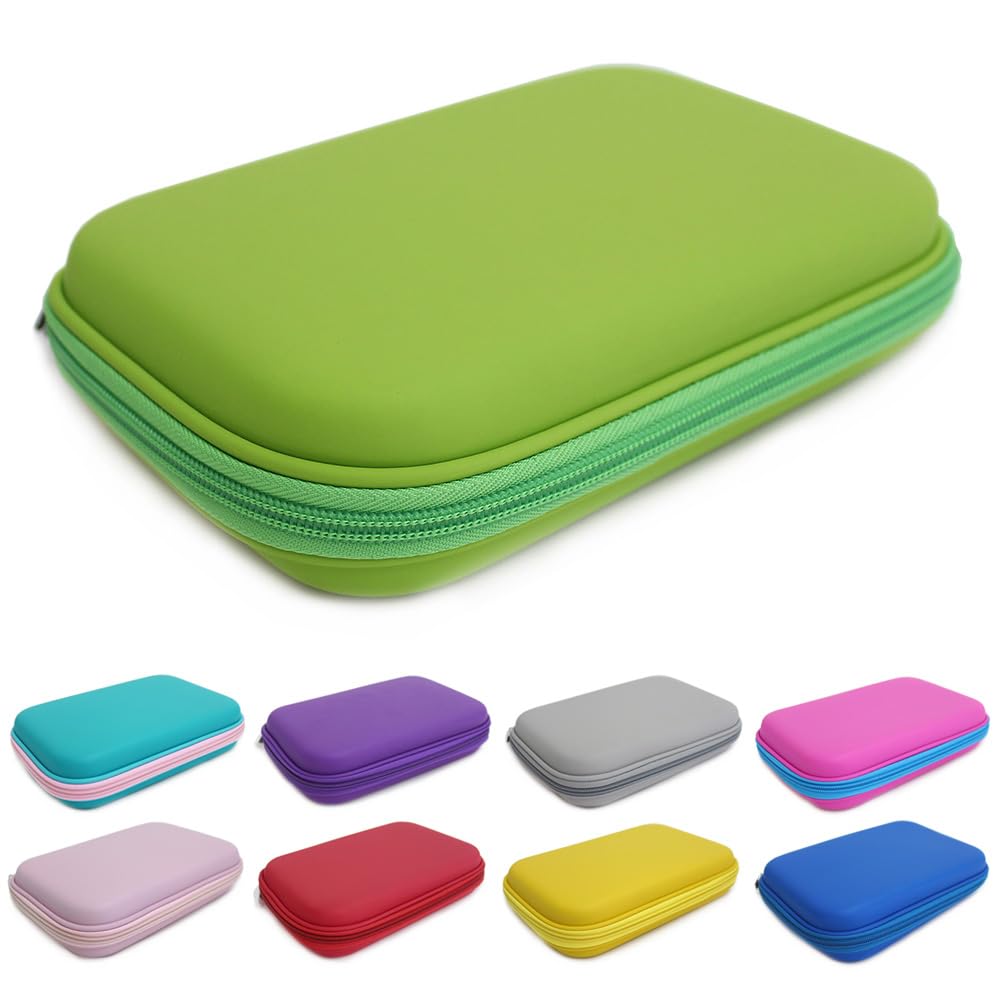
For artists carrying soft pastels, charcoal sticks, mechanical pencils or any media where the concern is physical breakage rather than just organisation, a hard shell case is the right choice regardless of the organisational trade-offs. The rigid exterior prevents crushing under the weight of other bag contents — a genuine concern when carrying fragile media on public transport or in a bag that also contains a laptop or a water bottle. Look for cases with foam or elastic interior fittings that hold tools in place rather than allowing them to rattle around inside the rigid shell.
Pencil Cases Worth Knowing About from UK Art Retailers
Beyond the Amazon options, it’s worth knowing that several UK art retailers stock artist-specific cases that don’t always appear in general pencil case searches. Our price comparison pulls live pricing on artist pencil cases from Cass Art, Jacksons, Amazon and others — worth checking before buying since prices on identical cases can vary by 20-30% between stockists. Derwent in particular produces pencil cases and rolls specifically designed for their own pencil sets that fit the dimensions exactly, which is worth knowing if you’re buying for a Derwent collection.
What Size Do You Actually Need?
The honest answer is that most artists underestimate the size they need when buying their first proper case and end up buying a second, larger one within six months. If you currently carry 24 pencils and find yourself wishing you had a few more colours, buy the 72-slot case rather than the 24-slot case. Cases that are slightly too large are considerably less annoying than cases that are slightly too small. The exception is travel and outdoor sketching, where a compact format genuinly matters and carrying a smaller, curated selection is part of the working method.