
Written by Paul Worrall
Gesso is one of those things every painter ends up buying, and nobody gets excited about. It’s not glamorous, but it quietly decides how your paint behaves, how long a canvas lasts and how much of your good paint soaks into a surface and disappears. Get it right and everything painted on top looks better. Get it wrong and you spend a week wondering why your colours look dull.
I’m Paul Worrall. I spent nearly a decade running digital marketing for ARTdiscount, one of the UK’s largest online art retailers, and I now run Discount Art Supplies, a price comparison site used by over 28,000 UK artists every week. After sixteen years in this industry, I’ve watched what artists buy and where they find it cheapest, and gesso is a product where the price gap between retailers can be surprisingly large for exactly the same pot. Here’s my honest guide to which gesso primer is worth buying.
Best Gesso Primer: Quick Picks
Best all-rounder (white): Liquitex Professional White Gesso
Best for everyday painting: Winsor & Newton Galeria Acrylic Gesso Primer
Best clear gesso: Winsor & Newton Professional Acrylic Clear Gesso
Best black gesso: Daler-Rowney Black Gesso Primer
Best premium black gesso: Golden Black Gesso
What Is Gesso Primer, and Is Gesso a Primer?
Yes, gesso is a primer. It’s a coating you put on a surface before you paint on it, and it does three jobs. It protects the surface underneath, because unprimed canvas can rot over time when paint sits directly on it. It gives the paint a better surface to grip, with a slight tooth that makes brush and pencil marks behave. And it stops the surface drinking up your paint, so colours stay stronger.
There are two types. Traditional gesso is made with an animal glue binder, usually rabbit-skin glue, mixed with chalk and white pigment. Acrylic gesso, the type nearly everyone buys now, uses an acrylic polymer binder instead. It dries quickly, it’s flexible and it’s easy to use straight from the pot. Some artists argue traditional gesso is better for long-lasting oil paintings, as the flexibility of acrylic gesso can be an issue over very long timescales, but for most painters acrylic gesso is the practical choice.
White, Clear or Black Gesso?
White is the standard. It gives a bright, opaque base that makes colours sit true, and it’s what most of the pre-primed canvases you buy are coated with. Clear gesso lets the natural colour of the surface show through, which is handy if you like the look of raw canvas or wood, or want to prime a surface without hiding it. Black gesso gives you a dark base, which suits dramatic work where you’d rather build up from dark to light, and it can make bright colours glow.
1. Liquitex Professional White Gesso — Best All-Rounder
Liquitex is a name you’ll see in almost every art shop, and this is the gesso most people think of first. Cass Art describes it as an opaque white ground that prepares your painting surface and gives a lasting, archival base, which is exactly what you want from a primer. It comes in a generous 946ml size, so it’s good for priming several canvases or panels without running out halfway through.
For the price comparison, it’s worth checking this one before you buy, because a pot this size varies noticably between retailers, and it’s one of the most widely stocked gessos in the UK. If you only buy one white gesso, this is a safe choice.
Check price on AmazonCompare prices
2. Winsor & Newton Galeria Acrylic Gesso Primer — Best for Everyday Painting
Galeria is Winsor and Newton’s acrylic range aimed at everyday painters, and the gesso primer is a sensible option if you’re priming lots of surfaces and don’t need a premium product for every one. Cass Art stocks it in two colours and two sizes, so you can choose how much to buy and whether you want a white or dark base.
It’s the one I’d suggest for students, hobby painters and anyone priming boards, panels or canvases in bulk, where cost per millilitre matters more than the prestige of the label. For work you plan to sell or keep long-term, step up to a professional-grade gesso.
Check price on AmazonCompare prices
3. Winsor & Newton Professional Acrylic Clear Gesso — Best Clear Gesso
If you want to prime a surface without covering it up, clear gesso is what you need. Winsor and Newton’s Professional clear gesso is sold for priming a surface for acrylic and oil paints, and it lets the natural colour of the canvas, wood or paper show through. That makes it a favourite for artists who like the warm tone of raw linen or the grain of a wooden panel.
The trade-off is that you lose the bright white base, so colours won’t have quite the same punch as on white gesso. But if natural texture is part of the look you’re after, nothing else does the job.
Check price on AmazonCompare prices
4. Daler-Rowney Black Gesso Primer — Best Black Gesso
Daler-Rowney’s black gesso primer is available in 250ml and 500ml sizes, which makes it an easy way to try a dark ground without buying a huge pot. It’s a good starting point if you’ve never painted on black before. Check stock before you plan around it, though, as I’ve seen the larger size listed as out of stock at times.
Black gesso is a bit of a revelation if you haven’t used it. Light and bright colours sit on top with a real glow, and you start thinking about your painting as something you bring out of the dark.
Check price on AmazonCompare prices
5. Golden Black Gesso — Best Premium Black Gesso
Golden is one of the most respected names in artist acrylics, and its black gesso is stocked by Cass Art for artists who want a professional-grade dark ground. If you paint seriously on black and want to be sure of the quality of your base, this is the one to look at.
It’s more of a considered purchase than a casual one, so it’s worth comparing prices before you commit. The difference between retailers on premium pots can easily be worth a few pounds.
Check price on AmazonCompare prices
How to Use Gesso Primer on Canvas
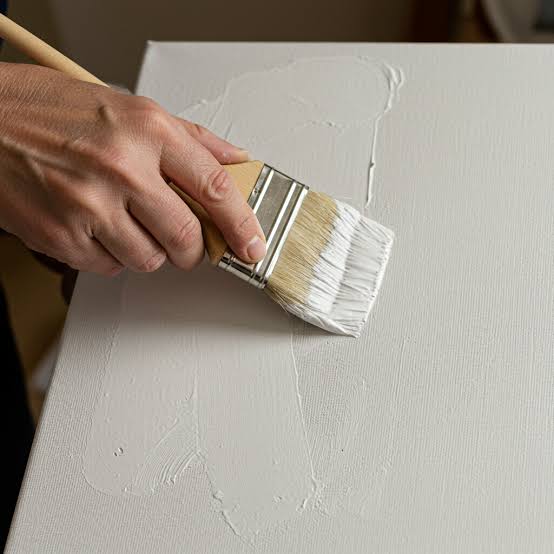
The method is simple. Use a broad, flat, short-bristled brush and work in one direction. Thinning the first coat with a little water helps it soak in. For the middle coats, change the direction of your brushstrokes, then finish in the same direction as the first coat. Most surfaces need around three coats. Acrylic paintings usually need one or two, and oil paintings two to four, depending on how absorbent the surface is and how smooth you want it.
How Long Does Gesso Take to Dry?
Gesso may be touch-dry within an hour or two, but you should leave at least an hour between coats and wait at least 24 hours before you paint on it. Humidity and temperature change that, so allow longer in a cold or damp room. Rushing it is how you end up with a tacky surface and paint that doesn’t behave.
Do I Need Gesso on a Pre-Primed Canvas?
Usually not. Winsor and Newton say their canvases already have at least three coats of pigmented gesso, so extra priming isn’t required. Some artists add a few more coats and sand them smooth for a different surface feel, which is optional. If you’re buying canvases to prime yourself or want to compare prices on ready-made ones, take a look at our canvas price comparison.
Can You Use Acrylic Gesso Under Oil Paint?
Many artists do, particularly beginners, as long as the surface is properly prepared. You can add an oil primer over acrylic gesso, and leave that to dry overnight before you start painting. Be aware that you can’t gesso or prime over oil paint itself. If you’re making work you want to last generations, traditional glue gesso is the choice some artists still prefer.
Where to Buy Gesso Primer Cheapest
Gesso is sold at Cass Art, Jackson’s, Hobbycraft and Amazon, and the price for the same pot can differ more than you’d expect. Our gesso price comparison shows UK retailers side by side so you can see who’s cheapest today. Check delivery as well, because gesso is heavy and postage can wipe out a saving. If you’d like to hear about sales as they land, join the newsletter or our Facebook group of 15,000+ artists.
Frequently Asked Questions
What is gesso primer? Gesso primer is a coating applied to a surface before painting. It protects the surface, gives paint a better grip and stops the surface absorbing too much paint.
Is gesso a primer? Yes. Gesso is a primer used to prepare canvas, board, wood and paper for painting. Acrylic gesso is the most common type today.
How many coats of gesso do I need? Around three coats is typical. Acrylic paintings usually need one or two, and oil paintings two to four, depending on how absorbent the surface is.
How long does gesso take to dry? Gesso can be touch-dry within one to two hours. Leave at least an hour between coats and wait at least 24 hours before painting.
Can you use acrylic gesso for oil painting? Many artists do, as long as the surface is properly prepared. You can add an oil primer over acrylic gesso, but you can’t gesso over oil paint.
Whichever gesso you choose, check the prices first. We compare UK retailers so you can see who’s cheapest without opening ten tabs. I beleive a good base is the cheapest way to acheive better paintings, and a little time spent comparing prices makes it cheaper still.