Written by Paul Worrall
Air dry clay is one of those materials that looks simple until you actually have a lump of it in your hand and a half-finished bowl cracking on the radiator. I’ve got two kids, which means our house goes through the stuff in a way that would shock a pottery studio, and I’ve had my fair share of cracked ornaments and squashed dinosaurs along the way. The good news is that most of the problems come down to picking the right clay and a few simple habits, and none of it needs a kiln.
I’m Paul Worrall. I spent nearly a decade running digital marketing for ARTdiscount, one of the UK’s largest online art retailers, and I now run Discount Art Supplies, a price comparison site used by over 28,000 UK artists every week. After sixteen years in this industry I know that air dry clay prices vary a lot between retailers, and that the cheapest option isn’t always the best for the job. Here’s my honest guide to what’s worth buying.
Best Air Dry Clay: Quick Picks
Best all-rounder: Das Air Drying Modelling Clay
Best for budget and bulk buying: Hobbycraft White Air Drying Clay 1kg
Best for faster drying and detail work: Staedtler Fimo Air Basic
Best for a premium finish: Pebeo Gedeo Air Drying Clay
Best for classrooms and groups: Scola Air Drying Clay (12.5kg)
How to Choose Air Dry Clay
Air dry clay hardens as the water leaves it, so there’s no firing and no special equipment. The differences between brands are mostly about how it handles, how quickly it dries, how well it holds fine detail and how easily it cracks. Colour matters too. Most people buy white because it takes paint cleanly, while terracotta suits rustic pieces you may leave unpainted.
The other thing to keep in mind is that air dry clay isn’t waterproof once it’s dry. It’s lovely for ornaments, trinket dishes, decorations and models, but it isn’t a substitute for ceramic if you want something that holds water. Anything you want to last needs sealing, which I’ll come to below.
1. Das Air Drying Modelling Clay — Best All-Rounder
Das is the name most people think of when they think air dry clay in the UK, and it has earned that reputation. It’s smooth, easy to shape and widely stocked, so you can find it at Hobbycraft, Cass Art and plenty of online retailers. It comes in white, and the manufacturer says it can be decorated with poster paints, acrylics and varnish once dry. No oven or kiln is needed.
The guidance on the product is to allow around 24 hours per centimetre of thickness, which is a helpful rule to plan around. It does need to be kept soft while you work, and it can feel stiff if it has been open for a while, so a little water and some patience will bring it back. For beginners, kids and anyone who wants a reliable first clay, it’s the one I’d start with.
Check price on AmazonCompare prices
2. Hobbycraft White Air Drying Clay 1kg — Best Budget Option
If you’re buying for a houseful of children, a party or a school project, cost per kilo matters, and this is where the Hobbycraft 1kg white air drying clay comes in. It’s an inexpensive way to get a decent amount of clay, and it’s easy to pick up in store if you need it in a hurry.
The honest trade-off is that the page doesn’t give much in the way of drying or finishing instructions, so treat it like any other white air dry clay: keep pieces an even thickness, dry them slowly and seal them once they’re done. As a stock-up option for casual crafting, it takes some beating. Before you head to a shop, check the price comparison, because the same weight of clay can differ noticably between retailers.
Check price on AmazonCompare prices
3. Staedtler Fimo Air Basic — Best for Faster Drying and Detail
Staedtler’s Fimo Air Basic is a white air dry clay that dries faster than most of the others I looked at, which is a real advantage when you’re impatient or working with children who want to paint their model today and not on Thursday. Once it’s dry it can be drilled and sanded, which makes it useful for jewellery, pendants and anything that needs a smooth finish or a hole for a ribbon.
It can also be painted and varnished in the usual way. If you do more detailed work than the average rainy-afternoon project, this is a good step up from a basic modelling clay.
Check price on AmazonCompare prices
4. Pebeo Gedeo Air Drying Clay — Best for a Premium Finish
Pebeo’s Gedeo is the one for artists who care about the result more than the price tag. It’s reported to harden without cracking and can be given a waterproof coating, and drying time is longer, around four to five days. That’s slower than the others, but if you’ve ever lost a piece to a hairline crack, slow and steady has its attractions.
It’s popular enough that stock sells out often, so if you see it at a good price it’s worth grabbing. It’s more of a considered purchase than a casual one, and I’d save it for work you plan to keep or give as a gift.
Check price on AmazonCompare prices
5. Scola Air Drying Clay — Best for Classrooms and Groups
Scola is a familiar name in school art cupboards, and it’s sold in large 12.5kg blocks, which makes sense if you’re running a class, a club or a birthday party. At that size the cost per kilo drops sharply, but it’s a lot of clay for one household, so unless you’ve got a big project in mind it’s probably more than you need.
If you are buying for a group, it’s worth comparing bulk prices before you commit, as the gap between retailers on a large block is bigger than on a single 1kg pack.
Check price on AmazonCompare prices
How Long Does Air Dry Clay Take to Dry?
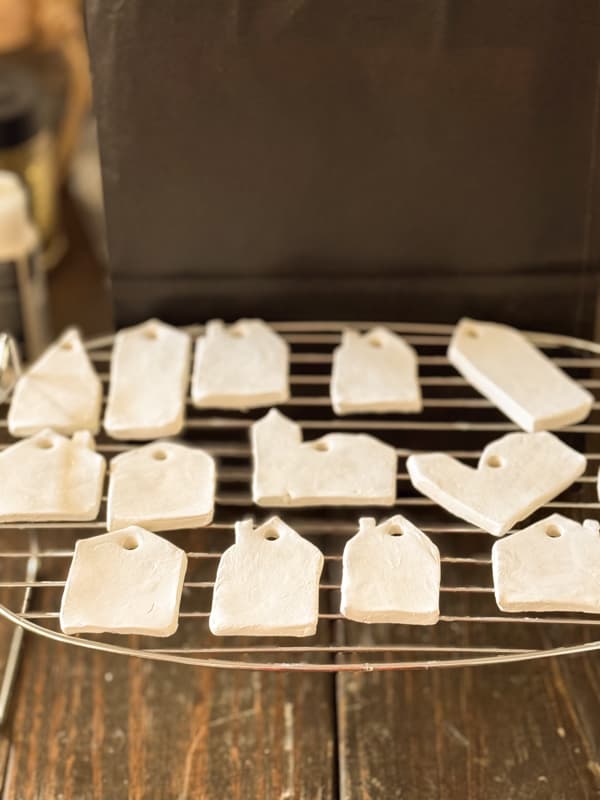
Most projects take somewhere between 24 and 72 hours, and thicker pieces can take up to about a week. Das gives a useful rule of thumb of around 24 hours for every centimetre of thickness, so a one-centimetre ornament is dry in about a day while a chunky sculpture will need several. Pebeo’s Gedeo is slower, at four to five days.
The key is to let it dry slowly and evenly. Keep pieces somewhere airy but away from direct heat, and turn them over once or twice so the underside dries as well. Rushing it is the most common reason for cracks.
Can You Put Air Dry Clay in the Oven?
You don’t need to, and I’d advise against it. Das states that its clay is designed for modelling without the need for an oven or kiln. Heat from an oven or a hairdryer will speed up drying, but it can cause cracking and make pieces more fragile. If you’re in a hurry, it’s better to choose a faster-drying clay such as the Fimo Air Basic than to force a slow one. Air dry clay is also different from polymer clay, which is baked, so don’t mix up the instructions.
How to Stop Air Dry Clay Cracking
Cracks usually come from too much water, shaping the clay too thin or drying it too quickly. Keep a little water on your fingers rather than soaking the surface, aim for an even thickness of at least a few millimetres and let pieces dry slowly. Small cracks can often be filled with a little fresh clay mixed with water into a paste and smoothed over.
How to Seal and Paint Air Dry Clay
Air dry clay is water-based, so it isn’t waterproof on its own. Once it’s completely dry, you can paint it with acrylics or poster paints, then seal it. The easiest options are a brushed coat of PVA or a craft glue such as Mod Podge, a spray or liquid varnish, or epoxy resin if you want a hard glossy finish. Varnish can also be used as a sealer before painting if you want to protect the surface first. Anything that will be handled a lot, or sit near moisture, deserves a coat.
Where to Buy Air Dry Clay Cheapest
Air dry clay is sold everywhere, from Hobbycraft and Cass Art to Amazon and supermarkets, and the price for the same weight can be surprisingly different. That’s where our price comparison comes in: we show UK retailers side by side so you can see who’s cheapest today. Always look at delivery too, becuase clay is heavy and postage can wipe out a saving. If you’d like to hear about sales as they land, join the newsletter or our Facebook group of 15,000+ artists.
Frequently Asked Questions
How long does air dry clay take to dry? Most air dry clay takes between 24 and 72 hours to dry, and thick pieces can take up to a week. Das suggests allowing around 24 hours per centimetre of thickness.
Can you put air dry clay in the oven? You don’t need to. Air dry clay is designed to harden without an oven or kiln, and heat can cause cracking and make pieces more fragile.
How do you seal air dry clay? Once it is fully dry, you can seal it with a brushed coat of PVA or craft glue, a spray or liquid varnish, or epoxy resin. Air dry clay isn’t waterproof on its own.
What is the best air dry clay for beginners? Das Air Drying Modelling Clay is the easiest place to start. It’s widely available, easy to shape and can be painted and varnished once dry.
Why does air dry clay crack? Cracking is usually caused by using too much water, shaping the clay too thin or drying it too quickly. Dry pieces slowly and keep the thickness even.
Whichever clay you choose, check the prices first. We compare UK retailers so you don’t have to open ten tabs, and we’re adding new products all the time. The begining of a good project is often just paying less for the clay.
If you enjoyed this, you might also like my guide to the best sketching pencils.