Written by Paul Worrall
Ask ten people what tempera paint is and you’ll get two different answers. Ask a UK primary school teacher and they’ll point at a bottle of bright, washable paint in the art cupboard, which most of us grew up calling poster paint. Ask an art historian and they’ll talk about egg yolk, gold leaf and the way nearly every painting in Europe was made until about 1500. They’re both right, and that’s exactly why people get confused when they go looking for it.
I’m Paul Worrall. I spent nearly a decade running digital marketing for ARTdiscount, one of the UK’s largest online art retailers, and I now run Discount Art Supplies, a price comparison site used by over 28,000 UK artists every week. After sixteen years in this industry I’ve seen how often the word tempera trips people up, so here’s a straight explanation of what it is, how the two kinds differ and what’s actually worth buying in the UK.
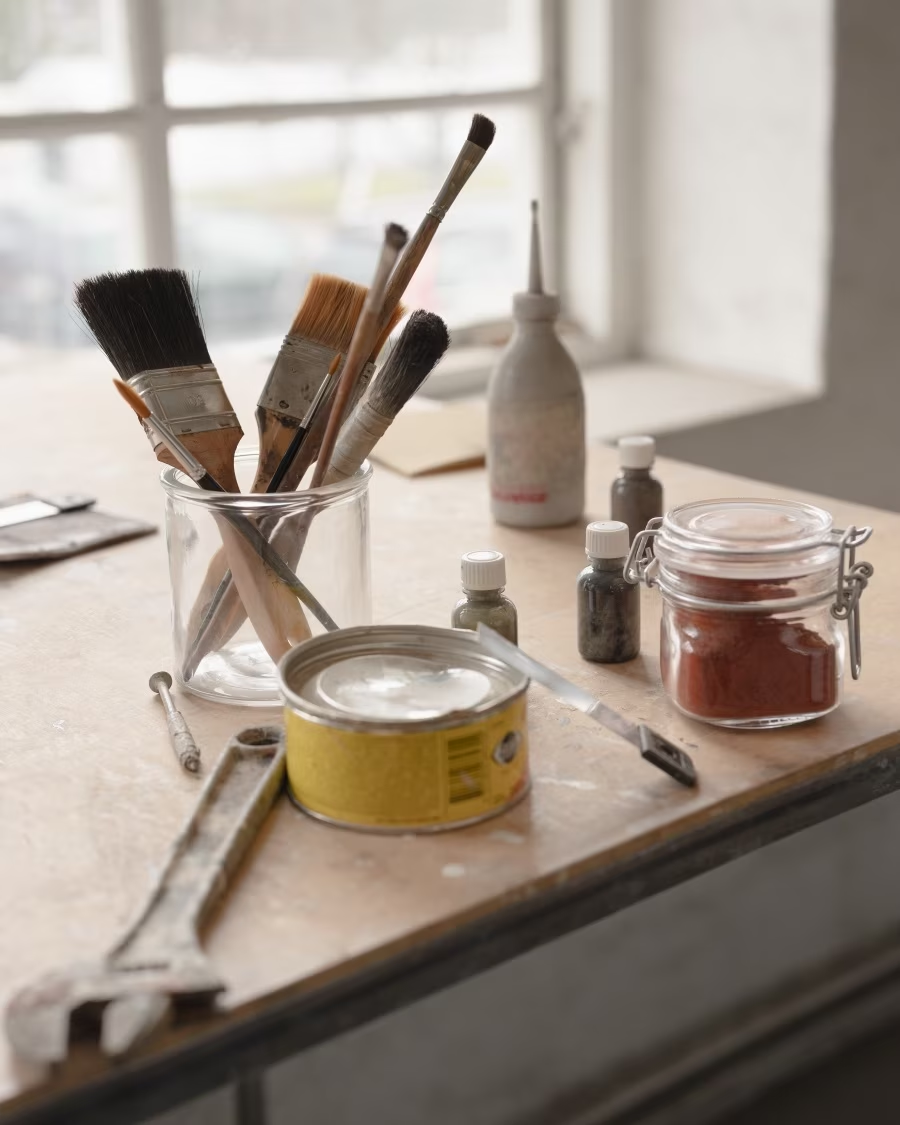
Tempera Paint: Quick Picks
Best mess-free option: Kwik Stix Solid Tempera Paint Sticks
Best washable paint for kids: Crayola Washable Tempera Paint
Best for classrooms and bulk: Ready-Mixed Poster Paint (600ml bottles)
Best for mixing your own: Tempera Powder Paint
Best for traditional egg tempera: Dry Pigments for Egg Tempera
What Is Tempera Paint?
Tempera is a fast-drying paint made from pigment bound with a water-soluble medium. The classic version, egg tempera, uses egg yolk as the binder, thinned with water. Other binders, such as casein (milk protein) and PVA, can also be used. The oldest examples we know of are thousands of years old, and it was the main medium for panel paintings and illuminated manuscripts across Byzantine, medieval and early Renaissance Europe. It was gradually replaced by oil paint from the fifteenth century, though it was revived in the nineteenth and twentieth centuries and is still the traditional medium for Orthodox icons.
The other kind is the tempera you’ll find in shops, and it’s a different product. School tempera, often sold as poster paint, is a cheap, bold, washable paint made with binders such as starch or gum rather than egg. The shared name is the source of the confusion, and it’s worth knowing which one you mean before you buy.
Egg Tempera Paint: The Traditional Medium
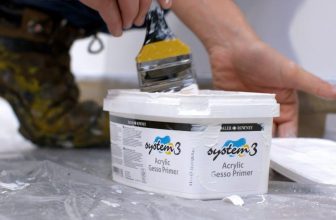
Egg tempera dries quickly and is built up in thin layers, often with many small cross-hatched strokes. It dries to a satin or slightly matte finish, and the colours are less saturated than oil paint, though they don’t darken or yellow with age the way oil does. It needs a rigid, absorbent surface. The traditional ground is gesso on a wooden panel, and canvas is a poor choice because the dry paint isn’t flexible enough and can crack. If you’re preparing a panel, my guide to the best gesso primer covers what to buy.
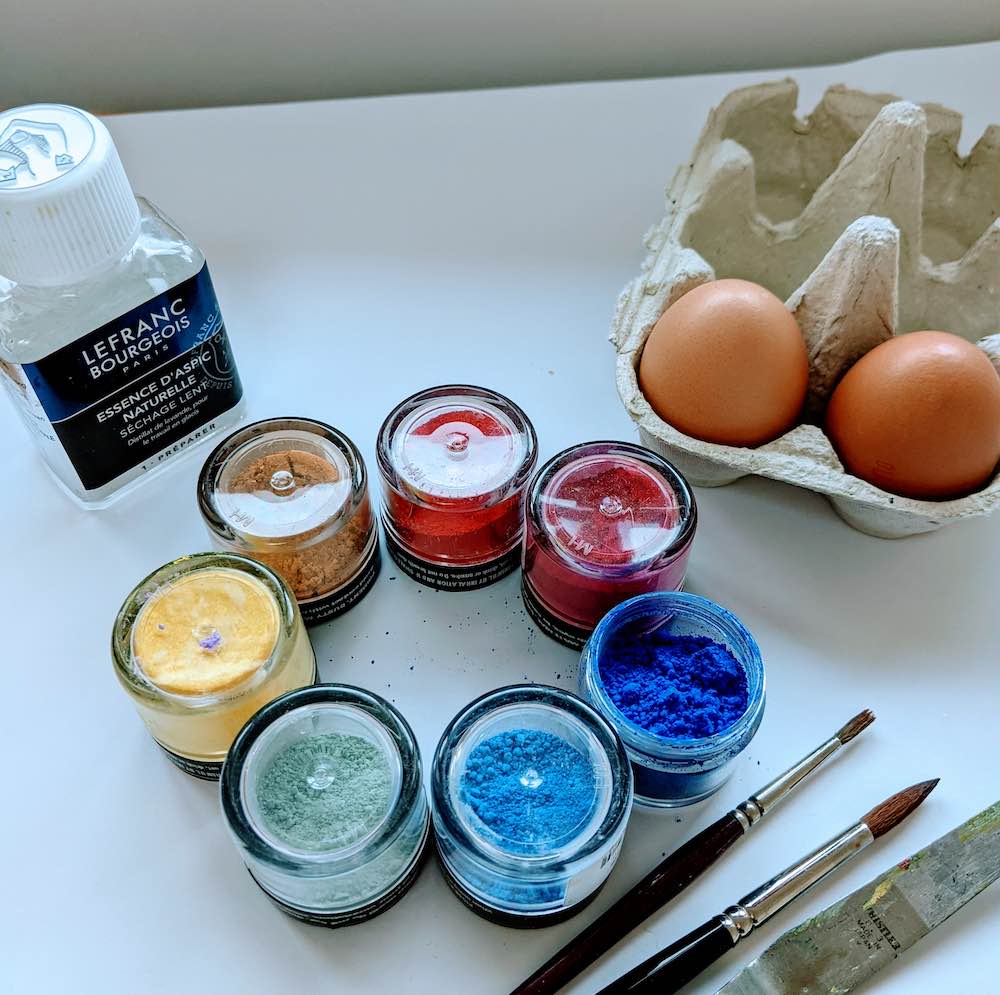
You can make egg tempera yourself by mixing dry pigment with egg yolk and a little water, which is how artists have done it for centuries. It takes a bit of practice, but it’s surprisingly simple, and it’s a lovely way to understand how paint works. A finished egg tempera painting needs a few months to cure fully before it becomes properly durable.
Tempera Paint vs Poster Paint
In the UK they’re essentially the same thing. Poster paint is the British name for what’s sold in the US as school tempera. Both are cheap, opaque, water-based paints used in classrooms, designed to be bold and easy to wash off. Egg tempera is the odd one out, a permanent fine-art medium that has little in common with a bottle of poster paint other than its name.
Tempera Paint vs Acrylic
School tempera stays water-soluble. It’s designed to wash off surfaces, and it can reactivate if it gets wet again. Acrylic dries to a flexible, water-resistant plastic film that’s permanent, so it’s much better for anything you want to last. For a child’s craft project or a school poster, tempera is cheaper and far easier to clean up. For canvas, outdoor work or anything you plan to keep, acrylic is the better choice. Egg tempera is closer to a traditional permanent medium, but it needs a rigid surface, so it’s a very different proposition.
1. Kwik Stix Solid Tempera Paint Sticks — Best Mess-Free Option
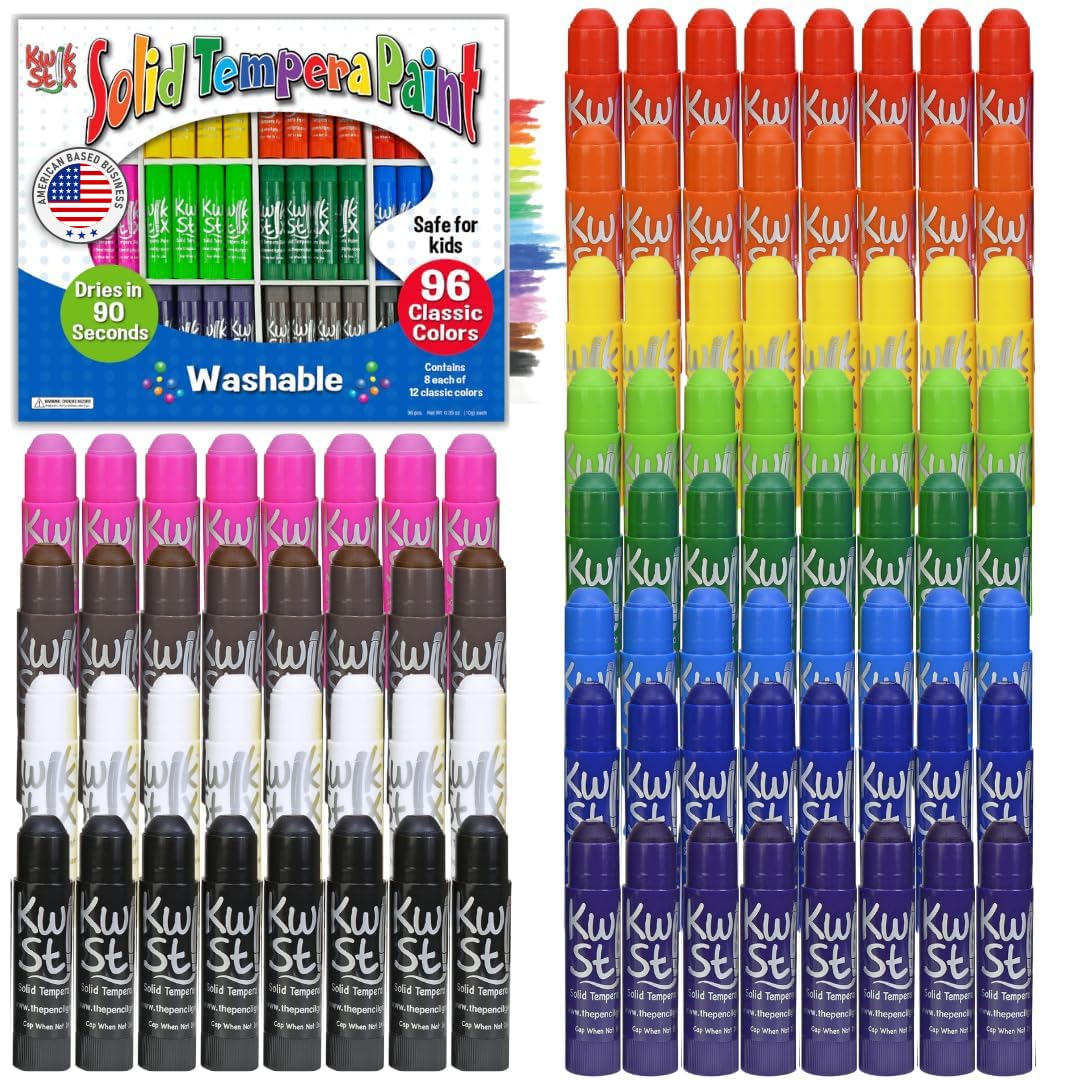
Kwik Stix are solid tempera sticks. You twist one up and paint with it, so there’s no water, no brushes and no pots to tip over. The maker says they dry in under 90 seconds, they wash off easily and they work on paper, card, wood, canvas, glass, rocks and more. They’re labelled suitable for children aged three and over.
For a house with young children, the lack of mess is the whole appeal, and I’ve seen how fast a tray of liquid paint can end up across a table. They won’t replace a proper brush for fine work, but for quick, bold colour they’re brilliant. Prices vary noticably between retailers, so check before you buy.
Check price on AmazonCompare prices
2. Crayola Washable Tempera Paint — Best Washable Paint for Kids
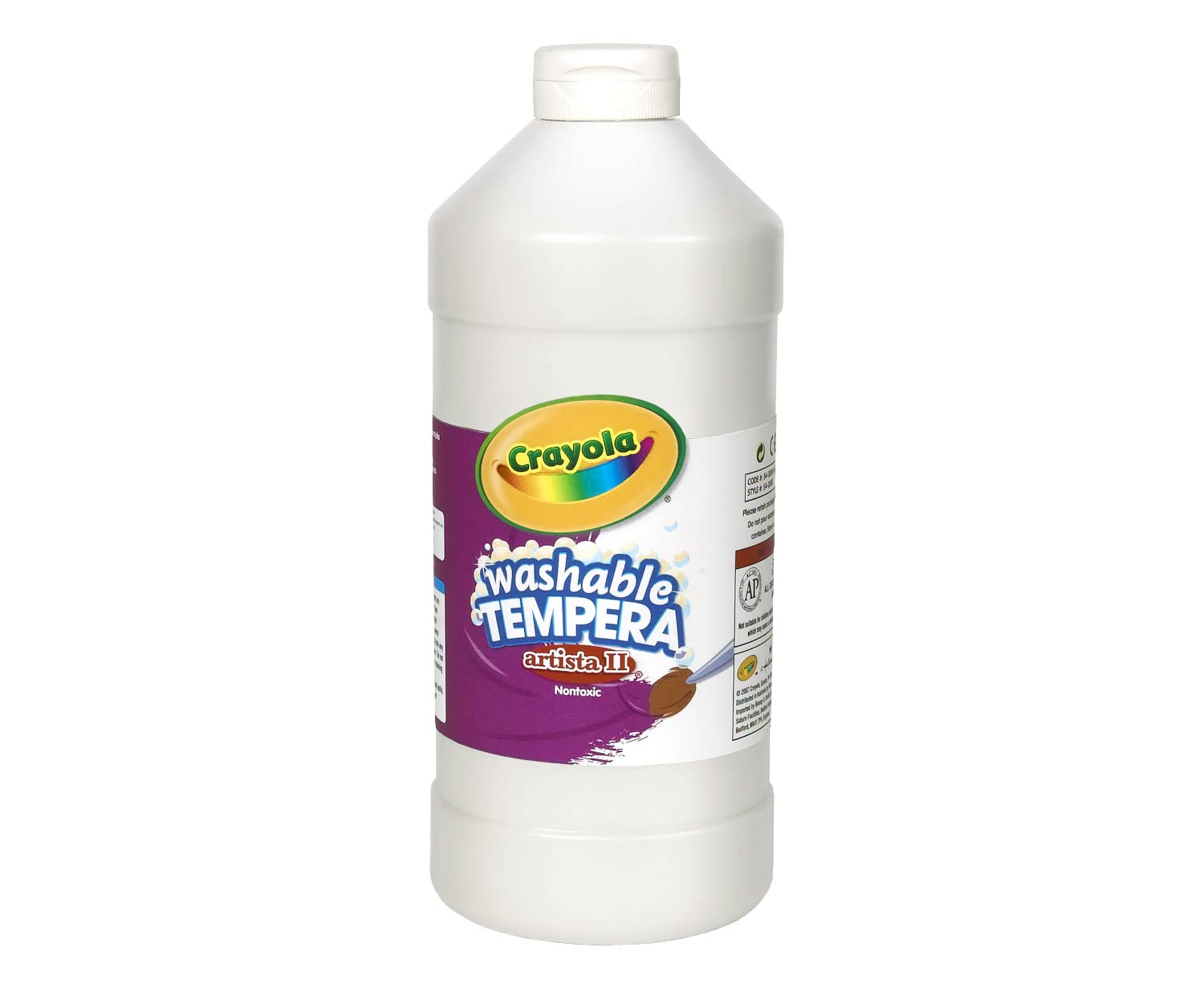
Crayola is the name most parents recognise, and its washable tempera is the standard ready-to-use paint for school and home. The point of a washable tempera is that it’s designed to come off surfaces and out of clothes easily, which is a big deal when your children paint with their whole bodies. Even so, old clothes are always a sensible idea, as some stains can linger.
I’d check the range available in the UK before you buy, as stock varies, and compare it with a standard ready-mixed poster paint, which does much the same job.
Check price on AmazonCompare prices
3. Ready-Mixed Poster Paint — Best for Classrooms and Bulk
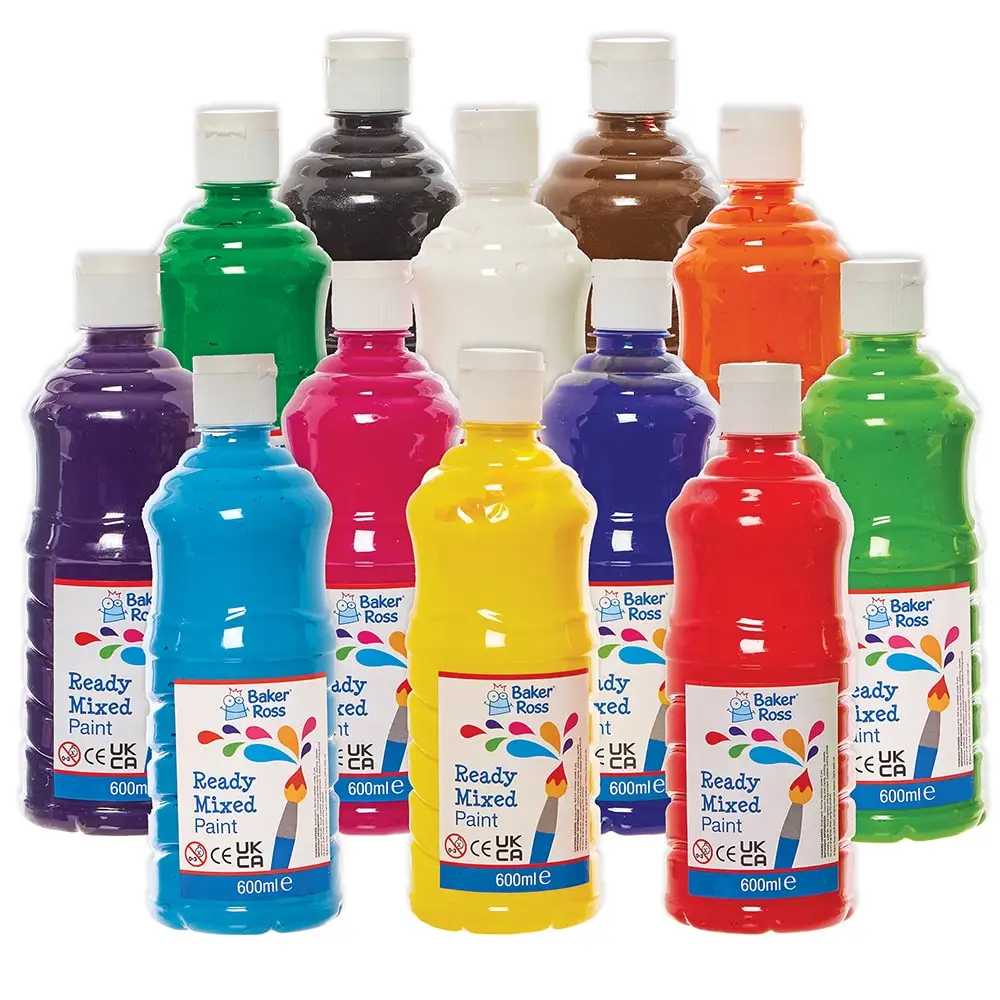
If you’re buying for a class, a club or a party, ready-mixed poster paint in large bottles is the cheapest way to get a lot of colour. It’s the paint most UK schools use, and it’s opaque, bold and quick drying. Brands such as Daler-Rowney make poster colour in a range of sizes, and the same bottle can vary a lot in price depending on where you buy it.
The trade-off is quality. Poster paint is built for cost and ease of use rather than lightfastness, so the colours will fade over time and it isn’t what you’d choose for work you want to keep. For classroom projects it’s ideal.
Check price on AmazonCompare prices
4. Tempera Powder Paint — Best for Mixing Your Own
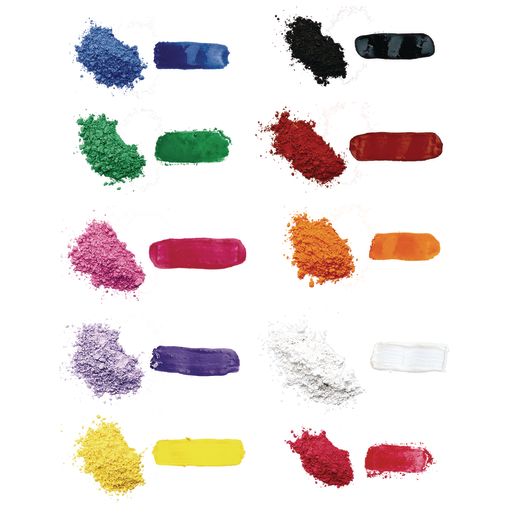
Powder tempera is sold dry and you mix it with water, which makes it light to store and very cheap per use. It lets you decide how thick or thin the paint is, and a little goes a long way, which suits teachers, community groups and anyone painting in volume. It does take a bit more effort than a ready-mixed bottle, and it’s messier to handle, so it’s better for older children and adults.
Check price on AmazonCompare prices
5. Dry Pigments for Egg Tempera — Best for the Traditional Method
If you’d like to try real egg tempera, you don’t need a special kit. You need dry pigment, an egg yolk, a little water and a rigid, gessoed surface. Pigment prices range from a couple of pounds to a good deal more depending on the colour, as some traditional pigments are expensive, so it’s worth starting with a small selection. Handle dry pigments carefully, wear a mask when working with powder and check the safety information, because some traditional pigments are toxic.
Check price on AmazonCompare prices
Where to Buy Tempera Paint Cheapest
Poster paint and tempera are sold at Hobbycraft, The Works, Amazon and specialist suppliers, and the price per litre can differ a lot. Our price comparison shows UK retailers side by side so you can see who’s cheapest today. Check delivery too, because paint is heavy and postage can wipe out a saving. If you’d like to hear about sales as they land, join the newsletter or our Facebook group of 15,000+ artists.
Frequently Asked Questions
What is tempera paint? Tempera is a fast-drying paint made from pigment and a water-soluble binder. The traditional form uses egg yolk, while the tempera sold for schools is a washable poster-style paint.
What is egg tempera paint? Egg tempera is a traditional paint made by mixing dry pigment with egg yolk and water. It dries quickly and is applied in thin layers on a rigid surface such as a gessoed panel.
Is tempera paint the same as poster paint? In the UK, school tempera and poster paint are essentially the same thing. Egg tempera is a different, traditional fine-art medium.
Is tempera paint washable? School tempera is designed to wash off surfaces easily, and many are labelled washable. Egg tempera is a permanent paint and isn’t washable once cured.
What is the difference between tempera and acrylic paint? School tempera stays water-soluble and washes off easily, while acrylic dries to a permanent, water-resistant film. Acrylic is better for work you want to keep.
Whichever kind of tempera you’re after, check the prices first. We compare UK retailers so you can see who’s cheapest without opening ten tabs. It’s wierd how much the same bottle can differ between shops, so the comparison really does matter. If you’re painting with children, lay down newspaper first, as it makes the enviroment around the table far easier to clean up, and you’ll recieve fewer complaints.