Written by Paul Worrall
The journaling pen question is one I get asked constantly, by the 36,000 artists and stationery lovers in the Discount Art Supplies community, in our Facebook group, and by people who’ve been journaling for years and still aren’t convinced they’ve found the right pen. It’s a fair obsession. The wrong pen genuinely ruins the experience: ink that bleeds through the page, a nib that drags, gel that smears every time your hand crosses what you’ve just written. I’ll happily admit I’m slightly unhinged about stationery after sixteen years in the art supplies industry. But it does mean I know what works.
These are my honest picks for the best journaling pens in the UK: the ones I’d actually buy, the ones our community reaches for, and the ones that have earned their reputation through consistent daily use rather than good marketing. I’ve linked each pen to Amazon so you can check today’s price, along with our own price comparison where we track it. Check for any current sale or discount before you buy.
Quick Picks
Best overall: Sakura Pigma Micron, waterproof and archival
Best gel pen: Pilot G2, smooth and refillable
Best for small handwriting: Muji Gel Ink pen
Best no-smudge pen (great for left-handers): Uni-ball Jetstream
Best fountain pen: Lamy Safari
Best brush pen: Tombow Dual Brush
Best highlighter: Zebra Mildliner
Best budget fineliner: Uni Pin
Each pick links to today’s price on Amazon.
What Actually Makes a Good Journaling Pen?
It’s worth saying quickly before the recommendations, because “best pen for journaling” covers an enormous range of needs. Someone writing dense daily diary entries in a small Leuchtturm needs something completely different to someone doing watercolour art journal pages with collage and mixed media. A bullet journalist tracking habits needs different ink properties to someone doing calligraphy headers and hand lettering spreads.
The things that matter across almost all journaling styles are consistent ink flow, bleed resistance on typical journal paper, comfort over longer writing sessions, and dry time, especially if you’re left-handed. A beautifull gel pen that smears every time your hand crosses the page is one of life’s minor but genuine frustrations, so I’ll flag dry time wherever it’s relevant.
Best Overall Journaling Pen: Sakura Pigma Micron
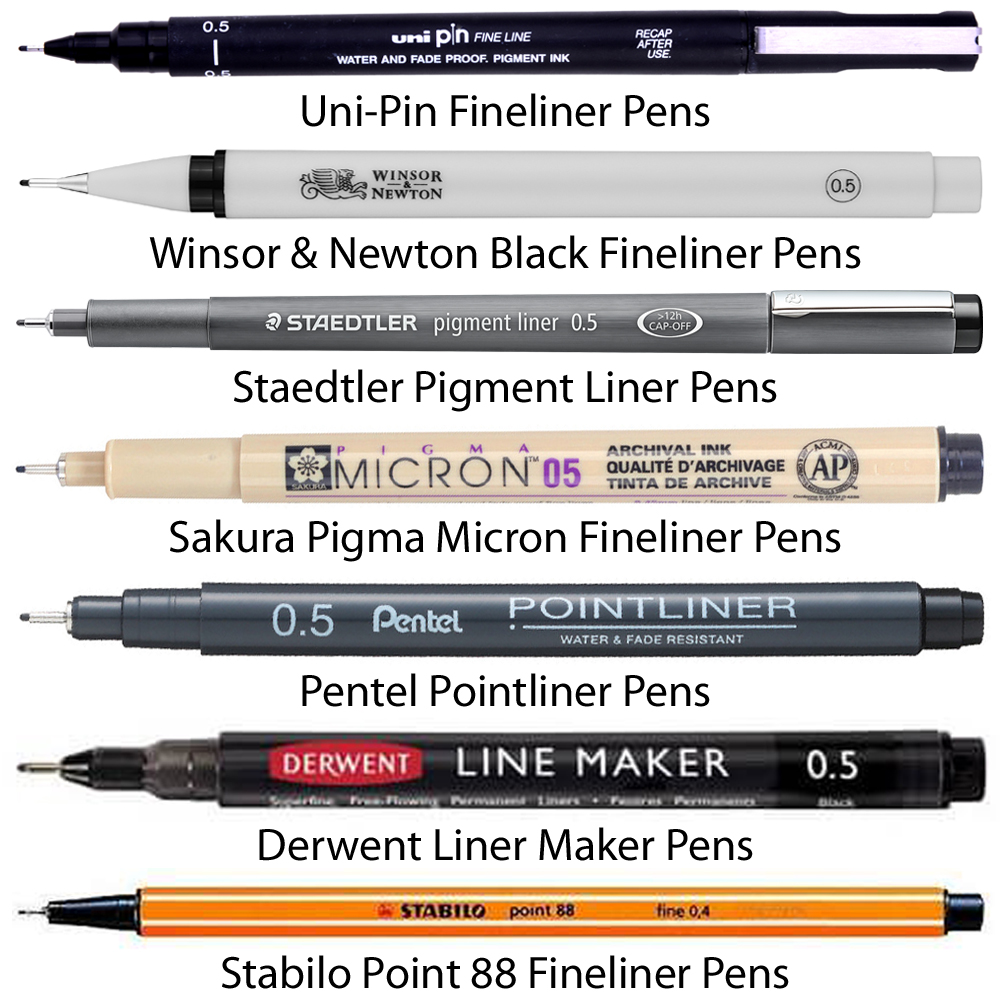
If you do any bullet journaling, hand lettering, drawing or doodling alongside your writing, and most journalers do at least some of this, the Sakura Pigma Micron is the pen I’d put in your hand first. It uses pigment-based, waterproof, archival ink. It won’t bleed if you add watercolour washes over it, it won’t fade over time, and it won’t feather on decent journal paper. The nib range runs from the tiny 005 (0.2mm) up to a brush tip, covering everything from precise grid work to loose illustration.
The Pigma Micron has become the default in the bullet journal community over the last decade, and it’s a deserved position. One caveat: on very smooth or coated paper it can take a moment longer to dry than you’d expect. On standard Leuchtturm or Rhodia paper it’s essentially instant. For a deeper look at sizes and colours, see our Sakura Pigma Micron guide.
Check today’s price on Amazon → Compare prices →
Best Gel Pen for Journaling: Pilot G2

The Pilot G2 is the gel pen I keep coming back to, year after year. It’s the benchmark: smooth, consistent ink flow, a dry time that suits most right-handed writers, a choice of nib sizes and a body that’s genuinely comfortable over longer sessions. The 0.7mm is the sweet spot for most journalers, fine enough for neat handwriting in a standard notebook and bold enough to feel satisfying on the page. If your paper is thin, drop to the 0.5mm, which bleeds less and dries faster. My kids have started nicking them from my desk, which I take as an endorsement.
The G2 is refillable, which matters if you journal daily and get through pens quickly. Refills cost much less than buying new pens, and the body is robust enough to last for years. It’s not exciting and it doesn’t have the romance of a fountain pen, but it’s reliably excellent in a way that matters over time.
Check today’s price on Amazon →
Best Pen for Small Handwriting: Muji Gel Ink Pen

Muji’s Gel Ink pens have a cult following in the journaling world, and it’s easy to see why. They’re cheap, minimal and write beautifully smoothly, and the very fine 0.38mm tip is perfect if you write small or fill tight spaces in a bullet journal or planner. The clean, slim barrels look great lined up on a desk too, which is half the appeal for a lot of people.
The ink dries fairly quickly for a gel pen, and the fine tips bleed far less than chunkier gel pens on thinner paper. The trade-off is that the ink isn’t as waterproof as a pigment fineliner, so it’s not the one to use under watercolour. And because they’re so cheap, it’s very easy to come home with every colour. You’ll find them in Muji stores and on Muji’s website. If you love Muji, our guide to the best Muji stationery in the UK covers the rest of the range.
Check today’s price on Amazon →
Best Pen That Doesn’t Smudge: Uni-ball Jetstream

If smudging is your biggest problem, and for left-handed journalers it usually is, the Uni-ball Jetstream is the pen I’d recommend. It uses a hybrid ink that writes with the smoothness of a gel pen but dries almost instantly, so you can drag your hand straight across a line you’ve just written without leaving a grey streak. That’s why it’s one of the most recommended pens for left-handers anywhere.
The Jetstream is also excellent on thin paper, because the ink sits on top rather than soaking through, so bleed-through and ghosting are minimal. It’s not as crisp as a fineliner for drawing, and the colours are more limited than gel pens, but for pure, fast, smudge-free writing in a daily journal it’s very hard to beat.
Check today’s price on Amazon →
Best Fountain Pen for Journaling: Lamy Safari

The fountain pen recommendation is always the most satisfying one to make, because journalers who switch almost never go back. Writing with a good fountain pen is a fundamentally different experience. The ink flows with virtually no pressure, which turns long writing sessions from something your hand tires of into something it can sustain almost indefinitely. If you’ve never tried journaling with a fountain pen, you’re missing something.
The Lamy Safari is the entry-level fountain pen I recommend without hesitation. It’s robust and reliable, comes in a range of nib widths, uses Lamy’s cartridge and converter system, and is priced accessibly enough that you’re not taking a big financial risk. The body is practically indestructable. I’ve seen Safaris survive conditions that would finish most pens. Start with the medium nib, or go for extra-fine if you write small or use thinner paper.
One honest note: paper matters more with fountain pens than with any other type. Cheap or thin paper will feather. Leuchtturm1917, Rhodia and Midori MD paper are all fountain pen-friendly and worth the investment if you’re committing to the format. Our guide to the best notebooks and journals for artists has more on choosing the right paper.
Check today’s price on Amazon →
Best Brush Pen for Art Journaling: Tombow Dual Brush
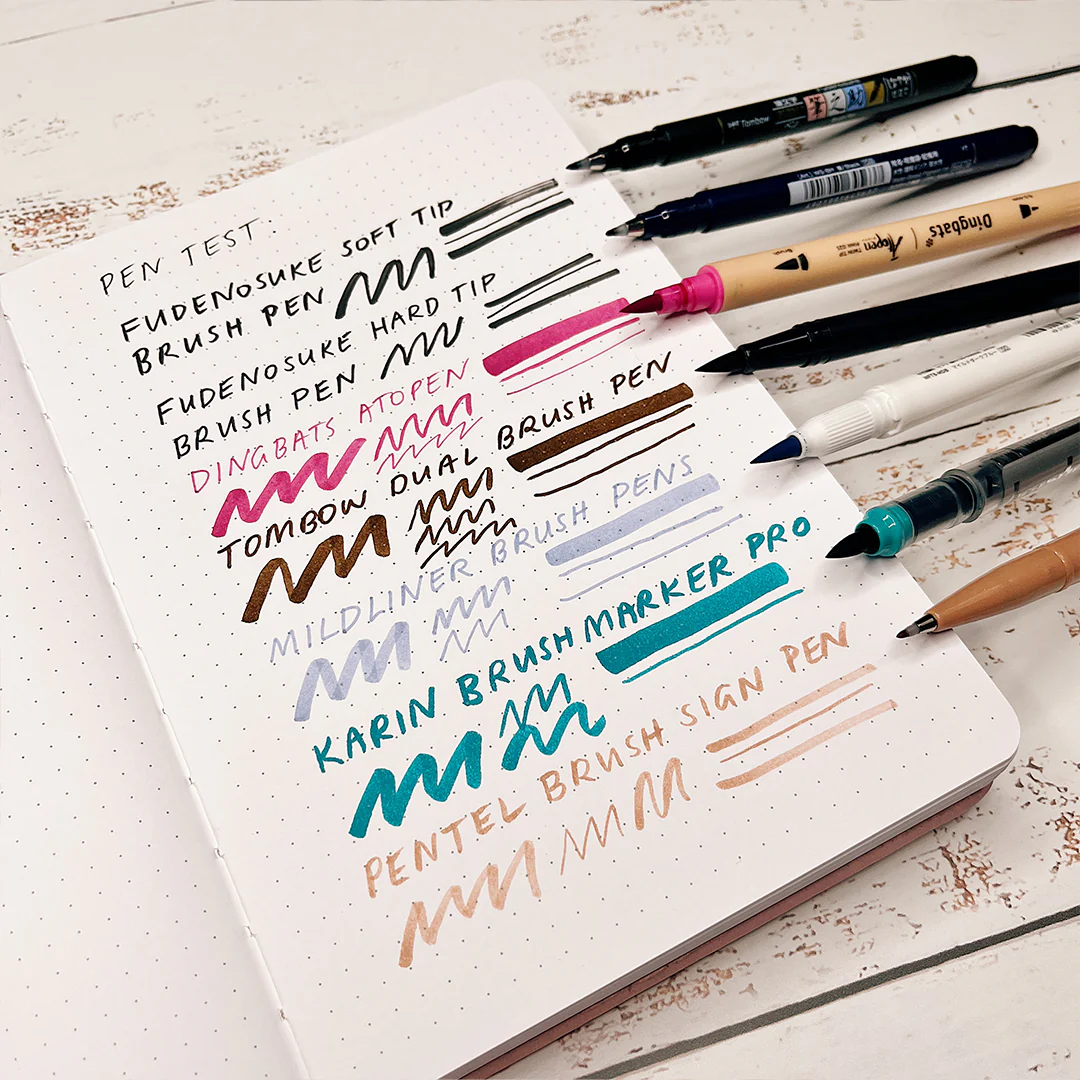
For art journalers, and there’s a big crossover between the journaling and mixed media communities, the Tombow Dual Brush is the pen that comes up again and again. You get two tips in one: a flexible brush tip for broad strokes, lettering and illustration, and a fine tip for detail. The water-based ink blends beautifully when wet, giving watercolour-like washes when you go over your marks with a damp brush or blender pen. The colour range is huge and the quality is excellent for the price.
It’s particularly useful if you do hand-lettered headers or loose illustration alongside your writing. The brush tip has enough flex to give real variation between thick and thin strokes without any calligraphy training. Sets work out better value than single pens if you’re building a colour palette.
Check today’s price on Amazon → Compare prices →
Best Highlighter for Journaling: Zebra Mildliner

The Zebra Mildliner has become the journaling community’s highlighter of choice, and it’s not hard to see why. The colours are soft and muted rather than the glaring fluorescent shades of office highlighters, so they sit on the page without shouting, and journal layouts look considered rather than chaotic. Each one is double-ended, with a broad chisel tip and a fine tip, so it works as a highlighter, a marker and a detail pen all at once.
The ink is also much less likely to bleed through typical journal paper than standard highlighters, which matters if you write on both sides of the page. Mildliners come in a wide range of colour sets, from soft pastels to brighter and cooler tones, so it’s worth getting more than one set if you colour-code your entries.
Check today’s price on Amazon →
Best Budget Journaling Pen: Uni Pin Fineliner
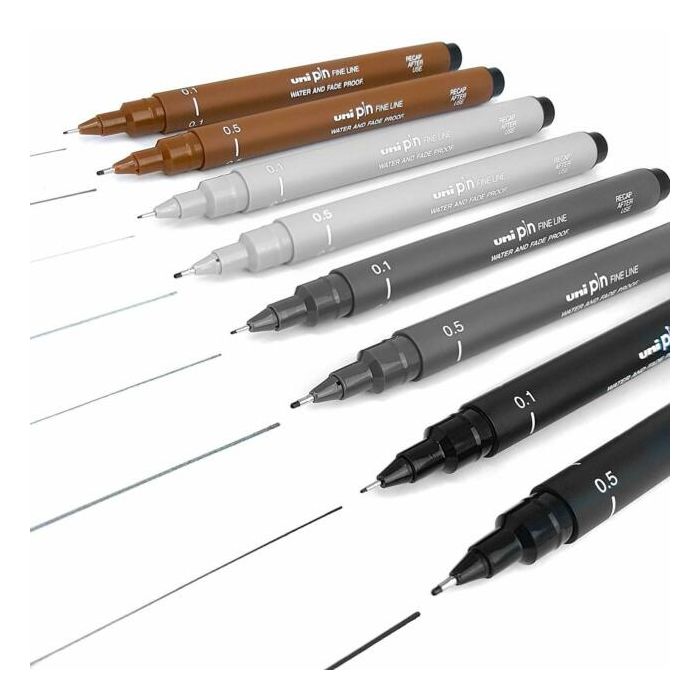
If budget matters, and for daily journalers who get through pens quickly it always does, the Uni Pin fineliner gives you the most quality for the least money. It has waterproof, fade-resistant pigment ink, a consistent line, good bleed resistance on most papers and sizes from 0.1mm up to 0.8mm. It’s not quite as refined as the Pigma Micron, but it’s competative in almost every technical respect at a noticeably lower price.
It’s especially popular with art journalers for working over watercolour backgrounds, because the waterproof ink holds up where cheaper fineliners would run. A set of three or four sizes covers most journaling needs without breaking the bank, even if you’re replacing them every few weeks.
Check today’s price on Amazon → Compare prices →
Pens for Journaling That Don’t Bleed or Ghost
Bleed-through is the most common journaling pen complaint, so it’s worth tackling directly. Ghosting, where you can see your writing from the other side of the page without the ink actually coming through, is its close cousin. The pens least likely to cause either are pigment fineliners like the Pigma Micron and Uni Pin, and fine ballpoints and hybrid pens like the Jetstream. If you want a gel pen, stick to fine tips such as the Pilot G2 0.5mm or a Muji 0.38mm. Fountain pens on good paper are also very low-bleed with a fine or extra-fine nib and a well-behaved ink.
What consistently causes bleed is oversaturated felt tips, broad gel nibs on thin paper, and very wet inks on paper that isn’t fountain pen-friendly. If your journal has thinner paper, as some Moleskines and cheaper notebooks do, stick to fineliners, ballpoints and hybrid pens.
Best Pens for Bullet Journaling
Bullet journaling has its own demands: grid work, ruler lines and a lot of switching between detail and decoration on the same spread. The setup I’d recommend is a Pilot G2 0.5mm or a Jetstream for everyday writing and task lists, a Sakura Pigma Micron 01 or 03 for headers, borders and detail, and a set of Zebra Mildliners for colour coding. That three-pen combination covers almost every bullet journal task, and none of it is expensive.
Where to Buy Journaling Pens in the UK, and How to Save
Amazon is usually the easiest place to buy every pen on this list, and it’s often the cheapest for sets and multipacks. Muji is the place for Muji pens. Ryman covers the basics on the high street, and Hobbycraft stocks Tombow, Mildliners and the more craft-focused ranges if you’d rather pick up in store.
Pen prices move around a lot, so it pays to compare before you buy. Black Friday in November and back to school in September bring the biggest savings on pen sets, and Amazon’s Prime Day deals often include Pilot, Uni and Zebra multipacks. Our daily deals page and biggest price drops track the best offers as they land.
Frequently Asked Questions
What is the best pen for journaling?
For most people, the Sakura Pigma Micron is the best all-round journaling pen. It uses waterproof, archival pigment ink that won’t bleed or fade, and it works for writing, bullet journal layouts and drawing. If you prefer a gel pen, the Pilot G2 is the most reliable choice.
Which pens don’t bleed through journal paper?
Pigment fineliners like the Sakura Pigma Micron and Uni Pin, and fine ballpoints and hybrid pens like the Uni-ball Jetstream, are the least likely to bleed through. Broad gel pens and juicy felt tips are the most likely to bleed, especially on thin paper.
What is the best journaling pen that doesn’t smudge?
The Uni-ball Jetstream is the best choice if smudging is a problem. Its hybrid ink dries almost instantly, which is why it’s so popular with left-handed writers. Fine gel pens such as the Pilot G2 0.5mm and Muji Gel Ink pens are also quick-drying options.
Are Muji pens good for journaling?
Yes. Muji Gel Ink pens are a favourite in the bullet journal community because they’re cheap, write smoothly and come in very fine tips that suit small handwriting. They’re less waterproof than pigment fineliners, so they’re not ideal under watercolour.
Where is the best place to buy journaling pens in the UK?
Amazon stocks almost every popular journaling pen and is often cheapest for sets and multipacks. Muji stores and the Muji website are best for Muji pens, while Hobbycraft and Ryman are handy if you want to buy in store. Black Friday and back to school are usually the best times to buy.
Best Pens for Journaling: Quick Summary
Best overall: Sakura Pigma Micron. Waterproof, archival and the bullet journal standard.
Best gel pen: Pilot G2. Reliable, refillable and universally excellent.
Best for small handwriting: Muji Gel Ink pen. Fine, smooth and cheap.
Best no-smudge pen: Uni-ball Jetstream. Dries almost instantly, ideal for left-handers.
Best fountain pen: Lamy Safari. An affordable way into fountain pens that transforms long writing sessions.
Best brush pen: Tombow Dual Brush. Blendable and versatile for lettering and art journaling.
Best highlighter: Zebra Mildliner. Soft colours, low bleed and double-ended.
Best budget fineliner: Uni Pin. Waterproof, consistent and excellent value.