Written by Paul Worrall
I get asked about notebooks almost as often as I get asked about paint. It makes sense — a sketchbook or journal is one of those purchases people agonise over more than they’d admit, because the wrong one genuinely puts you off using it. A notebook with paper too thin for your pens, or a cover that falls apart after a month in a bag, is a surprisingly common reason good journalling habits quietly die.
I’m Paul Worrall. I spent nearly a decade running digital marketing for ARTdiscount, one of the UK’s larger online art retailers, and I now run Discount Art Supplies — a price comparison platform used by over 41,000 UK artists every week. Here’s my honest breakdown of the notebooks and journals actually worth your money, and which one suits how you actually work.
Quick Picks
- Best all-round journal: Leuchtturm1917 A5 Dotted Notebook
- Best classic sketchbook feel: Moleskine Classic Notebook
- Best refillable system: Traveler’s Notebook (Leather, Regular Size)
- Best budget everyday notebook: Muji Recycled Paper Notebook
- Best luxury/gift option: Smythson Notebook
What size notebook do you actually need?
This trips more people up than it should. A5 (roughly 148 x 210mm) is the genuine all-rounder — big enough to draw or write comfortably, small enough to fit in most bags, and it’s the size most brands treat as their default. A4 gives significantly more working space and suits detailed studio sketching or anyone using it as a primary workbook rather than something they carry daily. A6 and pocket-sized notebooks are best kept for quick thumbnails, notes and ideas on the move — not somewhere you’ll do finished work, but importent for capturing things before you forget them. B5 sits between A4 and A5 and is popular with people who want more room than A5 without going all the way up to A4.
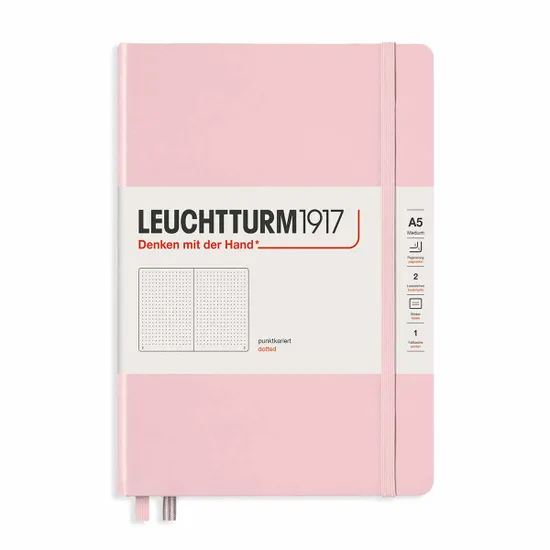
1. Leuchtturm1917 — the organised choice
Leuchtturm1917 has become the default recommendation for bullet journallers and fountain pen users, and it’s earned that reputation fairly. Numbered pages, a contents section at the front, two bookmark ribbons and an expandable inside pocket make it genuinely useful for anyone using a notebook as a working reference rather than a diary you fill once and forget. The 80gsm paper handles fountain pen ink noticeably better than most competitors, with minimal bleed-through even on wetter nibs.
The honest trade-off: it costs more than a basic notebook, and the functional, slightly utilitarian cover doesn’t have the same premium feel as Moleskine’s rounded corners and softer material. If you want a notebook that works as hard as you do, it’s worth the extra cost. If you want something that just feels nice to hold, it’s not quite as accessable an experience as some alternatives.
🛒 Buy Leuchtturm1917 on Amazon 🔍 Compare Prices
2. Moleskine — the classic sketchbook feel
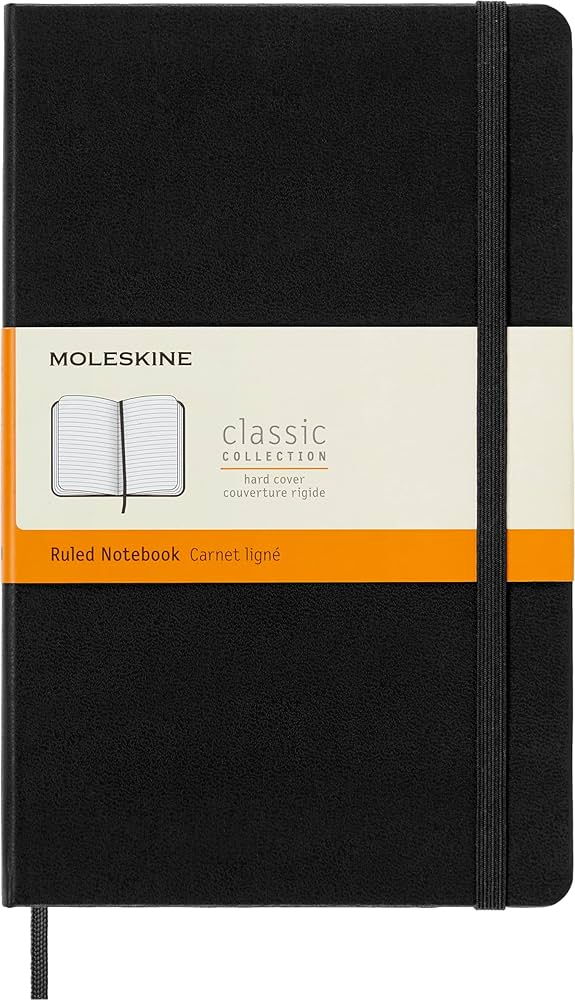
Moleskine remains the notebook most people picture when they imagine a “proper” sketchbook or journal, and there’s a reason the design has barely changed in years — it works. The elastic closure, rounded corners, expandable back pocket and soft-touch cover give it a tactile quality that’s hard to dislike, and it’s genuinely more widely stocked than any competitor here, which matters if you’re replacing one mid-project.
The trade-off is paper quality. Moleskine’s standard paper is thinner than Leuchtturm1917’s and prone to more ink bleed, particularly with fountain pens or heavier markers — fine for pencil, ballpoint or light sketching, less forgiving for wet media. Pages also aren’t numbered, so it’s not the best choice if you use your notebook as an ongoing reference.
🛒 Buy Moleskine on Amazon 🔍 Compare Prices
3. Traveler’s Notebook — the refillable option
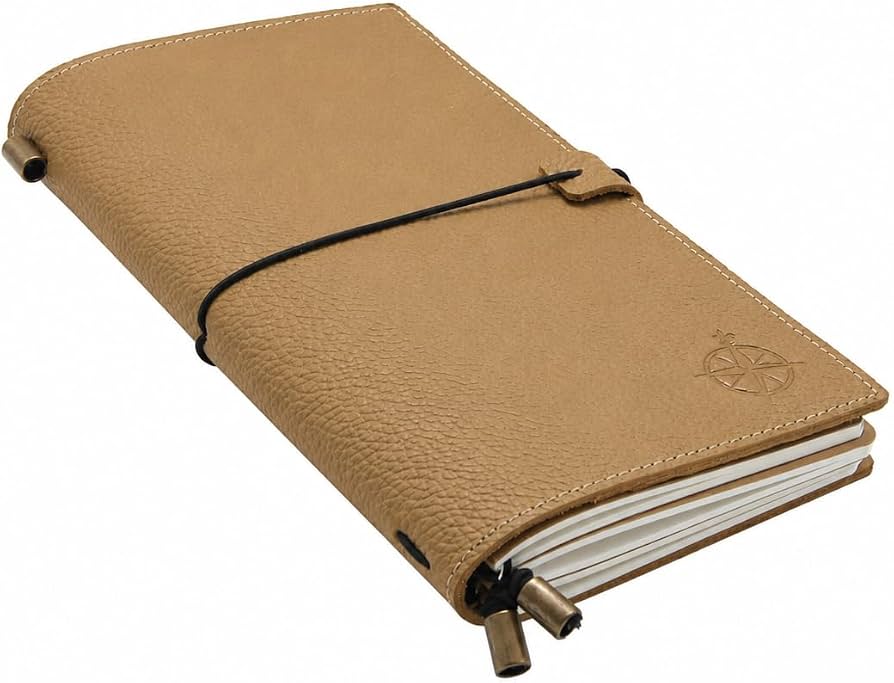
Originally launched by Midori in 2006 and now sold under the TRAVELER’S COMPANY name, this is the notebook for anyone who wants one cover for life rather than a new notebook every few months. The vegetable-tanned leather cover develops a genuine patina with use, and an elastic-and-clasp system lets you hold three or four paper refills at once — lined, blank, grid, or the popular dot grid insert — so you can mix note-taking and sketching in the same cover.
The honest trade-off: it’s an investment, and it takes a bit of setup to feel worth it. The refills themselves are relatively slim (64 pages each), so if you write or draw a lot you’ll be buying replacement inserts fairly regularly, and the total cost over a year can work out higher than it first appears. Where it wins is longevity — the leather cover itself should genuinely last decades.
🛒 Buy Traveler’s Notebook on Amazon 🔍 Compare Prices
4. Muji — the honest budget pick
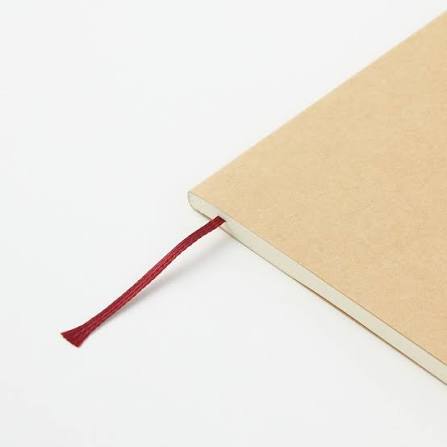
Muji’s plain, minimalist notebooks won’t excite anyone, and that’s rather the point. Simple recycled-paper covers, no branding to speak of, and prices well below any of the notebooks above make these a genuinely sensible everyday choice — for shopping lists, rough working notes, or students who’ll fill several a term and can’t justify a premium notebook for each one.
The trade-off is obvious: thinner paper, no numbering, no ribbon, no pocket. It’s a notebook, not a system. But not every notebook needs to be a keepsake, and for disposable daily use, Muji does the job without the guilt of using up an expensive one.
🛒 Buy Muji Notebooks on Amazon 🔍 Compare Prices
5. Smythson — the luxury/gift option
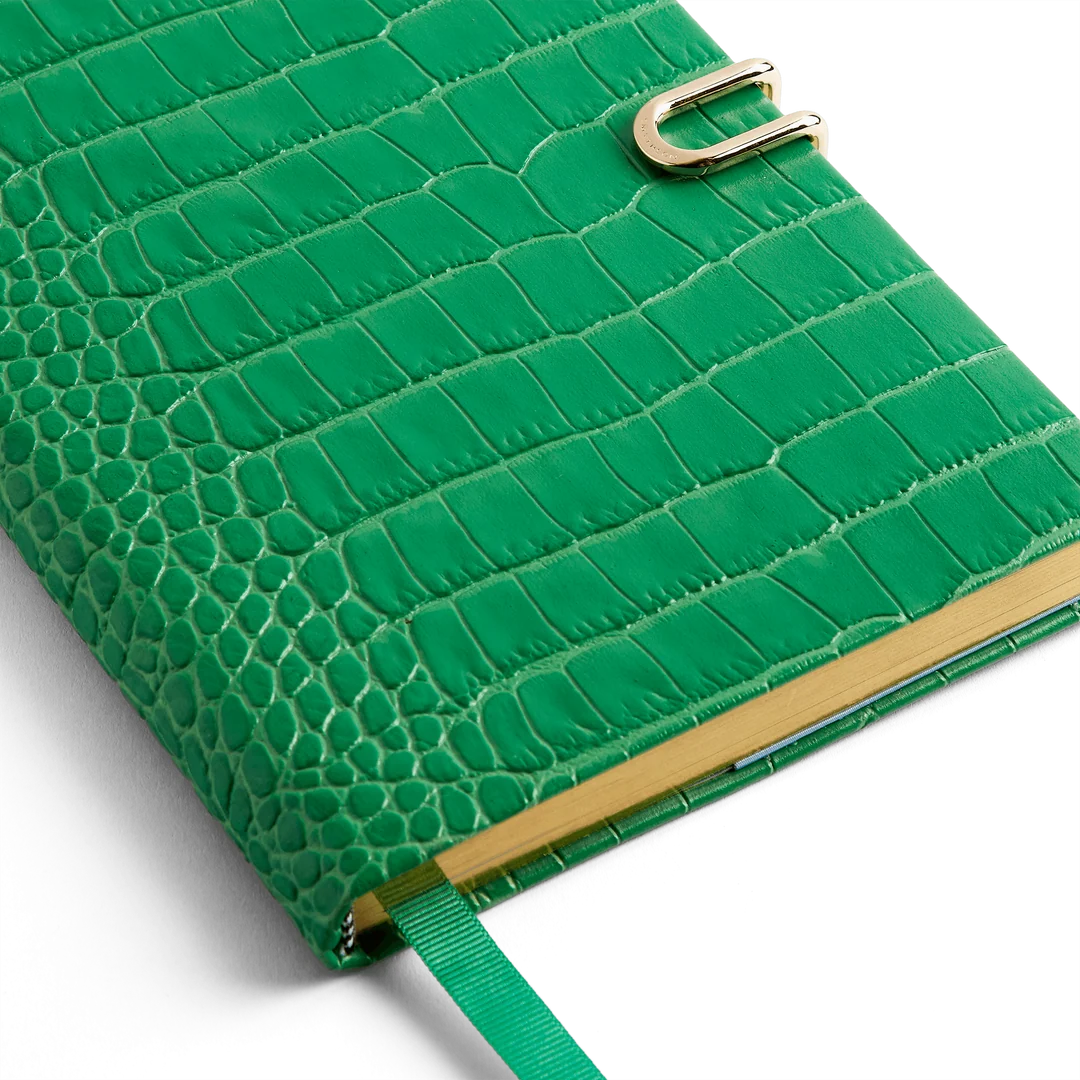
Smythson sits in a different category entirely — this is the notebook you buy as a gift, or for yourself when you want something that feels genuinely special. Featherweight paper, refined bindings and a level of finish well beyond anything else on this list. It’s a significent step up in price, and honestly, that’s the whole point — it’s not aiming to compete with Leuchtturm1917 or Moleskine on practicality.
🛒 Buy Smythson on Amazon 🔍 Compare Prices
Dotted, lined, or blank — which ruling should you choose?
Dotted (dot grid) pages have become the default for bullet journalling and sketchnoting — the faint dots give you just enough structure for straight lines and layout without the visual weight of full ruling, and most artists find them far less distracting than grid or lined pages when sketching. Lined suits pure writing and note-taking. Blank remains the purist’s choice for drawing and painting, since nothing on the page competes with the artwork. If you’re torn, a dotted hardback notebook is genuinely the most flexible middle ground for anyone splitting time between writing and sketching in the same book.
FAQ
What size notebook is best for sketching?
A5 is the most popular all-round size for sketching and journalling — big enough to work in comfortably, small enough to carry daily. A4 suits more detailed studio sketching, while A6 or pocket-sized notebooks are better for quick thumbnail sketches on the go.
Is dotted or blank better for a sketchbook?
Dotted pages give a faint structural guide that’s useful for layout, lettering and diagrams without the visual weight of full grid lines, which is why they’ve become popular with bullet journallers and sketchnote artists. For pure drawing and sketching, most artists still prefer fully blank pages so nothing interferes with the artwork.
What is the difference between Leuchtturm1917 and Moleskine?
Leuchtturm1917 notebooks have numbered pages, a contents page, two bookmark ribbons and typically heavier 80gsm paper. Moleskine notebooks are usually slightly thinner paper without page numbering, but have a more rounded, classic cover finish. Leuchtturm generally handles fountain pen ink better; Moleskine is more widely available and often cheaper.
Are refillable notebooks worth it?
For regular users, yes — a good refillable system like a Traveler’s Notebook or a disc-bound notebook lets you replace just the paper once it’s full, rather than buying an entirely new cover each time. It costs more upfront but works out cheaper over months of regular use, and lets you mix paper types in the same cover.
Whichever you land on, the paper matters more than the cover once you’re actually using it — if you’re pairing your notebook with fountain pens, alcohol markers or wet media, it’s worth reading up on paper weight before you buy. As always, check Discount Art Supplies before you buy — we compare prices across major UK retailers in real time, so you’re getting the best deal going.