Written by Paul Worrall
Palette knives get overlooked next to brushes, but they’re genuinely a different tool doing a different job — mixing paint without wasting any in bristles, and applying it thick enough to create texture a brush simply can’t. Worth understanding what actually matters before buying, since the range on offer is bigger than most people expect.
I’m Paul Worrall. I spent nearly a decade running digital marketing for ARTdiscount, one of the UK’s larger online art retailers, and I now run Discount Art Supplies — a price comparison platform used by over 41,000 UK artists every week.
Quick Picks
|
What Palette Knives Are Actually For
Two genuinely distinct jobs. The first is mixing — blending colours on your palette without paint getting trapped and wasted in brush bristles, which matters more than people expect once you’re mixing larger batches. The second is application — using the flat, flexible blade to apply paint directly to canvas in thick, textured strokes, known as impasto, creating a dimensional surface a brush can’t easily produce. Some knives are built more for one job than the other, which is worth knowing before you buy.
Plastic vs Metal
Plastic palette knives are genuinely fine for mixing paint on a palette and cost very little, making them a sensible first purchase while you’re still finding your feet. For actually applying paint to canvas, though, metal blades are consistantly the better choice — the flex and control of a proper steel blade is where the real technique in palette knife painting actually happens, and it’s importent to know a plastic knife simply can’t replicate that same responsiveness.
Winsor & Newton
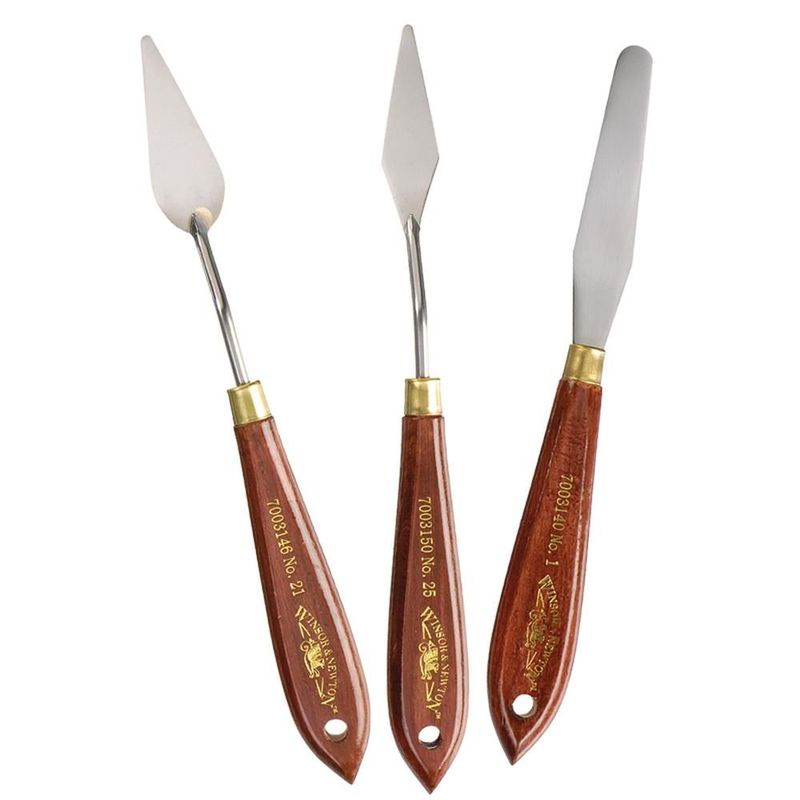
A genuinely classic, widely available range using a numbered system worth understanding — No.1 and No.2 are straight steel blades, No.4 and No.5 are the same but with a cranked shank for keeping your hand clear of the canvas surface, and the 20-30 series covers a range of more flexible painting knives specifically for mark-making. Flexible steel blades with a proper wooden handle, and a sensible, reliable starting point for most painters.
RGM
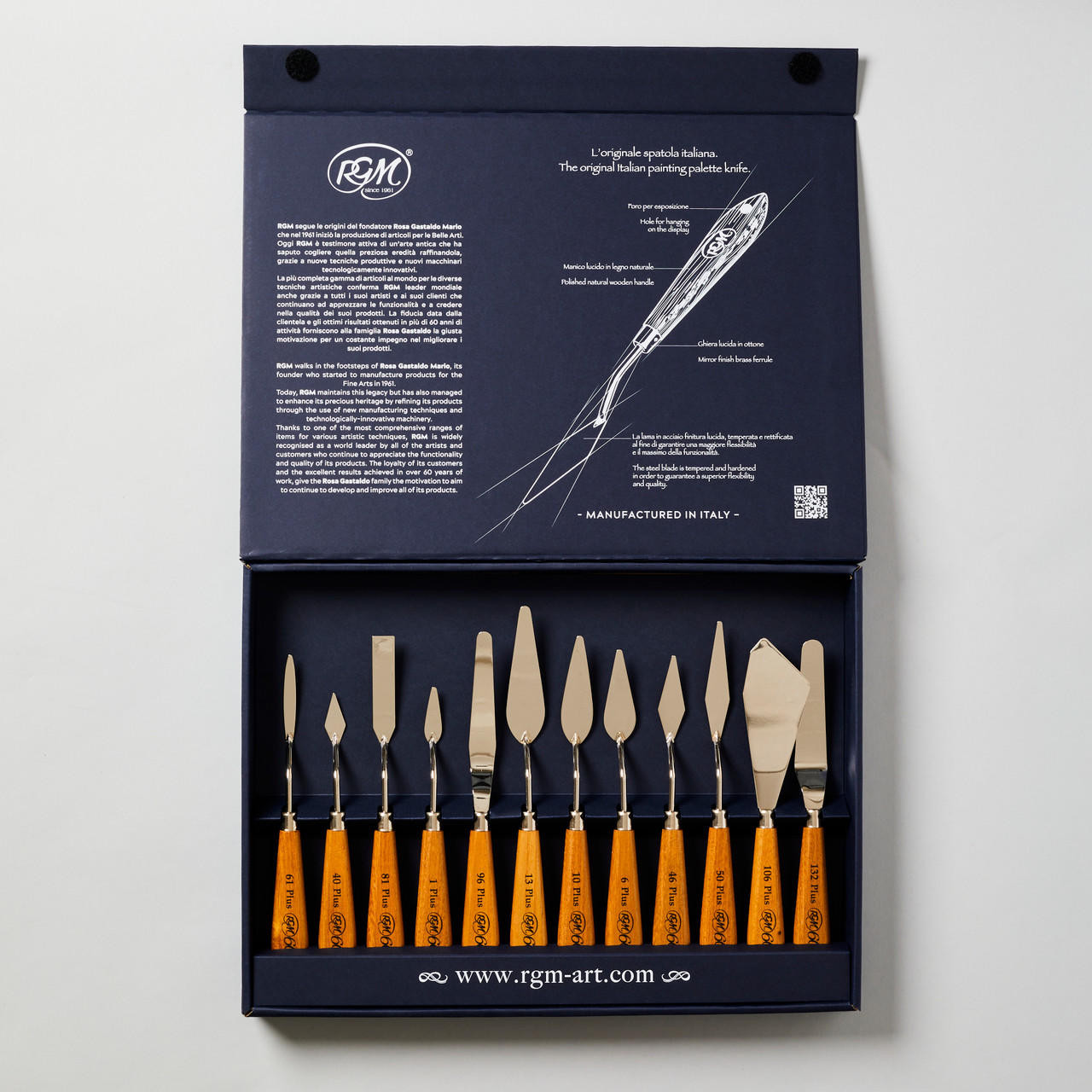
Crafted in Italy, RGM’s professional range uses hand-ground, tempered stainless steel blades for consistant flexibility, with rounded wooden handles and a brass ferrule. Genuinely well regarded among painters who work with impasto techniques regularly, and available in a wide enough range of shapes and sizes to cover almost any technique you’d want to try.
Liquitex and Budget Options
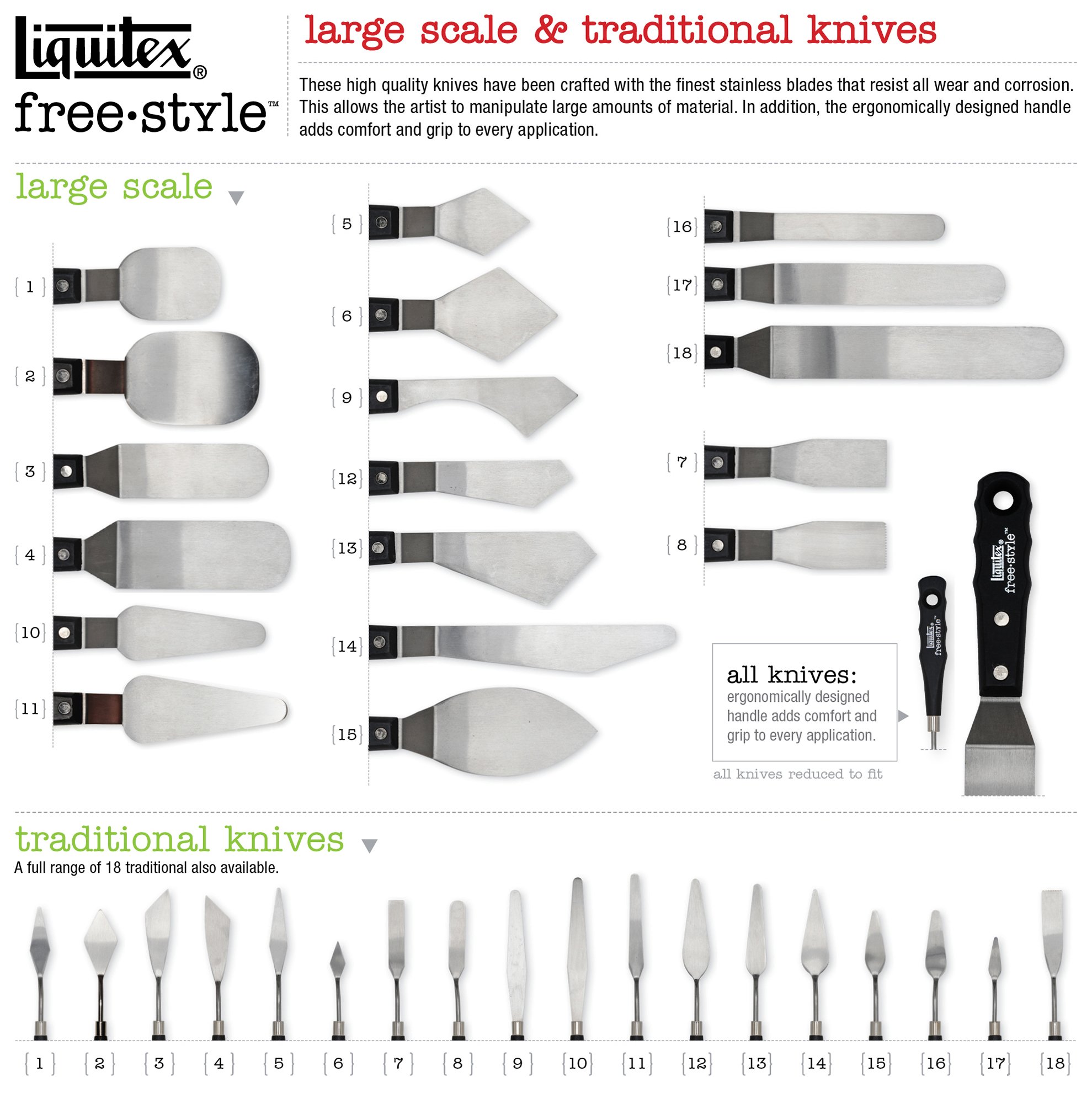
Liquitex offer inexpensive steel palette knives across several shapes, a genuinely sensible entry point if you’re still working out which shapes and sizes actually suit your painting style. Loxley and Jakar sit in a similar bracket — real, usable knives without the premium price tag of RGM or specialist brands.
Holbein — The Premium Option
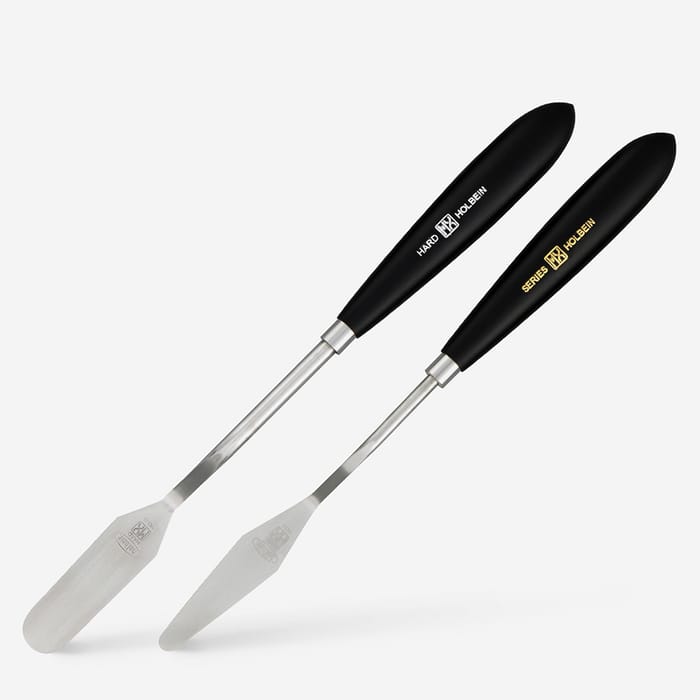
Genuinely worth knowing about specifically: Holbein’s painting knives are made by the same Japanese metalworkers who craft fine samurai swords — a real, unusual pedigree that shows in the blade quality. Not a necessary purchase for most painters, but worth considering if you’re serious about palette knife technique specifically and want the very best tool for it.
Oil vs Acrylic Use
Most palette knives work perfectly well across both oils and acrylics — there’s no need to buy separate sets for each medium. The one genuine thing to watch is acrylic drying hard and fast, which makes it consistantly harder to clean off a blade than oil paint if you leave it too long. Wipe knives down promptly after acrylic use rather than letting it set.
FAQ
What are palette knives actually used for?
Two main jobs: mixing paint on your palette without wasting any in brush bristles, and applying paint directly to the canvas for thick, textured impasto effects that a brush can’t easily achieve.
Should I buy plastic or metal palette knives?
Plastic is genuinely fine for mixing paint on a palette and is cheaper, but metal blades give far more control and flex for actually applying paint to canvas, which is where the real technique happens.
Can I use the same palette knife for oils and acrylics?
Yes, most palette knives work fine across both mediums. The main thing to watch is cleaning acrylic off promptly, since it dries hard and is harder to remove from a blade than oil paint.
If you’re building out your wider painting toolkit, my Best Acrylic and Oil Painting Brushes guide covers the rest of it. At Discount Art Supplies we compare prices across all the major UK art retailers in real time, so you can find the best current deal before you buy.