Written by Paul Worrall
When I was at ARTdiscount we had a print setup in the basement on Charnley Road that I used to produce everything from product photography to marketing materials. Nothing professional-grade by today’s standards — this was early to mid 2010s and the options available at a sensible price were considerably more limited than they are now. ARTdiscount actually ran a dedicated print arm for years called Print Discount — we also had a seperate website, posterprints.co.uk, built around a KIP large format poster printer that Granthams, the printing company we worked with, had just invested in. I remember standing watching that machine pump out A2 prints at a rate that felt genuinly extraordinary at the time. The whole print side of the business was a meaningful revenue stream for years before we wound it down. The gap between what a decent home studio printer can produce today and what required a professional setup like that fifteen years ago is genuinly staggering — the technology has moved faster in this category than almost any other.
The catch is that “printer for art prints” covers a genuinly wide range — from budget A3+ inkjets that handle occasional prints competently, through proper pigment-ink giclée machines, up to large-format studio presses that take up half a room. I’ve spent sixteen years in the UK art supplies industry and now run Discount Art Supplies, used by over 36,000 UK artists every week. Here’s the honest breakdown by budget and use case, with Amazon links so you can check current UK pricing before buying.
⭐ Best Printers for Art Prints — Quick Picks
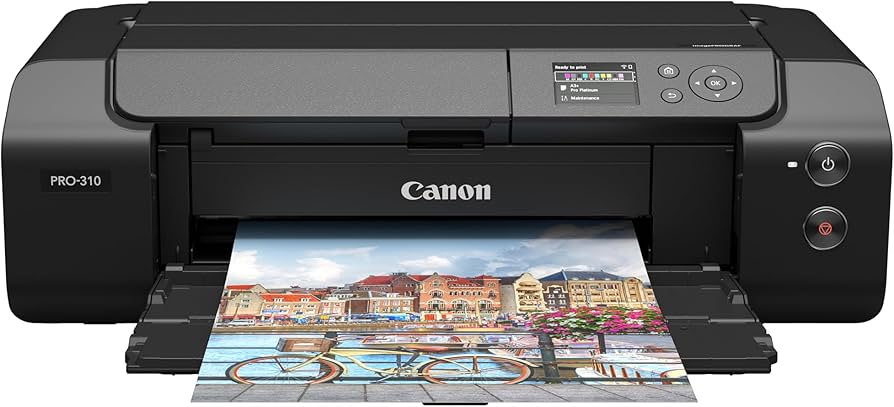
Best overall: Canon imagePROGRAF PRO-310 — 10-colour pigment system, the current benchmark for home studio fine art printing.
Best Epson alternative: Epson SureColor P700 — 10-colour UltraChrome PRO10 inks, exceptional on matte and fine art papers.
Best compact giclée: Canon imagePROGRAF PRO-300 — the PRO-310’s predecessor, still excellent and often available at a lower price.
Best for volume printing: Epson EcoTank ET-8550 — tank-based refilling means significantly lower ink costs per print over time.
Best mid-range: Canon PIXMA PRO-200 — 8-colour dye-based inks, superb for photographers and illustrators on a moderate budget.
Best budget A3+: Epson Expression Photo XP-15000 — 6-colour system, A3+ capable, the most accessible entry point for serious print quality.
Pigment vs Dye Inks — Why This Matters Before You Buy Anything
The single most important technical distinction in this whole guide, and the one most people skip past, is whether a printer uses pigment-based or dye-based inks. Dye inks produce vivid, saturated colour and are fine for proofing, greeting cards and any application where long-term lightfastness isn’t a concern. But they will fade — sometimes within a few years under normal display conditions — which makes them unsuitable for any print you intend to sell or frame seriously.
Pigment inks contain actual pigment particles suspended in liquid rather than dissolved dye, which means they’re inherently more lightfast — professional pigment printers claim 100-200 years for prints on archival paper. If you’re selling prints, framing work, or producing anything meant to last, pigment ink is not optional. The Canon PRO-300, PRO-310, the Epson SureColor range and the EcoTank ET-8550 all use pigment inks. The Canon PIXMA PRO-200 is the notable exception in this guide — it uses dye-based inks, which is why it performs beautifully on photo media but isn’t the choice for archival fine art work specifically.
Canon imagePROGRAF PRO-310 — The Best Overall Art Printer
The Canon imagePROGRAF PRO-310 is the current top pick across every serious independent review I found, and the reasoning is consistent. The 10-colour LUCIA PRO II pigment ink system — including a dedicated Chroma Optimizer that smooths ink surface texture on glossy media — delivers genuinly exceptional shadow detail, rich blacks and smooth tonal gradations that distinguish professional-grade pigment printing from everything a step below it. Prints up to A3+ (13×19 inches), handles borderless printing, and supports a wide range of fine art papers and canvas via rear and manual feeds.
The auto colour calibration system is a genuinly practical upgrade over the PRO-300 — it monitors and adjusts output to keep colours consistent as cartridges wear down, which matters considerably if you’re printing edition runs where consistency across multiple prints is essential. For artists who sell limited editions and need reliable colour matching across a batch, this is the kind of feature that justifies the price premium over earlier models.
Epson SureColor P700 — Best Epson Alternative

The Epson SureColor P700 is the direct Epson rival to the Canon PRO-310, using a 10-channel UltraChrome PRO10 pigment ink system and earning a particuarly strong reputation specifically for matte and fine art paper performance — the area most relevant to artists printing on Hahnemühle, Canson or similar specialist papers rather than glossy photo stock. Unlike older Epson models, the P700 has dedicated nozzles for both photo and matte black inks, eliminating the need to switch between them depending on paper type — a genuinly practical quality-of-life improvement anyone who’s dealt with older Epson Pro models will appreciate immediately.
Rated to 200+ years on archival paper, handles media up to 1.5mm thick, and includes roll feed for panoramic formats. For watercolour and fine art reproduction specifically, multiple independent tests rate it slightly ahead of the PRO-310 on matte papers, while the Canon tends to shade it on glossy. The honest answer is that both are excellent and the choice often comes down to existing preference for Canon or Epson ecosystems.
Canon imagePROGRAF PRO-300 — Best Compact Giclée

The Canon imagePROGRAF PRO-300 is the predecessor to the PRO-310 and still genuinly excellent — the same 10-ink LUCIA PRO system, the same A3+ capability, the same fine art paper support, without the auto colour calibration the newer model adds. If the PRO-310 is available at a premium that doesn’t suit your budget, the PRO-300 still represents one of the best “first serious giclée printer” purchases available, particularly if you’re printing in moderate rather than high volumes. Compact enough to sit on a studio table, handles heavyweight papers, supports borderless A3+ and integrates roll feed for panoramic work.
Epson EcoTank ET-8550 — Best for High Volume Printing
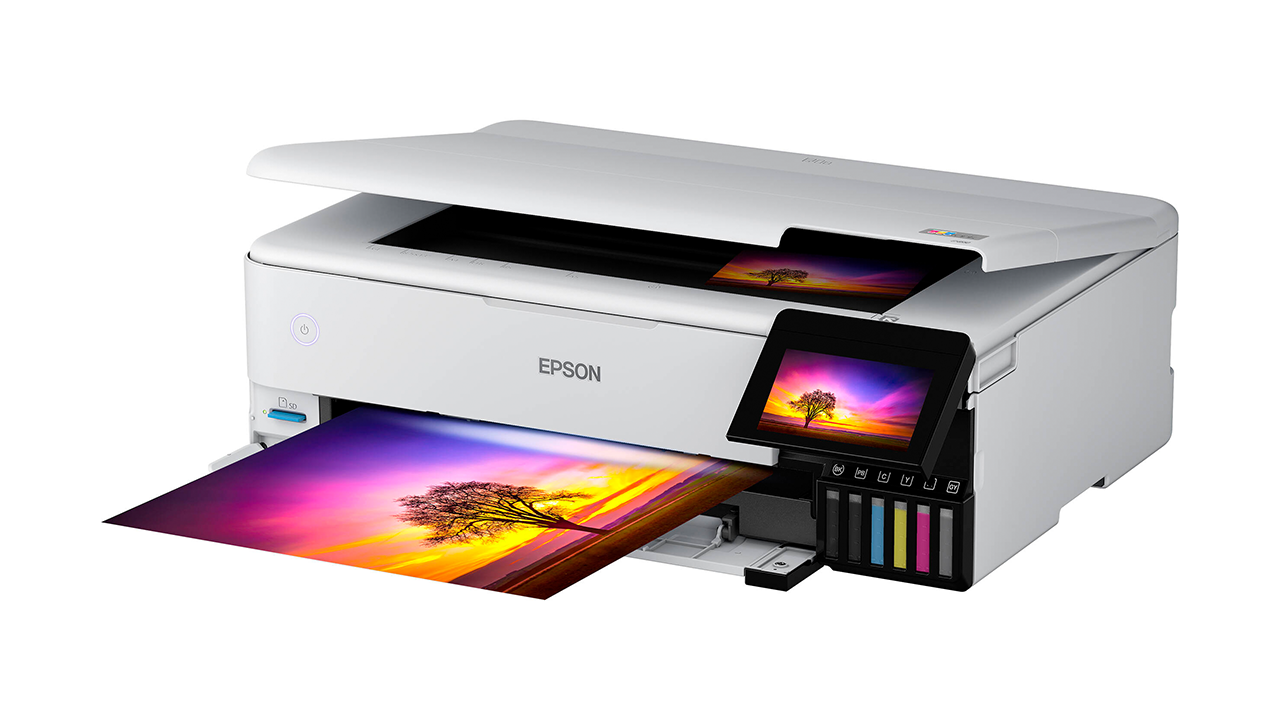
The Epson EcoTank ET-8550 approaches the print economics problem from a completely different angle to the cartridge-based models above. It uses refillable ink tanks rather than disposable cartridges, which reduces the cost per print considerably over time — the calculation that makes this printer genuinly compelling for anyone printing consistently at volume rather than occasionally. The 6-colour pigment ink system produces prints up to A3+ with 4800×2400 DPI, handles media up to 1.5mm thick, and is rated for archival performance. For artists printing greeting cards, postcards, portfolio copies or edition runs regularly and finding cartridge costs a constant frustration, the EcoTank model is the better long-term economic choice despite the higher upfront hardware cost.
Canon PIXMA PRO-200 — Best Mid-Range for Photographers and Illustrators

The Canon PIXMA PRO-200 sits at a more accessable price point than the imagePROGRAF models and earns consistent praise from photographers and illustrators for genuinly excellent colour gamut and smooth tonal gradations. The important honest caveat to repeat: it uses a dye-based ink system rather than pigment, which means it’s not the right choice if archival longevity matters for your prints. For illustrators creating prints for immediate sale and display, for photographers printing portfolios, or for anyone producing high-quality work where archival permanence isn’t the primary concern, the PRO-200 delivers superb results at a considerably lower price than the pigment alternatives above.
Epson Expression Photo XP-15000 — Best Budget A3+ Option
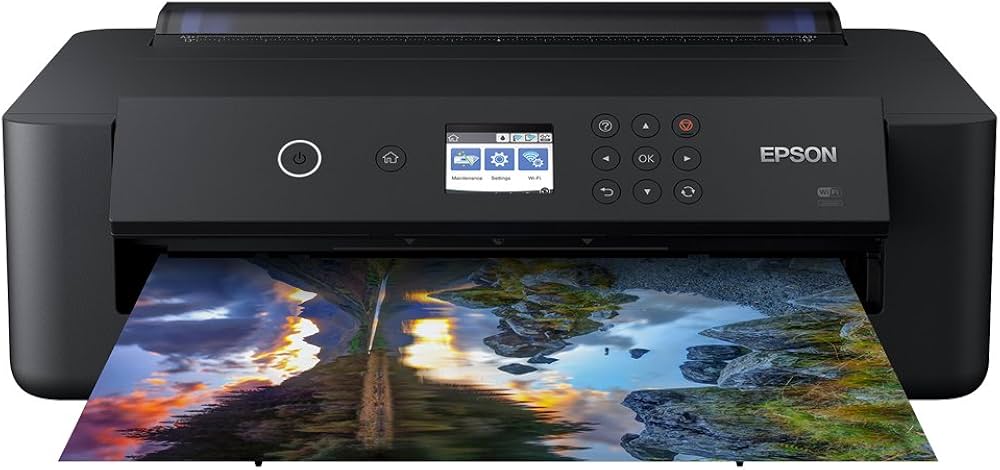
The Epson Expression Photo XP-15000 is consistently the most recommended budget A3+ printer for artists and illustrators who want to step beyond A4 printing without a major investment. The 6-colour dye-based ink system (same caveat as the PRO-200 on longevity) produces prints up to A3+ at 5760×1440 DPI, handles borderless printing, and the price is genuinly accessable compared to the professional models above. It also functions as a scanner and copier, which makes it a more versatile everyday studio tool than the dedicated print-only professional models. For beginners building a print practice, artists producing limited runs of cards and small prints, or anyone who wants to test the economics of home printing before committing to a professional-grade machine, this is the sensible starting point.
When You’d Be Better Off Using a Print Bureau

Worth being honest about this, given we already have a full guide to UK giclée printers — our best UK giclée printing companies article covers every major professional bureau in detail. For artists who print occasionally rather than regularly, the economics of a professional bureau often make more sense than buying and maintaining a home printer — ink cartridges don’t last indefinitely even without use, heads can clog if a printer sits unused for extended periods, and the per-print cost from a professional studio on proper Hahnemühle paper can be lower than the combined hardware and ink cost of occasional home printing. The crossover point where a home machine starts paying for itself tends to be around 10+ prints per month depending on the machine and paper. Below that, a bureau may genuinly be the better economic and quality choice.