Let me give you the answer straight, because most articles about this drag it out for 3,000 words before telling you anything useful.
If you’re an artist who sells work through a Shopify store and email is a serious part of how you make money — use Klaviyo. If you’re building an audience, sending newsletters, and aren’t yet generating meaningful e-commerce revenue through email — start with Mailchimp. That’s the short version.
The long version is more interesting. And the reason I can give you an honest one is that I’ve used both platforms professionally across different businesses and different stages of growth — not just for a test drive.
I spent nearly a decade running digital marketing at ARTdiscount, where I started out on Mailchimp in the early days before eventually migrating to Klaviyo as the business scaled. That transition taught me more about the difference between the two platforms than any comparison article ever could. I also used Klaviyo at HTI Group — the company behind Wowowtoys.co.uk, where I worked as E-commerce Manager — where automated retention flows drove a 23% repeat purchase rate on a D2C channel I scaled from zero to £700k in 18 months.
These days I run Discount Art Supplies — a UK price comparison and deals platform with 36,000 subscribers and a 50% open rate — and I use neither Mailchimp nor Klaviyo for it. I use Brevo. More on that in a moment, because it’s actually relevant to the decision you’re trying to make.
What You’re Actually Choosing Between
The mistake most people make when comparing these two is treating them as equivalent products at different price points. They’re not. They were built for fundamentally different purposes, and understanding that makes the decision much simpler.
Mailchimp was born in 2001 as a tool for sending newsletters reliably and affordably. It’s been expanded enormously since then, but that origin still shapes what it does best — it’s a marketing platform for businesses that want to communicate with their audience without needing deep technical knowledge or a dedicated marketing team.
Klaviyo was built in 2012 to solve a specific problem: how do you use customer behaviour data to trigger the right email at the right moment? It started as a customer database and added email later. That sequence matters. Klaviyo thinks in data first, messaging second. Mailchimp thinks in messaging first, data second.
For artists, that distinction plays out in very practical ways.
Mailchimp: Where It Works Well for Artists
There’s a version of the creative business where Mailchimp is genuinely the right tool — and it’s more common than Klaviyo advocates would have you believe.
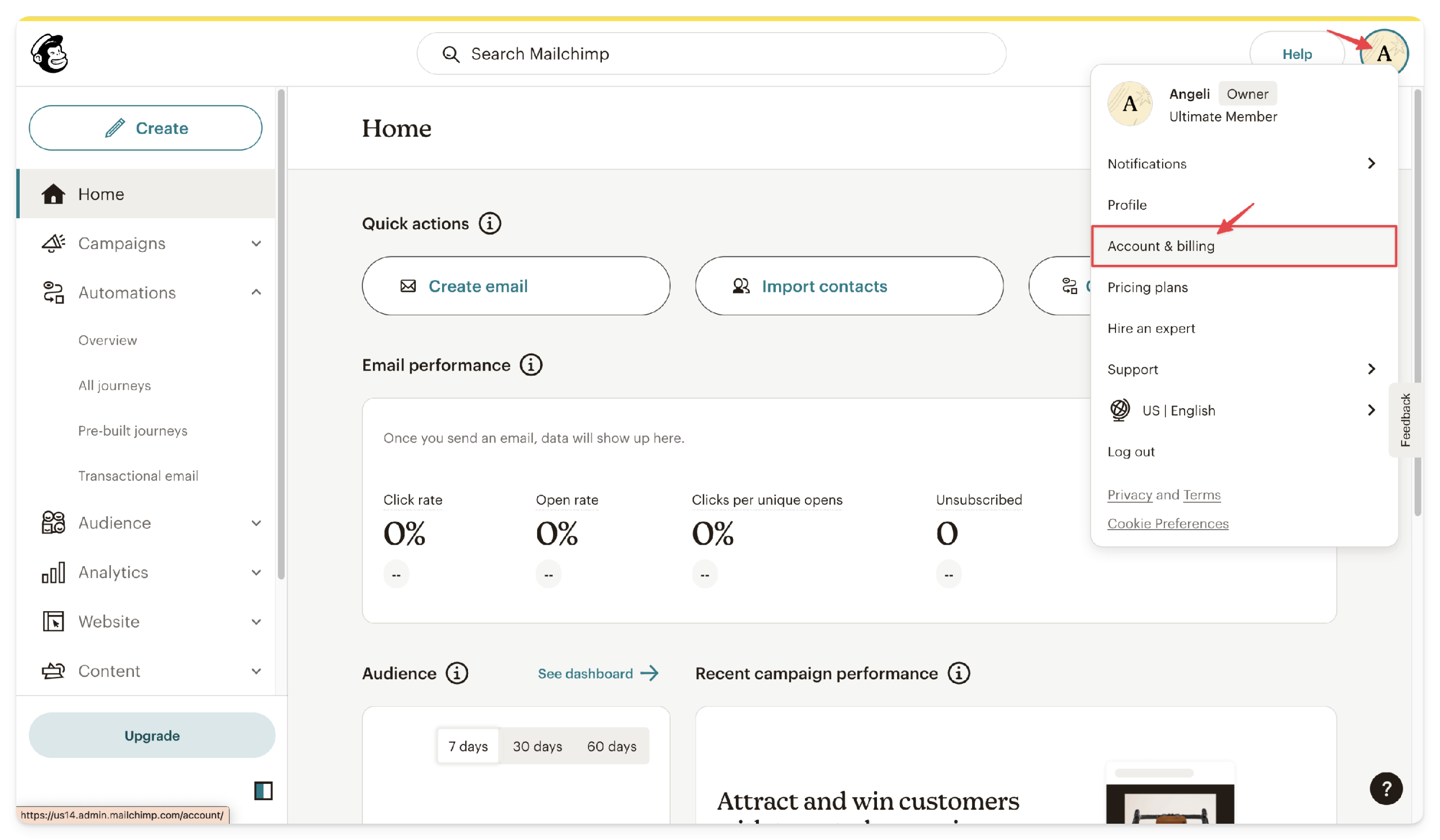
If you’re building an audience around your work, sending a regular newsletter, promoting new pieces, announcing exhibitions or workshops — Mailchimp handles all of that beautifully. The drag and drop email builder is excellent. The template library is extensive. You can be sending professional looking emails within a couple of hours of signing up, without reading a single help article.
When I first started using it at ARTdiscount, that ease of use was exactly what we needed. A small team, a growing list, and no appetite for a steep learning curve. Mailchimp got us up and running quickly and it did the job well at that stage of the business.
The free plan — up to 500 contacts — is genuinely useful for artists just starting to build their list. Paid plans start from around £10-13 per month and scale reasonably until you approach larger list sizes, where costs become harder to justify versus the alternatives.
Mailchimp also connects natively with Google Analytics — something Klaviyo doesn’t do as cleanly — which matters if you’re already tracking website traffic and want email data feeding into the same picture.
Klaviyo: Where It Pulls Ahead for Artists Who Sell
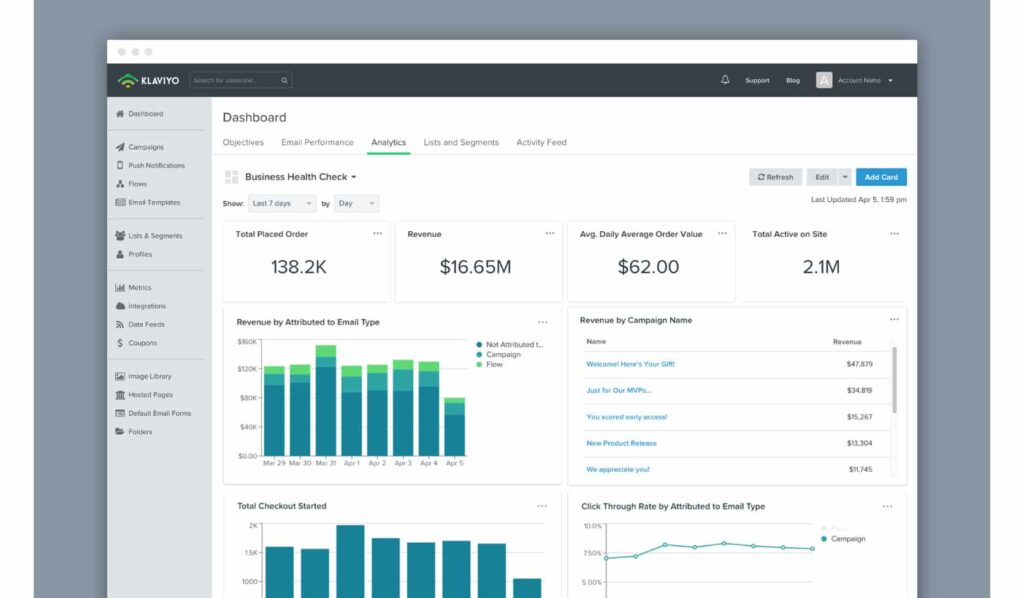
The moment you start taking e-commerce seriously — selling prints, originals, merchandise, digital downloads at any real volume — the calculus shifts considerably.
Klaviyo’s architecture is built around behavioural triggers. It watches what your customers do — which pages they visit, which products they view, what they add to their basket and don’t buy — and lets you automate responses to all of it. Browse abandonment flows. Abandoned cart sequences. Post-purchase upsells. Win-back campaigns for lapsed buyers. Price drop alerts.
Mailchimp has versions of some of these features. But there’s a meaningful gap in execution. At Wowowtoys, properly configured Klaviyo flows were one of the single biggest contributors to that 23% repeat purchase rate. The difference wasn’t the emails themselves — it was the intelligence behind when they sent and to whom. That’s something I couldn’t have replicated on Mailchimp at the same level, and I’d used both by that point so I knew what I was comparing.
At ARTdiscount, making the switch to Klaviyo from Mailchimp was part of what helped us build an email ecosystem generating over £400,000 in annual attributed revenue. The segmentation depth and automation capability simply wasn’t achievable on Mailchimp at the scale we were operating.
The Shopify integration in particular is where Klaviyo earns its premium. Real-time purchase data, product recommendation blocks in emails, predictive lifetime value scores. It connects to Shopify natively and deeply in a way Mailchimp simply doesn’t match.
One number worth knowing: according to Klaviyo’s own 2025 benchmark data, automated flows generate 30 times more revenue per recipient than broadcast campaigns. Thirty times. That’s a structural advantage, not a marginal one — and it’s only achievable with a platform that handles behavioural automation properly.
Why I Use Neither for Discount Art Supplies — And What That Tells You
This is the bit most comparison articles miss — and it’s genuinely useful context.
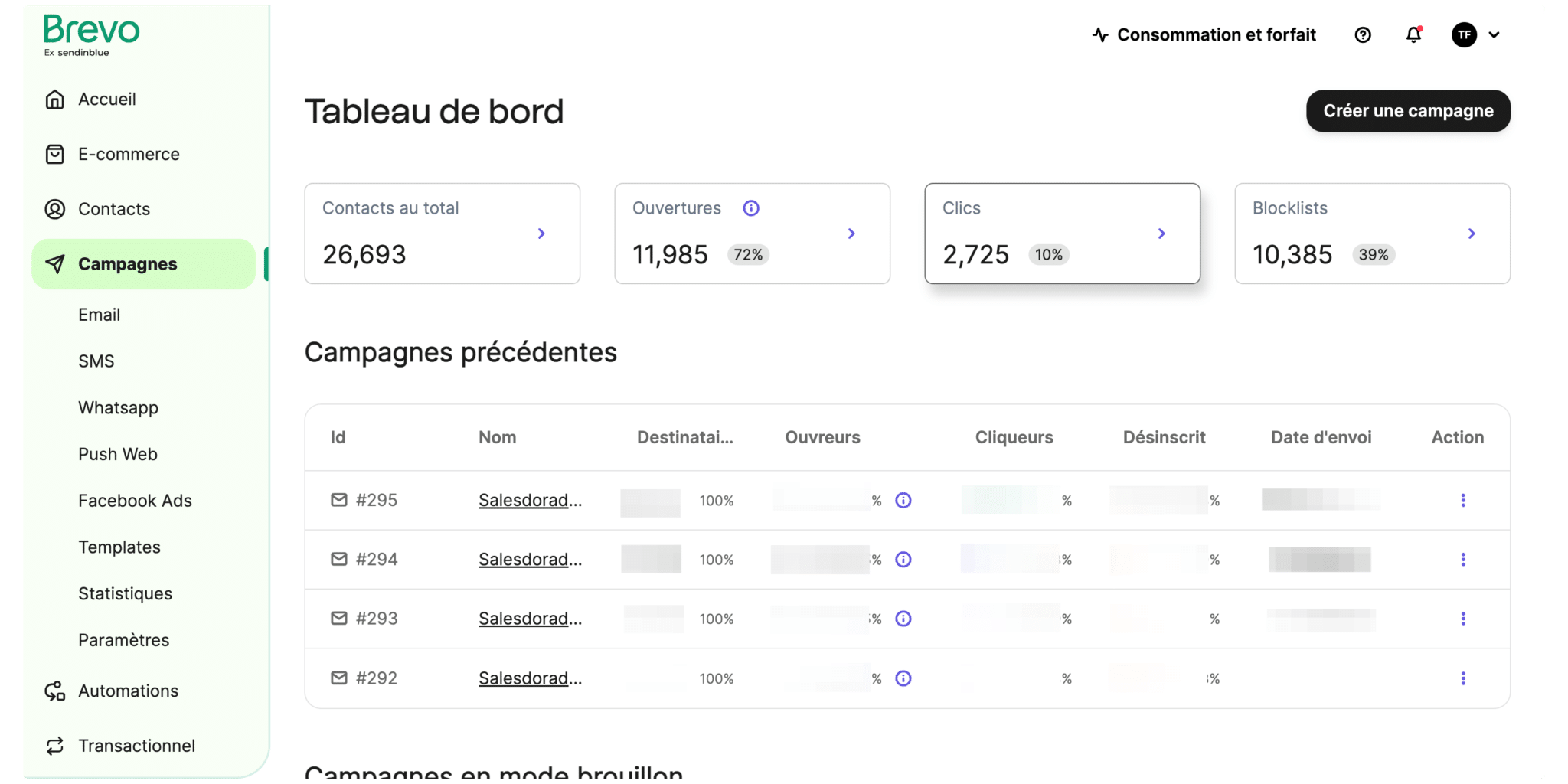
For Discount Art Supplies I use Brevo (formerly Sendinblue). And the reason is simple: I’m not selling anything through email. DAS is a content and deals platform. The weekly send to 36,000 subscribers is curated deals, editorial content and affiliate links — not an e-commerce transaction engine. I don’t need abandoned cart flows or browse abandonment sequences because there’s no cart to abandon.
Brevo prices by email volume rather than contact count, which makes it significantly cheaper at larger list sizes than either Mailchimp or Klaviyo. At 36,000 subscribers, Klaviyo would cost me a significant amount each month. Brevo handles the same sends at a fraction of the price — and those sends are generating 50% open rates and 17%+ click through rates, so the tool is clearly doing its job.
The lesson here for artists is that the right platform depends entirely on what you’re trying to do with email. If you’re a painter who wants to keep collectors updated, share new work and occasionally announce a sale — Brevo or Mailchimp. If you’re running a serious Shopify store where email is a primary revenue driver — Klaviyo. Those are different jobs and they deserve different tools.
The Pricing Reality in 2026
Klaviyo looks expensive on paper and Mailchimp looks affordable. The surface comparison is misleading once you factor in what each platform generates.
Mailchimp:
- Free up to 500 contacts
- Essentials from ~£10/month
- Standard from ~£15/month
- Premium from ~£285/month
Klaviyo:
- Free up to 250 contacts
- Email from ~£15/month (500 contacts)
- Scales significantly — 10,000 contacts around £150/month
At smaller list sizes Mailchimp is cheaper. That’s real. But the question worth asking is what the platform generates in revenue, not what it costs. A £150/month Klaviyo subscription driving £3,000 in monthly email revenue is considerably better value than a £50/month Mailchimp plan driving £800. Optimise for return, not subscription cost.
Which One Is Right for You?
Choose Mailchimp if:
- You’re building your first email list and want something easy to learn
- Your primary goal is a regular newsletter rather than automated sales sequences
- You sell occasionally rather than running a consistent e-commerce operation
- You’re under 2,500 subscribers and budget is a real consideration
Choose Klaviyo if:
- You run a Shopify store and email is a primary sales channel
- You sell prints, originals or merchandise regularly and want abandoned cart and browse abandonment flows
- You’re already above 2,500 subscribers and growing quickly
- You want to segment your audience by purchase behaviour rather than basic demographics
Consider Brevo if:
- You have a large list but email is primarily for content, deals or newsletters rather than product sales
- You want to keep costs down at scale without sacrificing deliverability
- You don’t need deep e-commerce automation
One thing I’d add from experience: don’t wait too long to migrate if you know you need Klaviyo. The longer you build your audience in Mailchimp, the more involved the migration becomes. It’s not as painful as people fear — Klaviyo has decent migration tools — but earlier is genuinely easier.
A Final Thought
Whichever platform you choose, the tool is only part of the story. I’ve seen well-configured Klaviyo accounts generating almost nothing because the underlying email strategy was weak. And I’ve seen scrappily set up Mailchimp accounts generating meaningful revenue because the person behind them understood their audience and wrote emails people actually wanted to read.
Lucy reads my DAS emails before they go out — not as a marketing professional, just as someone who isn’t particularly interested in art supplies. If she finds them worth reading, I know I’ve written something decent. That’s as useful a test as any open rate dashboard.
If you’re thinking about selling your art online more seriously, also worth reading our guides on Printful vs Printify for UK artists and the best portfolio builders for UK artists.
Try Them For Yourself
| Platform | Best For | Free Plan | Get Started |
|---|---|---|---|
| Klaviyo | Artists selling via Shopify | Up to 250 contacts | Try Klaviyo |
| Mailchimp | Beginners & newsletter senders | Up to 500 contacts | Try Mailchimp |
| Brevo | Large lists, content & deals | 300 emails/day free | Try Brevo |
| Mailerlite | Budget-friendly beginners | Up to 1,000 contacts | Try Mailerlite |