
Written by Paul Worrall
Airbrushing comes up a lot alongside my miniature painting brushes guide — it’s the tool that takes base coats and large area work from “fine with a brush” to genuinely smooth and professional-looking. Worth a proper honest look at what actually matters when buying one, since the market is genuinely confusing once you start looking.
I’m Paul Worrall. I spent nearly a decade running digital marketing for ARTdiscount, one of the UK’s larger online art retailers, and I now run Discount Art Supplies — a price comparison platform used by over 41,000 UK artists every week.
Quick Picks
Airbrush or Compressor: What You’re Actually Buying
An airbrush and a compressor are two separate pieces of kit that work together — the compressor provides the airflow, the airbrush controls how paint is atomised and sprayed. Some starter kits bundle both together, which is genuinely the sensible route for a first purchase, since compatibility between separately bought units isn’t always straightforward.
What Actually Matters in a Compressor
Adjustable pressure matters more than a high maximum PSI figure printed on the box. Most miniature painting and detail work happens somewhere between 15 and 30 PSI, with thinner airbrush-specific paints and primers often needing under 22 PSI — a compressor that only runs at one fixed high pressure genuinely limits what you can do with it. A small air tank is worth having too, since it smooths out pulsing in the airflow that would otherwise cause speckling, particularly at lower pressures. An oil-less design is importent for anyone using acrylics, since it avoids contamination risk and cuts down on maintenance. A built-in moisture trap is genuinely worth having in the UK specifically, given how much air humidity can affect spray consistency.
Iwata
A Japanese brand widely regarded as one of the best in the airbrushing world, known for dual-action, gravity-feed airbrushes that handle both fine detail and thicker acrylic coverage well. Genuinely durable — an Iwata airbrush is often described as one you’ll own for life rather than replace in a couple of years. The trade-off is price, sitting noticeably above most competitors, which makes it more of an investment once you already know you’ll stick with airbrushing rather than a first purchase to test the water.
Badger and Sparmax
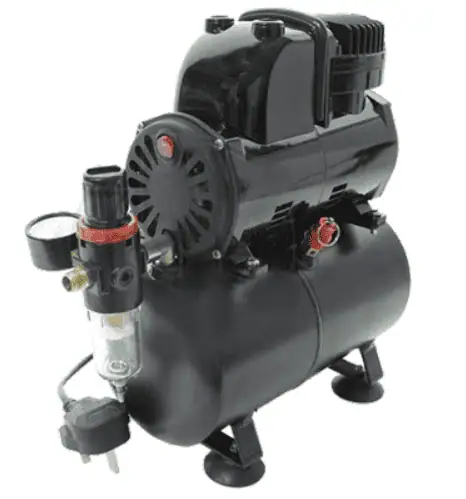
Badger, an American brand, and Sparmax both sit in a genuinely sensible mid-range bracket — real quality and reliability without Iwata’s premium price tag. Badger’s Model 150 in particular comes up often as a solid, well-regarded airbrush for anyone past complete beginner level but not ready to spend Iwata money. Sparmax compressors are consistantly recommended as a step up from generic budget units without needing to spend on a premium brand.
Budget Compressors — What to Actually Know

Worth being genuinely honest here: a lot of the budget compressors sold under different brand names on Amazon are the same rebadged unit manufactured by the same OEM factory — different stickers, identical hardware inside. For very occasional, light use, one of these small USB-rechargeable units is a reasonable way to try airbrushing cheaply, but they typically run at a fixed lower pressure without a tank, which shows up as inconsistant coverage on anything beyond simple base coats. If you find you’re using an airbrush regularly, it’s worth budgeting for a proper tanked compressor with adjustable pressure sooner rather than later, since the frustration of unreliable results tends to put people off the whole technique.
Beginner Complete Kits
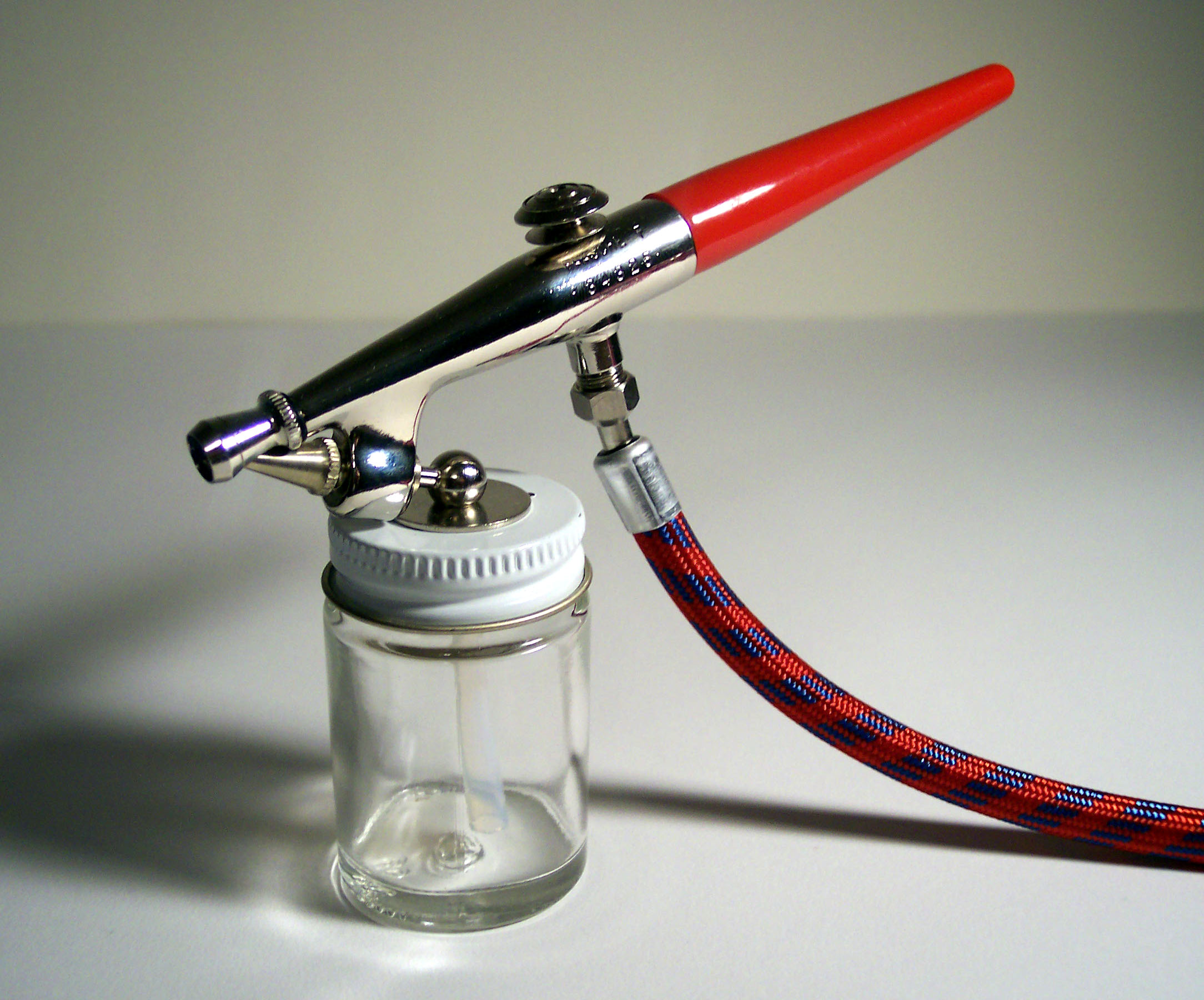
For a genuine first purchase, a complete kit bundling a dual-action airbrush with a compatible, tanked compressor is the sensible route — you avoid any compatibility guesswork, and most complete kits include enough accessories (hose, cleaning brushes, sometimes a basic paint set) to get started without buying everything separately.
FAQ
Do budget airbrush compressors actually work?
For light, occasional use, yes, though most budget compressors sold under different brand names are the same rebadged unit. For regular miniature painting or detail work, a proper tanked compressor with adjustable pressure gives noticeably more consistent results.
What PSI do I need for miniature painting?
Most miniature painters work somewhere between 15 and 30 PSI depending on the paint and effect, with thinner airbrush-specific paints and primers often needing less than 22 PSI. A compressor with adjustable pressure matters more than a high maximum PSI figure.
Do I need a tank on my airbrush compressor?
Not essential, but genuinely helpful. A small air tank smooths out pulsing in the airflow, which reduces speckling and gives a more even finish, particularly at lower pressures.
If you’re setting up for miniature painting more broadly, my Best Brushes for Miniature Painting guide and Best Resin 3D Printer guide cover the rest of the setup. At Discount Art Supplies we compare prices across all the major UK art retailers in real time, so you can find the best current deal before you buy.