Written by Paul Worrall
Pottery has genuinely grown as a hobby over the last few years, and it’s one of the few crafts where the initial equipment purchase is a real, considered decision rather than picking up a set of paints. A pottery wheel is a proper investment, so it’s worth understanding what actually matters before spending anything.
I’m Paul Worrall. I spent nearly a decade running digital marketing for ARTdiscount, one of the UK’s larger online art retailers, and I now run Discount Art Supplies — a price comparison platform used by over 41,000 UK artists every week.
Quick Picks
|
Electric vs Kick Wheels
Electric wheels are genuinely the sensible choice for almost every beginner — consistant, adjustable speed via a foot pedal, and none of the physical effort a kick wheel demands to keep it spinning. Kick wheels are still used by some traditionalists and in certain teaching environments, and there’s a genuine argument they build a better feel for the clay over time, but they’re importent to know are a harder starting point, since managing your own momentum on top of learning to centre clay is a lot to juggle at once.
Shimpo

Shimpo has been manufacturing wheels for decades and is consistently praised across independent reviews for quality control and quiet operation — the RK-Whisper and VL-Whisper models in particular are known for being genuinely unobtrusive in a shared home, which matters more than people expect once you’re throwing regularly. The VL-Lite is Shimpo’s budget-friendly entry point, though several experienced potters note it has noticeably less torque than the full Whisper once you’re working with more than a few pounds of clay.
Brent

Brent’s motto is “built for life,” and it’s genuinely earned that reputation — the brand is a fixture in pottery schools and studios worldwide, known for dependable belt-drive reliability and high torque. The Model C and CXC in particular come up repeatedly as long-term investments that hold their value well on the used market, which is worth knowing if budget is a concern now but you’re planning to stick with the hobby.
Speedball
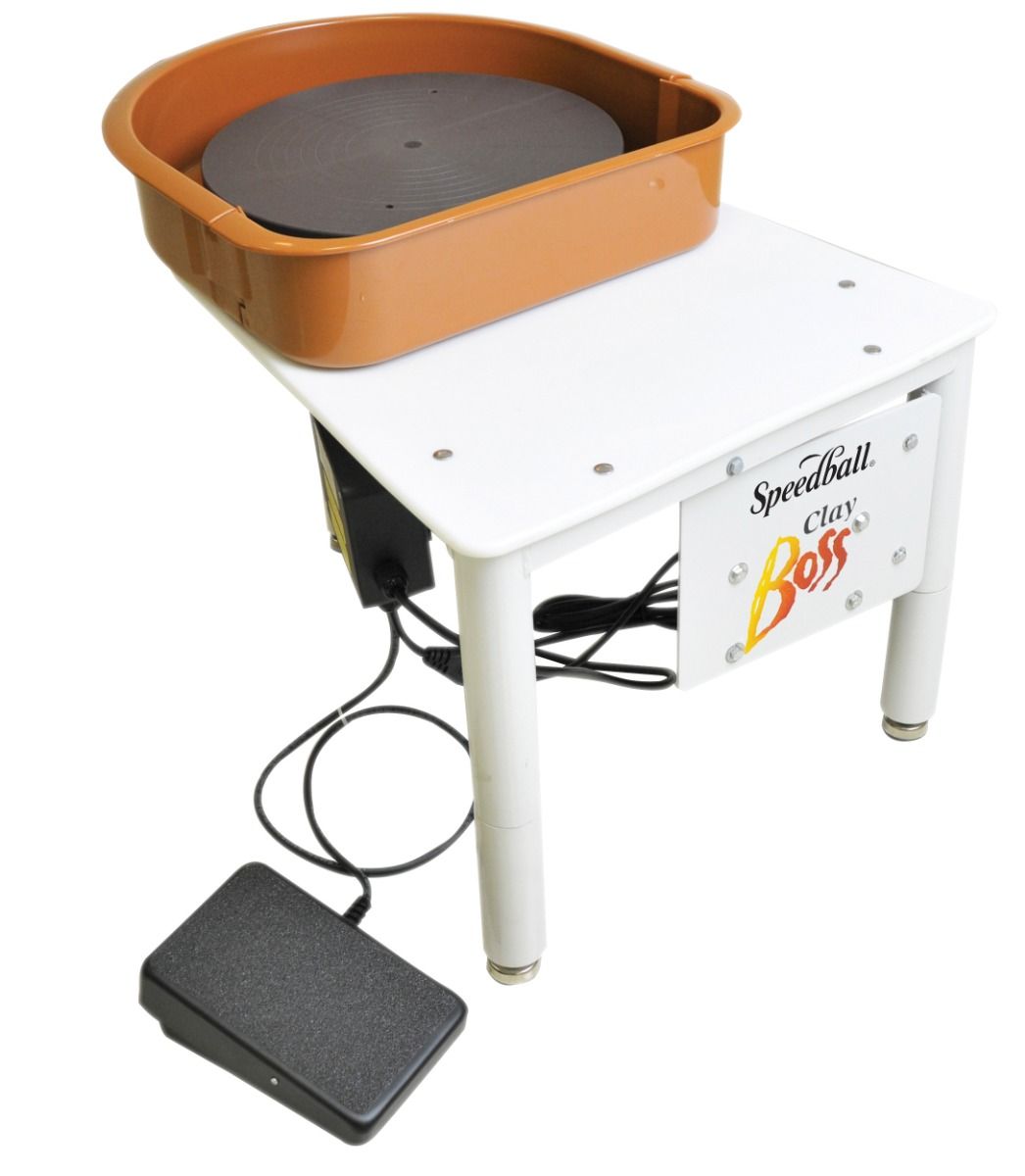
Speedball’s Clay Boss is a genuinely well-regarded budget option — inexpensive relative to Shimpo or Brent, with a decent centring capacity for a first wheel. It’s a sensible first choice rather than a compromise pick, and a good way to learn the fundamentals before deciding whether to invest in a pricier brand later.
Pacifica

Made by Laguna, Pacifica sits in a similar budget-friendly bracket to Speedball, with several experienced potters specifically noting it offers good torque and value compared to pricier alternatives. It’s also often mentioned as one of the more visually distinctive options on the market, if that sort of thing matters to you in a piece of studio equipment you’ll be looking at for years.
UK-Specific Options
Worth knowing about specifically: Kiln Crafts, a UK ceramics retailer, sell their own Daisy Starter Pottery Wheel — a solid aluminium build aimed squarely at beginners and hobby potters at a sensible price point, without needing to import from a US brand. The Pottery People, another UK retailer, offer their own Home Studio Wheel alongside major brands, and both are genuinely worth checking for UK-based support and warranty handling that can be harder to access with US manufacturers.
Buying Used
Genuinely worth considering, particularly from established brands like Brent and Shimpo, which are built to last many years and hold their value well on the second-hand market. Check the motor runs smoothly without excessive noise, the wheel head isn’t wobbling, and the splash pan and foot pedal are both intact before buying — these are the parts that tend to wear or crack first with heavy studio use.
For Kids and Beginners
For younger or genuinely first-time potters, a lower-capacity, more compact wheel is consistantly the better choice over a full-size studio wheel — easier to handle physically, and there’s little point paying for capacity that won’t be used while still learning the basics of centring and throwing.
FAQ
Should a beginner buy an electric or kick pottery wheel?
Electric, for almost everyone starting out. Kick wheels are genuinely still used by some traditionalists and in certain teaching settings, but they demand more physical effort and coordination that most beginners find gets in the way of learning to centre and throw clay.
Is it worth buying a used pottery wheel?
Often, yes, particularly from established brands like Brent and Shimpo, which are built to last many years and hold their value well. Worth checking the motor runs smoothly and the wheel head isn’t wobbling before buying.
How much clay capacity do I actually need as a beginner?
For learning fundamentals, a wheel centring 15-25lb of clay is genuinely enough. Higher capacity only matters once you’re throwing larger pieces regularly, and it usually comes with a higher price tag for power you won’t need at first.
Whatever you end up buying, it’s worth a quick check on prices before you commit — they vary more across UK retailers than people expect. At Discount Art Supplies we compare prices across all the major UK art and craft retailers in real time, so you can find the best current deal before you buy.