Written by Paul Worrall
I get asked this more often than you’d think — usually by someone who’s just framed something themselves for the first time and reached for whatever tape was in the kitchen drawer, only to find it’s peeled, yellowed, or worse, left a mark on the mount six months later. Tape is one of those things nobody thinks about until it goes wrong, and by then the damage is already done.
I’m Paul Worrall. I spent nearly a decade running digital marketing for ARTdiscount, one of the UK’s larger online art retailers, and I now run Discount Art Supplies — a price comparison platform used by over 41,000 UK artists every week. Framing questions come up constantly in our community, and tape is one of the most consistantly misunderstood parts of the whole process. So here’s the honest breakdown of what to actually use, and why.
Quick Picks
- Best overall (archival frame sealing): Lineco Archival Self-Adhesive Frame Sealing Tape
- Best traditional/budget option: Gummed Brown Paper Framing Tape
- Best for hinging artwork to a mount: Lineco Self-Adhesive Linen Hinging Tape
- Best low-cost hinging option: Acid-Free Conservation Kraft Tape
Why the tape you choose actually matters
This isn’t me being precious about materials. Tape that isn’t acid-free can genuinely damage what’s underneath it over time — staining, discolouration, and in bad cases the adhesive itself breaking down and leaving residue that’s a nightmare to remove without taking the paper with it. It’s one of those things that seems irrelevent on day one and obvious five years later, usually when you take a frame apart to find a brown tape-shaped shadow burned into the mount board.
The good news is that once you know which tape does which job, it’s a genuinely simple decision — you’re really only choosing between three categories.
1. Archival Frame Sealing Tape — for closing up the back
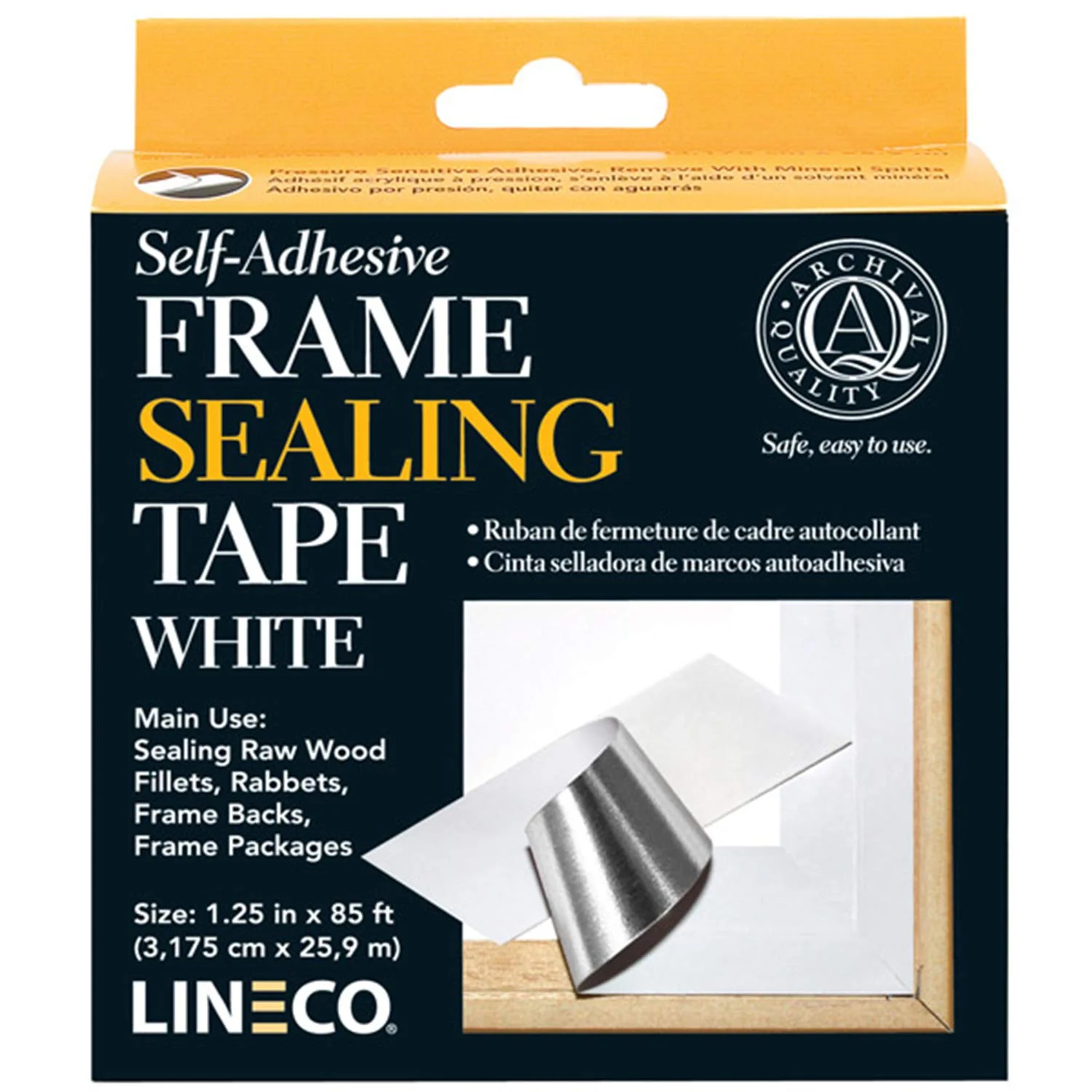
This is the tape you use on the outer back of a finished frame, sealing the backing board to the frame itself to keep dust, insects and moisture out. Lineco’s archival frame sealing tape is the one that comes up again and again among professional framers, and it’s easy to see why — it’s acid-free and lignin-free, has a non-yellowing acrylic adhesive, and the foil-backed version adds a moisture-resistant barrier, which matters more than people realise if a frame is going anywhere near a bathroom or a kitchen.
The genuine trade-off: it’s not cheap compared to the alternatives below, and once it’s bonded to raw wood it’s essentially permanent — you’ll need mineral spirits to shift it if you get the positioning wrong. Get your placement right first time.
🛒 Buy on Amazon 🔍 Compare Prices
2. Gummed Brown Paper Tape — the traditional choice
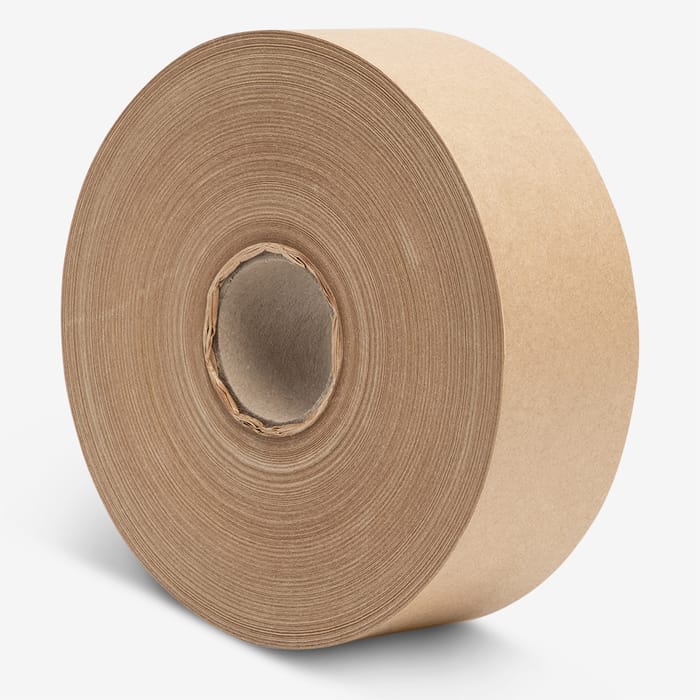
This is the tape framers have used for generations, and it’s still genuinely preferred by a lot of professionals over the newer self-adhesive options. It’s water-activated — you wet it with a sponge or a proper gum tape wetter — and the adhesive is typically derived from maize or potato starch, which makes it a properly sustainable choice as well as an effective one. It’s also noticably cheaper than archival self-adhesive tape, which matters if you’re framing in volume.
The catch is that it needs to be wetted thoroughly and evenly, or it’ll bubble and lift away from the frame — not a difficult skill, but one that takes a couple of goes to get consistent. It also tends to perform better in warmer conditions, so it’s worth bearing in mind if you’re working in a cold workshop.
🛒 Buy on Amazon 🔍 Compare Prices
3. Hinging Tape — for attaching the artwork itself
This is a different job entirely and it’s where I see the most mistakes. Hinging tape attaches the actual artwork to the mount board, so it needs to be acid-free without exception — this tape sits in direct, permanent contact with the piece you’re framing.
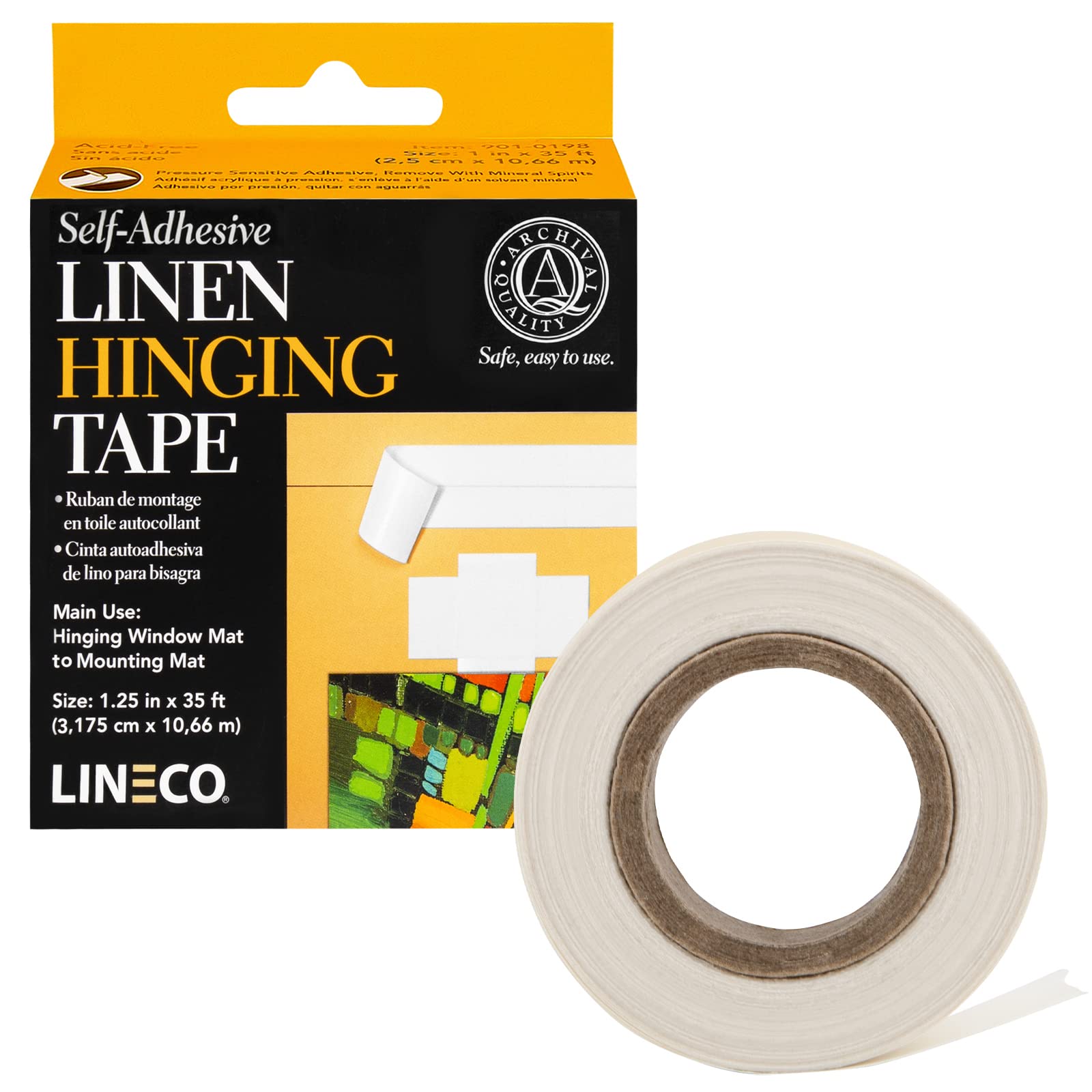
Linen hinging tape, like Lineco’s self-adhesive linen tape, is the standard for heavier watercolours and collage work because the fabric backing gives it real strenght.
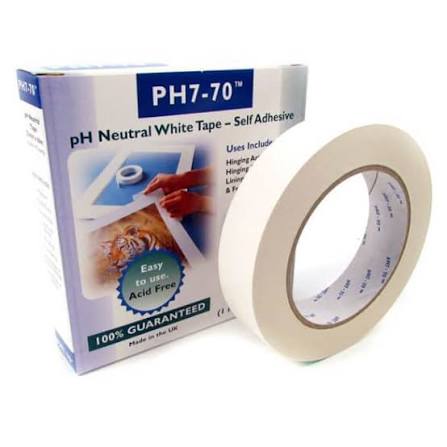
For lighter paper-based pieces, an acid-free conservation-grade kraft tape does the job without the extra cost.
The genuine trade-off between the two hinging styles: water-activated linen tape gives a stronger, more archival-quality bond and can be reversed with water if needed, but it takes longer to apply properly. Self-adhesive versions are quicker but slightly less forgiving if you need to reposition.
🛒 Buy on Amazon 🔍 Compare Prices
Self-adhesive vs gummed — which should you actually buy?
If you’re framing the odd piece at home, self-adhesive archival tape is the easier route — no wetting, no waiting, just peel and stick, and it’s forgiving for someone doing this occasionally. If you’re framing regularly or in volume, gummed brown paper tape works out significantly cheaper per frame and, once you’ve got the technique down, gives a genuinely durable, professional seal. Neither is “wrong” — it’s really a question of how often you’re doing this and how much patience you’ve got for the wetting step.
FAQ
What tape do you use for picture framing?
Most framers use one of three types depending on the job: acid-free self-adhesive frame sealing tape for closing up the back of a frame, gummed brown paper tape for a traditional dust-proof seal, or acid-free hinging tape (linen or paper) for attaching artwork itself to a mount. Which one you need depends on whether the tape will touch the artwork directly.
Is masking tape OK for picture framing?
Standard masking tape isn’t a good choice for framing. It’s not acid-free, it can yellow and become brittle over time, and it isn’t designed for long-term contact with paper or board. It’s fine for painting projects but not for anything inside a frame that’s meant to last.
Do I need acid-free tape for framing?
If the tape will be anywhere near the artwork, mount or backing board, yes. Non-acid-free tape can cause staining and discolouration over years, particularly on paper-based work. For sealing the outer back of a frame where the tape never touches the piece itself, it matters slightly less, but acid-free is still the safer default.
What’s the difference between framing tape and hinging tape?
Framing tape (or frame sealing tape) is used on the outside back of a frame to keep dust, moisture and insects out. Hinging tape is used to actually attach the artwork to the mount board, so it needs to be acid-free, low-tack in the right applications, and gentle enough not to damage the paper.
Get this bit right and it’s a five-minute decision, not a five-year regret. If you’re sending work out to be framed rather than doing it yourself, it’s worth reading our guide to the best UK picture framing companies before you choose one. And as always, check Discount Art Supplies before you buy tape or materials — we compare prices across major UK retailers in real time, so you’re not overpaying for something as simple as tape.