Written by Paul Worrall
Genuinly nothing ruins a resin project faster than spending an evening on a beautiful pour and coming back the next day to find it’s gone cloudy, or worse, yellowed within a few weeks of curing. It happens to beginners and experienced crafters alike, and it’s almost never actually the resin’s fault in the way people assume — it’s usually mixing ratio, humidity, or buying a resin that was never rated for UV stability in the first place. This is the honest guide to avoiding that, and what’s actually worth buying.
I’ve spent 16 years in the UK art and craft supplies industry and now run Discount Art Supplies, used by over 41,000 UK artists and hobbyists every week.
Quick Picks — Best Epoxy Resin UK
Best overall: Craft Resin — Buy on Amazon
Best for art and coating: ArtResin — Buy on Amazon
Best for deep pours and river tables: FGCI Deep Pour Resin — Buy on Amazon
Best for casting and jewellery: Alumilite Clear Cast — Buy on Amazon
Best budget: Let’s Resin Epoxy — Buy on Amazon
Why Resin Goes Cloudy or Yellows — Read This First
Before the product picks, it’s worth understanding the actual causes, because most “bad resin” complaints are genuinly avoidable. Cloudiness during curing is most often caused by an incorrect mixing ratio — resin and hardener need to be measured precisely, not eyeballed, and even a small imbalance can leave the mixture visibly hazy once cured. Humidity during pouring can also cause a milky “blush” on the surface, particularly in cooler, damper UK conditions — working in a warm, dry room genuinly makes a measurable difference.
Yellowing over time is a different problem entirely, and it’s about UV stability rather than mixing. Cheaper resins not specifically formulated with UV inhibitors will genuinly yellow within weeks or months of sun exposure, regardless of how carefully you mixed them. If a project will see any daylight — coasters, jewellery, anything displayed near a window — buying a resin explicitly marketed as UV-resistant isn’t optional, it’s the difference between a piece that looks good in a year and one that doesn’t.
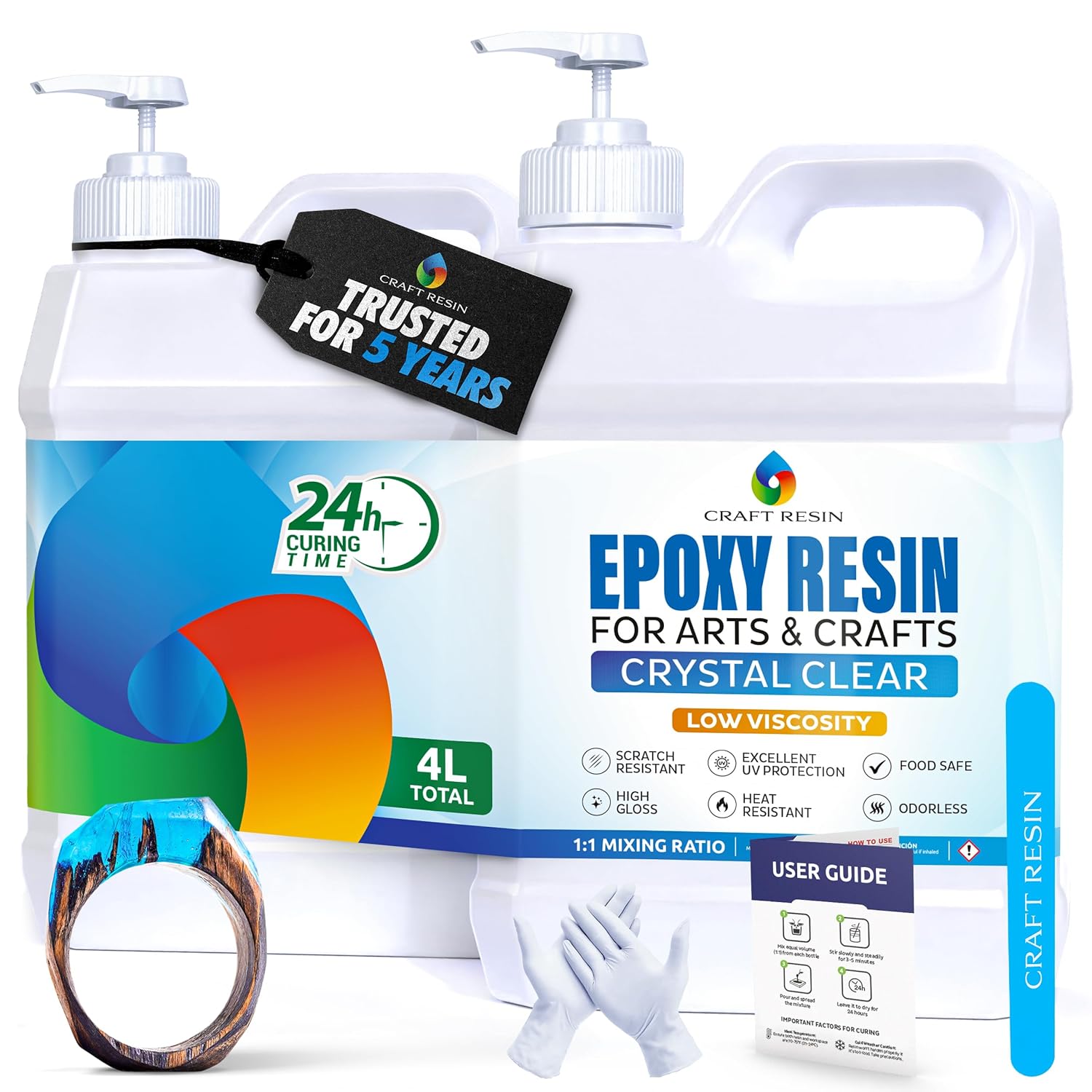
1. Craft Resin — Best Overall
Craft Resin has genuinly built its reputation specifically on UV stability and clarity, which addresses the exact problem above head-on rather than as an afterthought. It’s a simple 1:1 mixing ratio, which removes a lot of the beginner error that causes cloudy cures, and it self-levels well, making it genuinly forgiving for anyone still learning proper pouring technique.
It’s a premium price point relative to some budget alternatives, but for anyone who’s been burned by a cheaper resin yellowing on a finished piece, the extra cost buys real, demonstrated UV performance rather than a marketing claim.
🛒 Buy on Amazon2. ArtResin — Best for Art and Coating
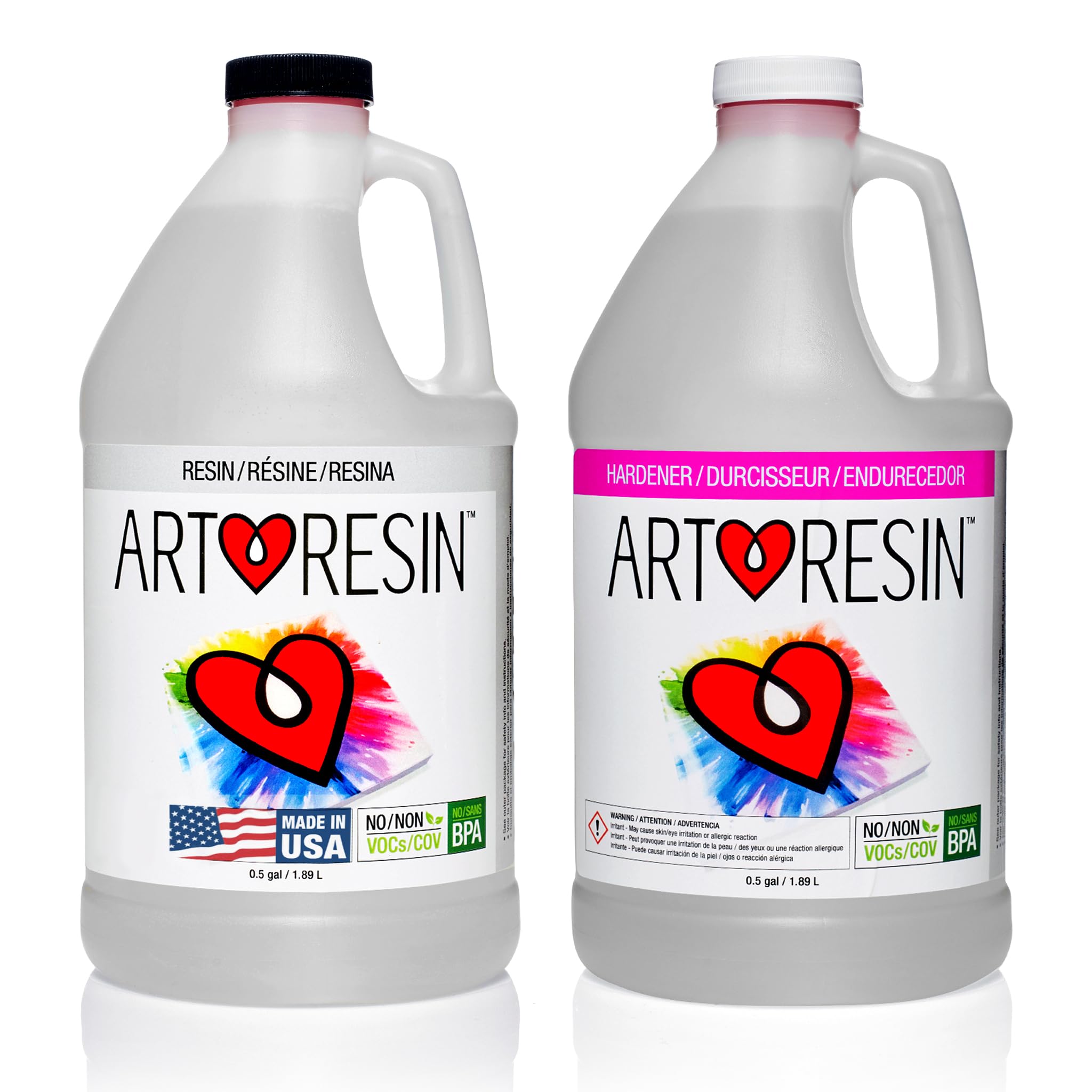
ArtResin was originally developed specifically for coating finished paintings and artwork, and that heritage still shows — it’s genuinly excellent for the “clear glossy coat over a finished piece” use case specifically, self-levelling into an even, glass-like finish without needing much intervention. It’s also food-safe once cured, which matters if you’re making coasters, trays or anything that might come into contact with food or drink.
It’s slightly thicker in viscosity than some casting-focused resins, which suits coating work well but makes it less ideal for filling intricate moulds with fine detail — worth matching the resin to the actual project rather than assuming one resin does everything equally well.
🛒 Buy on Amazon3. FGCI Deep Pour Resin — Best for Deep Pours and River Tables
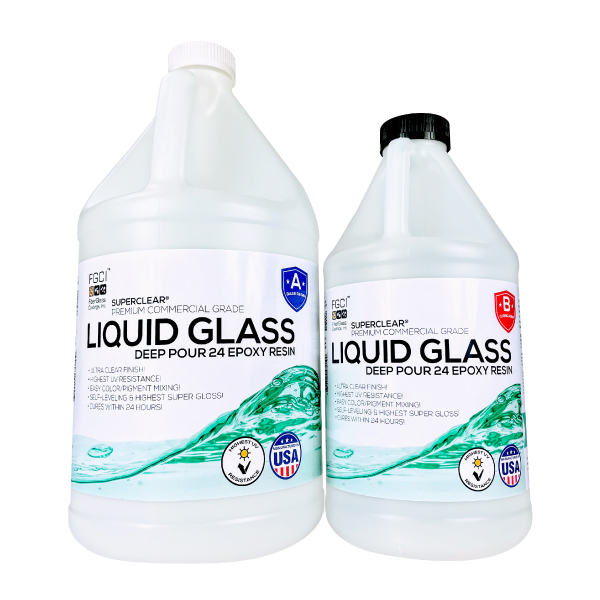
Standard casting resin genuinly isn’t built for deep pours — it cures too fast and generates too much heat in thick layers, which can crack or cloud a large pour like a river table. Deep pour resin like FGCI’s is formulated specifically to cure slowly and evenly at greater depths, avoiding that heat-related failure that ruins ambitious woodworking-crossover projects.
This is a genuinly specialist product rather than a general-purpose resin — don’t use it for small jewellery casting, where the slow cure works against you. Match the resin to the depth of what you’re actually pouring.
I’ve got a genuinly personal reason for knowing this one matters. We’ve got a small bucket of sand and a handful of shells sitting in a cupboard from my youngest’s very first trip to the beach — the sort of thing that means far more than it looks like it should, and that I’ve been meaning to actually do something with rather than let it slowly get forgotten. The plan is a deep box frame, the sand and shells arranged and set inside, then a proper deep pour resin over the top to seal it all permanently under glass-clear resin. A standard shallow-coat resin genuinly isn’t right for that depth of pour — it’s exactly the kind of project deep pour resin like this exists for, and it’s next on my own list to actually get done rather than just talk about.
🛒 Buy on Amazon4. Alumilite Clear Cast — Best for Casting and Jewellery
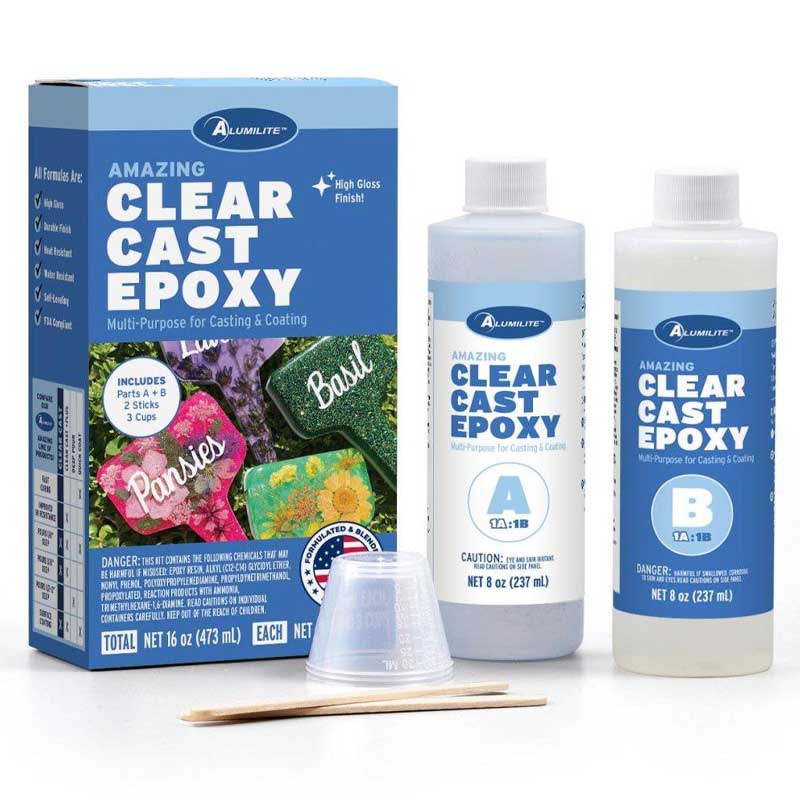
Alumilite is a genuinly well-regarded name specifically for mould casting — jewellery, small decorative pieces, anything poured into a silicone mould rather than an open surface. It has a fast cure time relative to art and coating resins, which suits small, detailed casts where you don’t want to wait hours for a small piece to set.
That fast cure is the wrong property for a large open pour or a coating project, where you want time to work the surface before it sets — worth being clear on the use case before buying, since the “best” resin genuinly changes depending on what you’re actually making.
🛒 Buy on Amazon5. Let’s Resin Epoxy — Best Budget
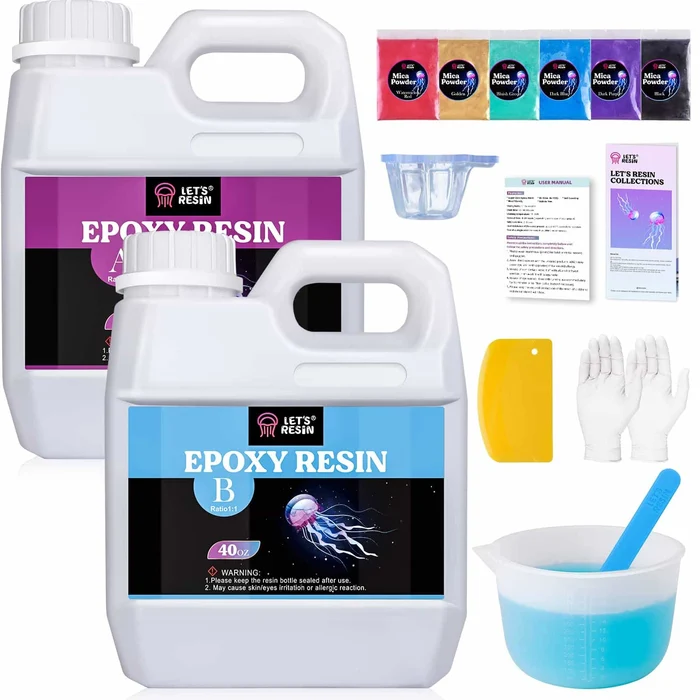
Let’s Resin is the honest starting point for anyone trying resin art for the first time without wanting to commit premium money before knowing if the craft suits them. It’s genuinly capable for small practice projects and coasters, with a straightforward mixing ratio that’s forgiving of beginner error.
Given what we’ve covered above about UV stability, it’s worth being realistic that budget resin is more likely to yellow over time on pieces that see daylight — fine for practice pieces and gifts, less ideal for anything you want to genuinly last for years on display.
🛒 Buy on AmazonSafety — Read Before You Start
Uncured epoxy resin is a genuine skin sensitiser, and repeated unprotected contact can build up a reaction over time even in people who had no initial issue with it. Always wear nitrile gloves, work in a well-ventilated space, and avoid skin contact throughout mixing and pouring. Once fully cured, epoxy is generally inert and safe to handle — the risk is entirely during the working and curing stage, not the finished piece.
Finishing Your Project
Once cured, a resin piece often needs a final finishing pass — a genuine glue formulated specifically for resin (rather than a generic craft glue) is worth using for anything with multiple bonded pieces, since standard adhesives can struggle to bond properly to a fully cured resin surface. For polishing out fine surface scratches or dull patches after sanding, a proper polishing compound designed for acrylic or resin surfaces will bring back genuine clarity that sandpaper alone leaves hazy.
Which Should You Buy?
If you want the best all-round protection against cloudiness and yellowing, Craft Resin is the standout choice. ArtResin is the specific pick for coating finished art or making food-safe pieces. FGCI’s Deep Pour range is essential if you’re attempting a river table or any large, thick pour. Alumilite suits mould casting and jewellery specifically. And Let’s Resin is where to start if you’re new to the craft and want to learn technique before spending more.
If you’re working with UV resin rather than two-part epoxy, or you’re printing your own moulds and models, our guide to the best resin 3D printers for miniatures covers the printing side of resin work.