Written by Paul Worrall
Almost everyone has done it. You tape off a clean edge on a nearly finished painting, peel the tape away, and a strip of paper comes with it. It’s one of those small disasters that’s entirely avoidable, and it usually comes down to grabbing whatever roll was in the drawer rather than the right tape for the job.
I’m Paul Worrall. I spent nearly a decade running digital marketing for ARTdiscount, one of the UK’s larger online art retailers, and I now run Discount Art Supplies — a price comparison platform used by over 28,000 UK artists every week. Here’s the honest breakdown of which masking tapes suit artwork, which are really made for walls, and how to avoid ruining a good sheet of paper.
Quick Picks
- Best all-rounder for crisp edges: FrogTape Delicate Surface
- Best low-tack alternative: Scotch Delicate Surface Painter’s Tape
- Best for delicate paper: Artist’s Low-Tack Drafting Tape
- Best for light-grip borders: Washi Masking Tape
- Best for fine lines: Thin Masking Tape (6mm)
Why standard masking tape is risky for artwork
Ordinary decorators’ masking tape is made to stick firmly to walls, skirting and window frames. That grip is exactly what causes trouble on paper. Pull it away and it can lift the top fibres of the sheet, or peel off paint that hasn’t fully cured. Softer, lighter papers suffer most; heavy cotton paper is more forgiving. The other factor is time: the longer any tape stays down, the harder it tends to grip, so leaving it on overnight is asking for trouble.
The answer is rarely “never use masking tape”. It’s choosing a lower-tack tape, testing it first, and taking it off carefully. Here’s how the main options compare.
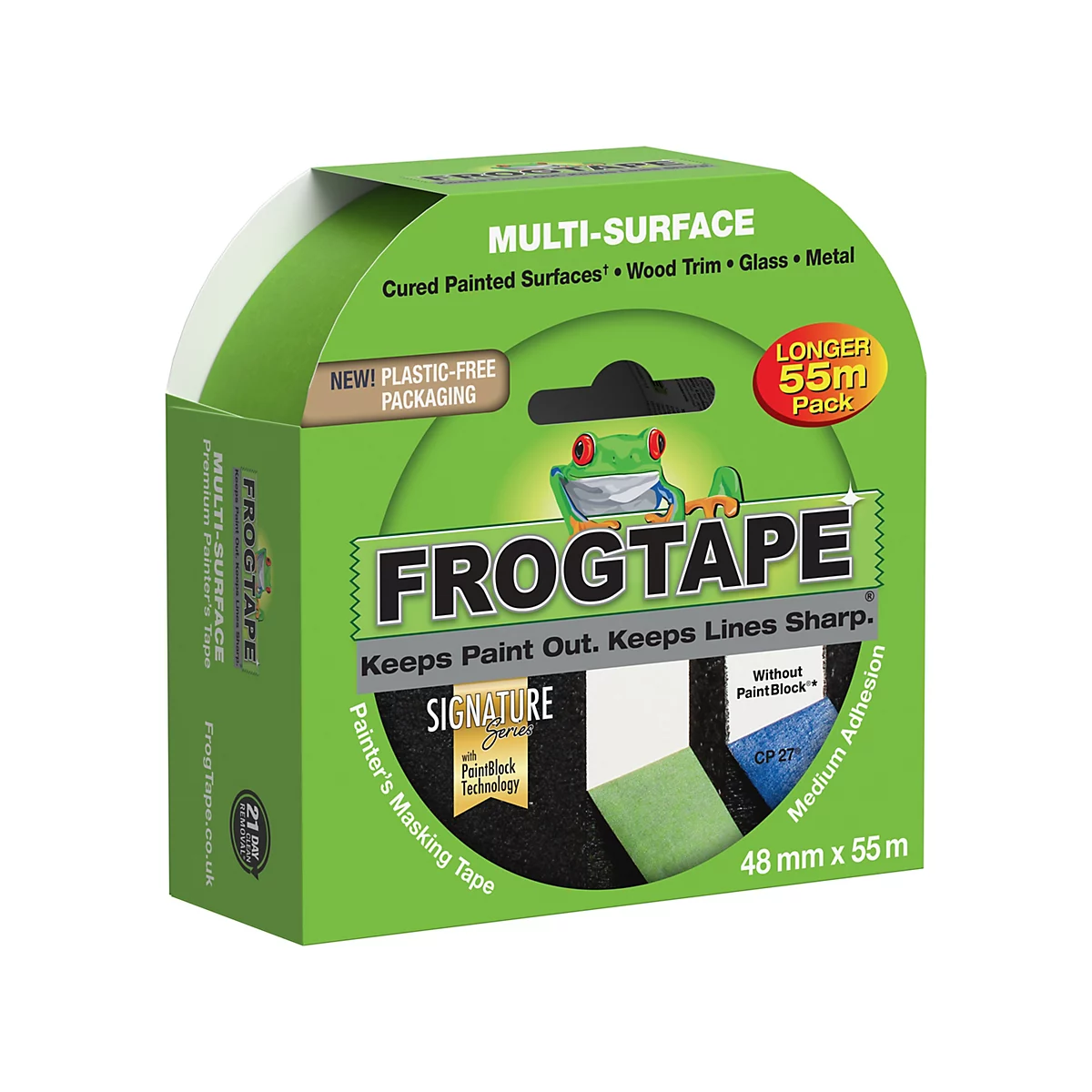
1. FrogTape Delicate Surface — the crisp-edge favourite
FrogTape is the tape that keeps coming up when artists talk about clean edges. The Delicate Surface version is a low-tack painter’s tape, and it’s treated with PaintBlock technology, which reacts with emulsion paint to seal the tape edge and stop paint creeping underneath. Some watercolourists report using it over a dry wash and lifting it without damage, which is why it’s become a go-to for horizon lines and neat borders.
The honest trade-off: it was designed for decorating, not for paper. PaintBlock is formulated for emulsion, so you shouldn’t assume it seals the same way with watercolour or acrylic. And “low-tack” doesn’t mean “no-tack”: one artist on a UK forum found small fragments of paper coming away from 300gsm watercolour paper when peeling the green version. The delicate (yellow) version is the safer one for artwork, but test it on a scrap first.

🛒 Buy FrogTape Delicate Surface on Amazon 🔍 Compare Prices
2. Scotch Delicate Surface Painter’s Tape — the low-tack alternative
Scotch’s Delicate Surface tape is described as a low-to-medium adhesion painter’s tape, aimed at smooth, freshly painted surfaces and faux painting. That grip level makes it a sensible option if you want something a little gentler than standard masking tape without paying for a specialist artist’s product.
The trade-off is the same as FrogTape: it’s a decorating product first. “Low-medium” adhesion is still more than you’d want on soft paper, so it suits sturdier surfaces such as primed canvas, board and heavy watercolour paper better than thin or delicate sheets. It’s also easy to overlook that adhesion varies between rolls and brands, so a quick test always beats trusting the label.

🛒 Buy Scotch Delicate Surface Tape on Amazon 🔍 Compare Prices
3. Artist’s low-tack drafting tape — the safest for paper
Drafting tape and dedicated artist’s tape are low-tack tapes made to be used on paper, which is exactly what most painters need. If you’re taping down watercolour paper or masking fine edges on a piece you’ve spent hours on, this is the category built for it. It’s typically harder to find in the shops than decorating tape, and can cost just as much, which is why plenty of artists end up defaulting to painter’s tape instead.
The trade-off is that even low-tack tape isn’t risk-free. Drafting and artist’s tapes can still damage a delicate surface if you’re rough removing them, so peel slowly whichever you choose. But if paper damage is your main worry, this is the one to reach for.

🛒 Buy Artist’s Drafting Tape on Amazon 🔍 Compare Prices
4. Washi tape — the light-grip option
Washi-style masking tape uses a thin, paper-based tape with a lighter grip, and it’s often recommended for lifting off cleanly from delicate surfaces. It’s a good fit for borders, quick masking and taping a sheet down for a small study, and it comes in an enormous range of widths and colours.
The catch is that a lighter grip means a less firm seal. It may not stop wet paint creeping under the edge, and it may not hold a heavy sheet flat while you work, so test it before relying on it for a crisp line. It’s best where you want gentle, and less suited to jobs that need a hard seal.

🛒 Buy Washi Masking Tape on Amazon 🔍 Compare Prices
5. Thin masking tape — for fine lines and stripes
If you’re masking narrow stripes, geometric edges or fine detail, width matters as much as tack. Thin masking tape in the 3mm to 6mm range gives you far more control than standard 25mm or 50mm rolls, and it’s the sensible choice for graphic work and layered acrylic designs.
The trade-off is that narrow tape is fiddly, and it’s easy to stretch or misalign, which ruins a crisp line more effectively than the wrong adhesive. Press the edge down firmly along its length before you paint, and always check what tack level the roll actually is, since thin tapes aren’t automatically low-tack.
🛒 Buy Thin Masking Tape on Amazon 🔍 Compare Prices
What about ordinary masking tape?
It has a place. On primed canvas, board, or a painting surface that’s fully cured, a standard roll is fine, and it’s neccessary to remember that cost matters when you’re masking large areas. What I’d avoid is putting it anywhere near unprimed paper or a piece you can’t replace. If you do use it, test it on a scrap first and keep the time it’s left on the surface as short as you can.
How to avoid ripping your paper
Whichever tape you choose, the technique does as much as the product. Test it on a scrap corner of the same paper first. Press the edge down firmly so paint can’t creep underneath, but don’t burnish it hard into the surface. Remove it as soon as the paint is safe to touch rather than leaving it for days. Peel slowly, at a low angle close to the paper, in short sections, and use a hairdryer to warm the adhesive if it’s being stubborn. It sounds fussy, but it’s the difference between a clean edge and an occassionally heartbreaking rip.
FAQ
Can you use masking tape for painting?
For decorating, yes. For artwork, be careful. Standard masking tape can grip too hard and lift paper fibres or dried paint when you peel it off, especially on lighter papers. A low-tack tape made for delicate surfaces, or a dedicated artist’s tape, is the safer choice.
What is the best masking tape for watercolour paper?
A low-tack tape is the safest starting point: delicate-surface painter’s tape, artist’s or drafting tape, or washi-style tape. Heavier cotton paper is more forgiving than lighter cellulose paper, and it’s always worth testing on a scrap corner before taping anything you care about.
What does low tack masking tape mean?
Low tack means the adhesive grips lightly, so the tape holds in place but peels away without pulling at the surface underneath. It suits delicate materials like watercolour paper, but the exact level of grip varies by brand, so a test on scrap paper is still worth doing.
How do you remove masking tape without tearing paper?
Peel slowly, at a low angle close to the paper, in short sections rather than one long pull. Warming the tape gently with a hairdryer first can soften the adhesive. Removing the tape sooner rather than later also helps, because adhesive tends to grip harder the longer it stays on.
Get the tape right and it’s one less thing to worry about. If you’re also framing your finished work, our guide to the best tape for picture framing covers the other side of the tape question. As always, check Discount Art Supplies before you buy — we compare prices across major UK retailers in real time, so you’re getting the best deal going.