Written by Paul Worrall
Sewing has been quietly booming in the UK for years. Make do and mend came back, the sewing TV shows turned dressmaking into prime-time viewing, and a whole generation of crafters discovered that a decent sewing machine opens up everything from hemming school trousers to making your own clothes, cushions and quilts. The trouble is, walk into any shop or open any website and you’re faced with dozens of machines, hundreds of stitch counts and prices running from £30 to well over £1,000.
I’m Paul Worrall. I’ve spent 16 years in the UK art and craft supplies industry, nearly a decade of it as Digital Marketing Manager at ARTdiscount, and I now run Discount Art Supplies — a price comparison and deals platform used by over 36,000 UK artists and makers. I’ll be honest up front: I’m not a seasoned dressmaker. What I do know is how craft products are sold, which ones people come back happy with and which ones end up in the loft. For this guide I’ve looked at what’s genuinely recommended for beginners, checked current UK prices across retailers, and listened to what our community actually says about their first machines.
If you’re into crafting more generally, you might also like our guide to Cricut Joy vs Explore vs Maker and our round-up of the best gifts for artists and makers.
Quick Picks
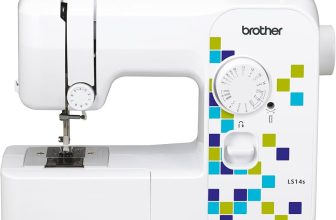
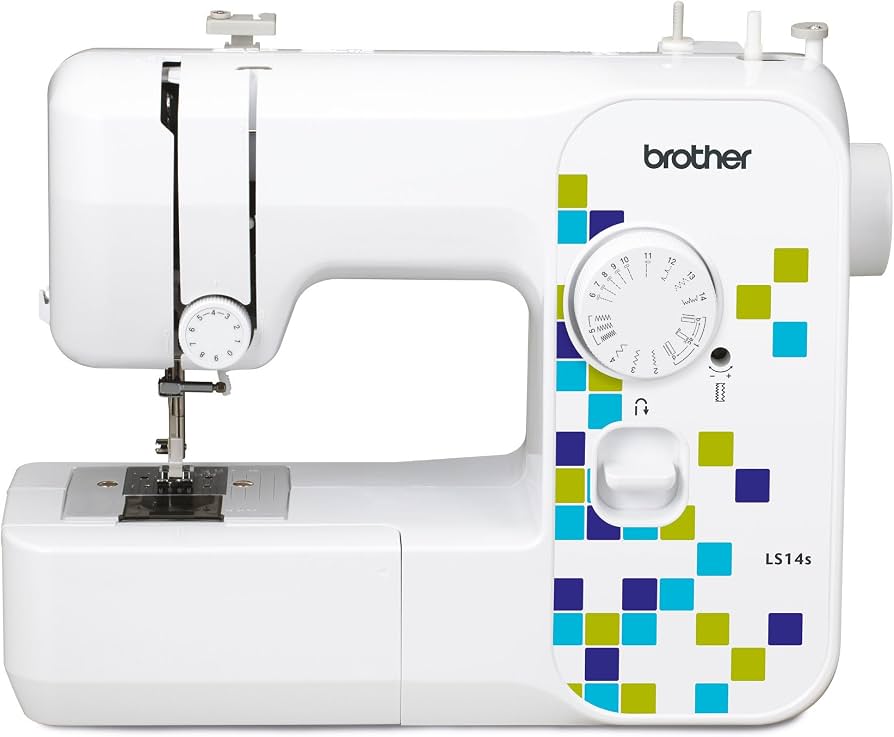
Best budget starter: Brother LS14s (around £89)
Best looking beginner machine: John Lewis JL110 (around £139–£145)
Best simple all-rounder: Janome 2200XT (around £189)
Best overall for most beginners: Janome J3-18 (around £209–£219)
Best computerised machine: Brother FS40s (around £229–£249, often less)
Best for thick fabrics: Singer Heavy Duty 4423 (around £279–£299)
Prices on sewing machines move a lot, especially around Black Friday and the January sales, so treat the figures above as a guide and check the latest prices before you buy. Our biggest price drops page is a good place to start.
Beginner Sewing Machines Compared
| Machine | Type | Stitches | Buttonhole | Needle threader | Typical price |
|---|---|---|---|---|---|
| Brother LS14s | Mechanical | 14 | 4-step | No | ~£89 |
| John Lewis JL110 | Mechanical | 14 | 4-step | No | ~£139–£145 |
| Janome 2200XT | Mechanical | 22 | 4-step | No | ~£189 |
| Janome J3-18 | Mechanical | 18 | 4-step | Yes | ~£209–£219 |
| Brother FS40s | Computerised | 40 | 1-step (5 styles) | Yes | ~£229–£249 |
| Singer Heavy Duty 4423 | Mechanical | 23 | 1-step | Yes | ~£279–£299 |
1. Brother LS14s — Best Budget Starter
If you just want to find out whether sewing is for you without spending a fortune, the Brother LS14s is where I’d start. At around £89 it’s one of the cheapest full-size machines from a proper sewing brand, and that matters. It has 14 built-in stitches including a 4-step buttonhole, a free arm for sleeves and trouser hems, and a bright LED light. That’s genuinely everything most beginners will use for their first year or two.
It’s a simple dial-and-lever machine, which I actually see as a positive. There’s nothing to go wrong with menus or screens, and you learn how a sewing machine works rather than relying on automation. It handles everyday cottons, polycottons and light fabrics well, and with the right needle it’ll cope with stretch fabric and a bit of denim, though it’s not built for heavy work.
The trade-off is that it’s lighter and more basic than the machines further down this list. There’s no needle threader, the 4-step buttonhole takes a bit of practice, and if you get properly hooked you may want to upgrade within a couple of years. But as a first machine, for mending, simple makes and finding your feet, it’s very hard to argue with the price.
Check today’s price on Amazon →
2. John Lewis JL110 — Best Looking Beginner Machine
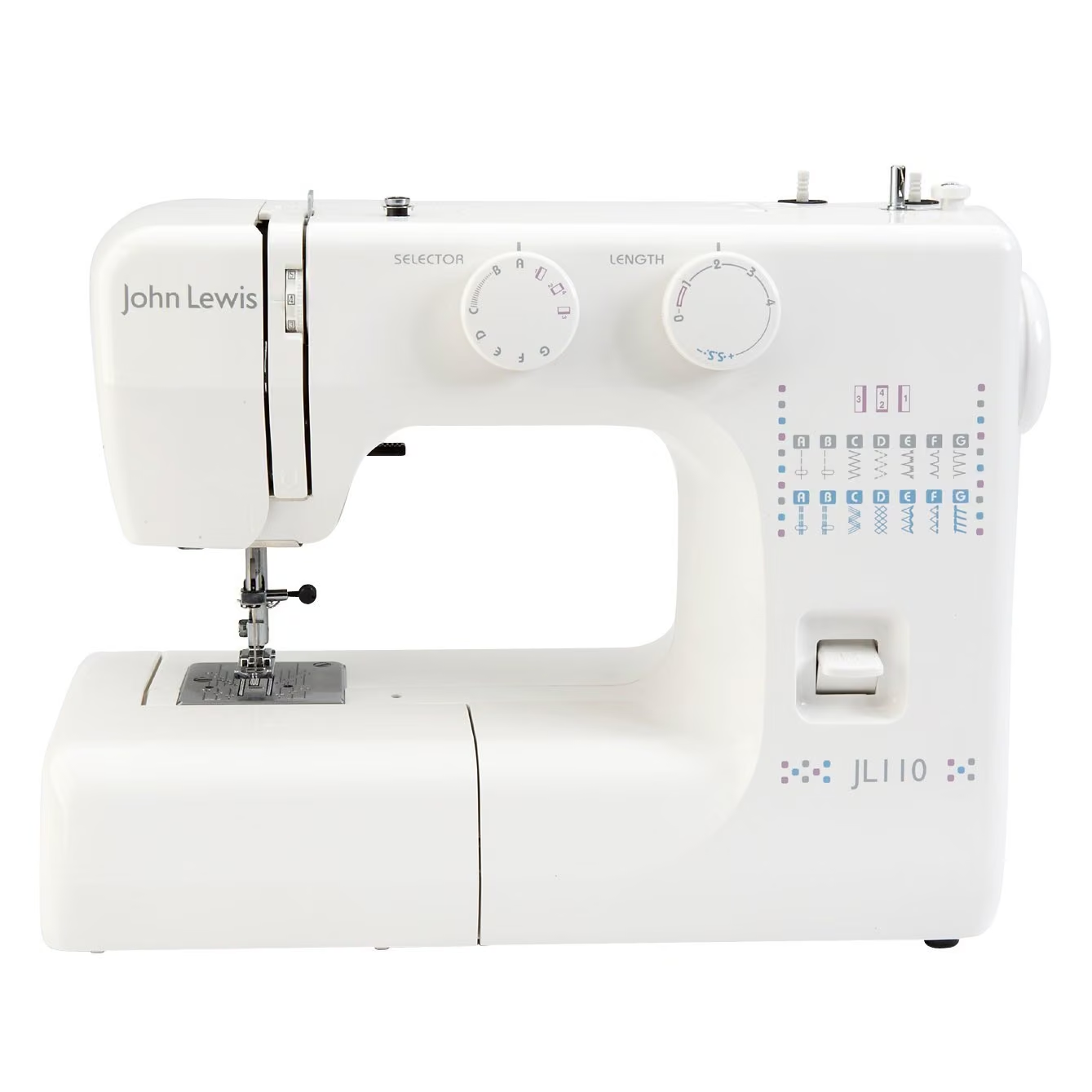
Let’s be honest, looks matter when a machine is going to live on your kitchen table. The John Lewis JL110 comes in a range of retro-inspired colours and it’s one of the few beginner machines that doesn’t look like a piece of office equipment. But it’s not just a pretty face. It’s made with Janome, one of the most respected names in sewing, and John Lewis says it’s compatible with Janome sewing machine accessories, which is a real bonus when you want extra feet later.
You get 14 stitches, a 4-step buttonhole, a drop-in bobbin with a view-through cover so you can see when you’re running low, and a free arm. It’s designed for light to medium weight fabrics, which covers most dressmaking, alterations and home projects. Sewing magazines have consistently praised it as an excellent value starter, and part of the reason is that it deliberately keeps things simple. A machine with 200 stitches can be needlessly intimidating when you’re learning.
The downsides are similar to the Brother: no needle threader and no stitch width adjustment, so it’s very much a beginner’s machine rather than one you’ll grow into for years. It also tends to sell at its full price more often than the big-brand models, so it’s worth watching for John Lewis promotions. If you want something that looks lovely and is easy to learn on, it’s a fantastic first machine.
3. Janome 2200XT — Best Simple All-Rounder
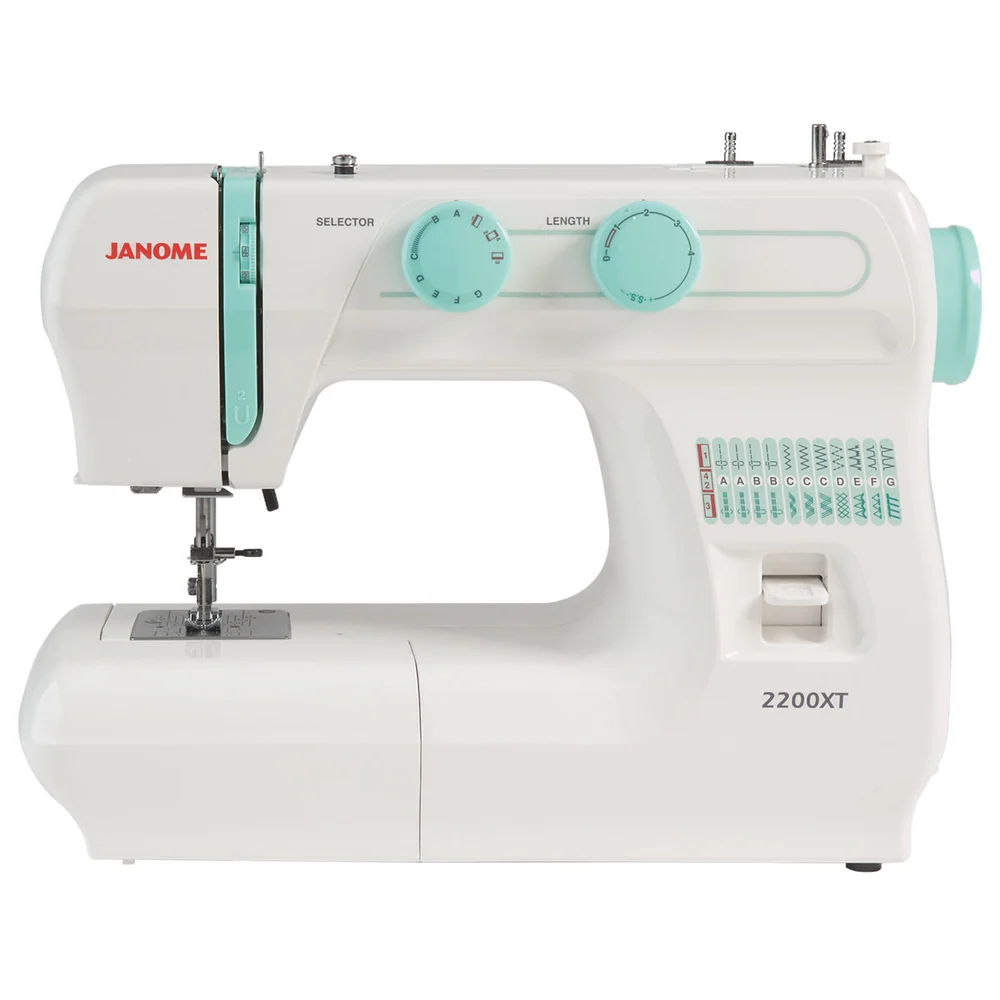
The Janome 2200XT is the machine a lot of sewing shops quietly recommend to beginners who want something a step up from the cheapest options. It has 22 built-in stitches plus a 4-step buttonhole, which covers seams, hems, stretch fabrics and buttonholes without any menus to work through. It also has a free arm, a drop feed for free-motion sewing once you’re more confident, and an extra-high presser foot lift that gives you a bit more room for bulkier layers like curtains.
What you’re really paying for here is Janome’s build quality and reliability. Janome machines have a reputation for running smoothly for years, and the 2200XT comes with a 2-year guarantee from most UK dealers, with extended warranties sometimes available. It’s the kind of machine you buy once and keep.
There are a couple of things to know. There’s no needle threader, so you’ll be threading the needle eye by hand, and the bobbin is front-loading, which means you can’t see how much thread is left while you’re sewing. It’s also designed for light to medium fabrics, so if you’re planning lots of denim, canvas or upholstery, the Singer further down is a better fit. At around £189 it’s usually a stable price, with occassionally a free accessory kit thrown in by dealers.
Check today’s price on Amazon →
4. Janome J3-18 — Best Overall for Most Beginners
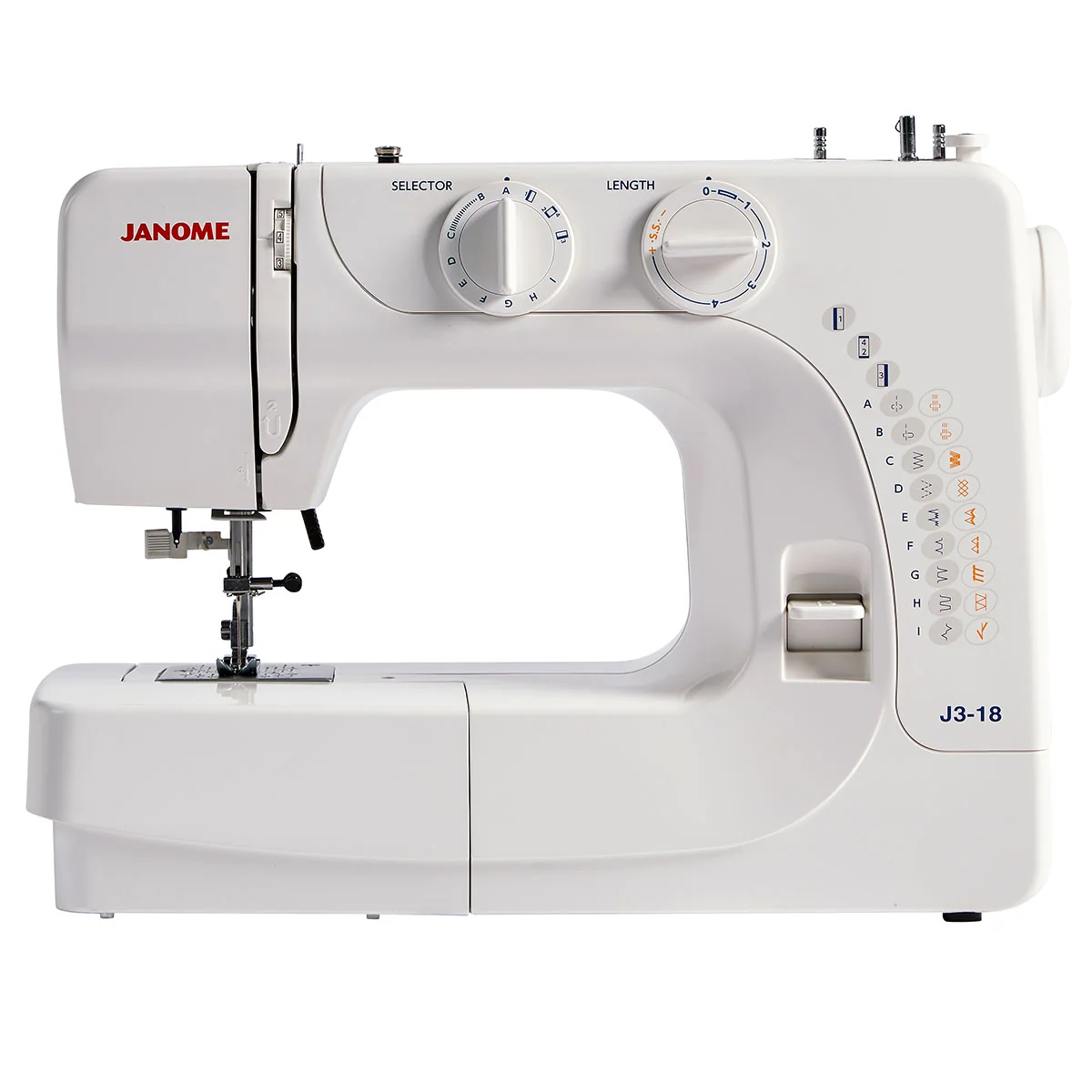
If I had to pick one machine for a beginner who’s serious about learning to sew, it would be the Janome J3-18. It sits right in the sweet spot of price and performance, and it’s a machine you won’t outgrow quickly. You get 18 stitches covering all the practical utility stitches plus a couple of decorative ones, a 4-step buttonhole, a free arm, a drop feed, and crucially, a built-in needle threader.
That needle threader sounds like a small thing until you’ve spent ten minutes squinting at a needle eye under a lamp. It’s one of those features that makes the difference between a machine you enjoy using and one you avoid. The J3-18 is also lightweight at around 6kg, so it’s easy to get out and put away, and Janome’s reputation for reliability means it should keep going for many years.
It usually sells for around £209 to £219, and some dealers bundle in a free fashion and finishing kit. If you’d rather not fiddle with 4-step buttonholes, it’s worth knowing about its sibling, the Janome J3-20, which adds an automatic 1-step buttonhole for around £40 more. For most beginners, though, the J3-18 is the one I’d point to first.
Check today’s price on Amazon →
5. Brother FS40s — Best Computerised Machine for Beginners
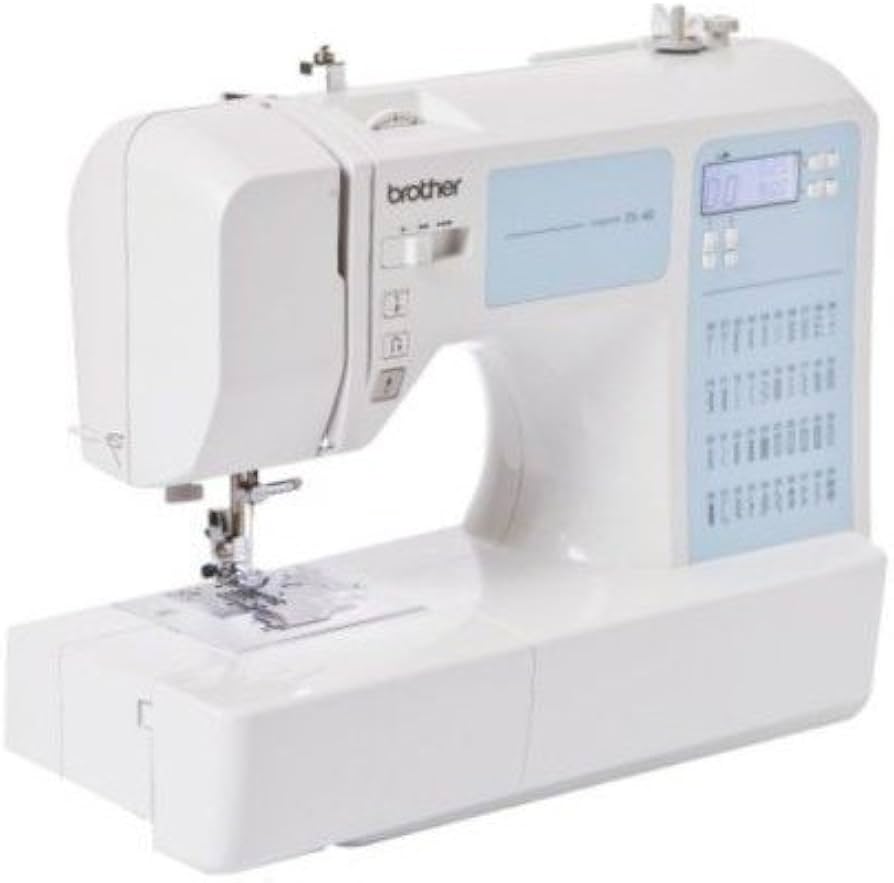
Computerised machines used to be expensive and complicated. The Brother FS40s shows how far that’s changed. For a similar price to a good mechanical machine, you get 40 built-in stitches including five automatic 1-step buttonhole styles, an automatic needle threader, a quick-set drop-in bobbin, a backlit LCD screen and a start/stop button that lets you sew without the foot pedal.
That start/stop button is underrated for beginners. If you’re nervous about controlling speed with your foot, being able to set the speed and press a button makes learning much less stressful. The 1-step buttonholes are also a big win, because the machine sews the whole buttonhole for you rather than you switching between four separate steps. It also has 15 needle positions and a 7mm maximum stitch width, so there’s plenty of room to grow into decorative stitching and quilting.
The honest caveat is that computerised machines are a bit more delicate than simple mechanical ones and can cost more to repair if something does go wrong. The FS40s is also lighter, so it can move around a bit when sewing thicker fabrics at speed. Look out for the FS40WTS version too, which comes with a wide extension table, handy for larger projects. The FS40s is regularly discounted below its RRP, so it’s well worth comparing prices.
Check today’s price on Amazon →
6. Singer Heavy Duty 4423 — Best for Thick Fabrics
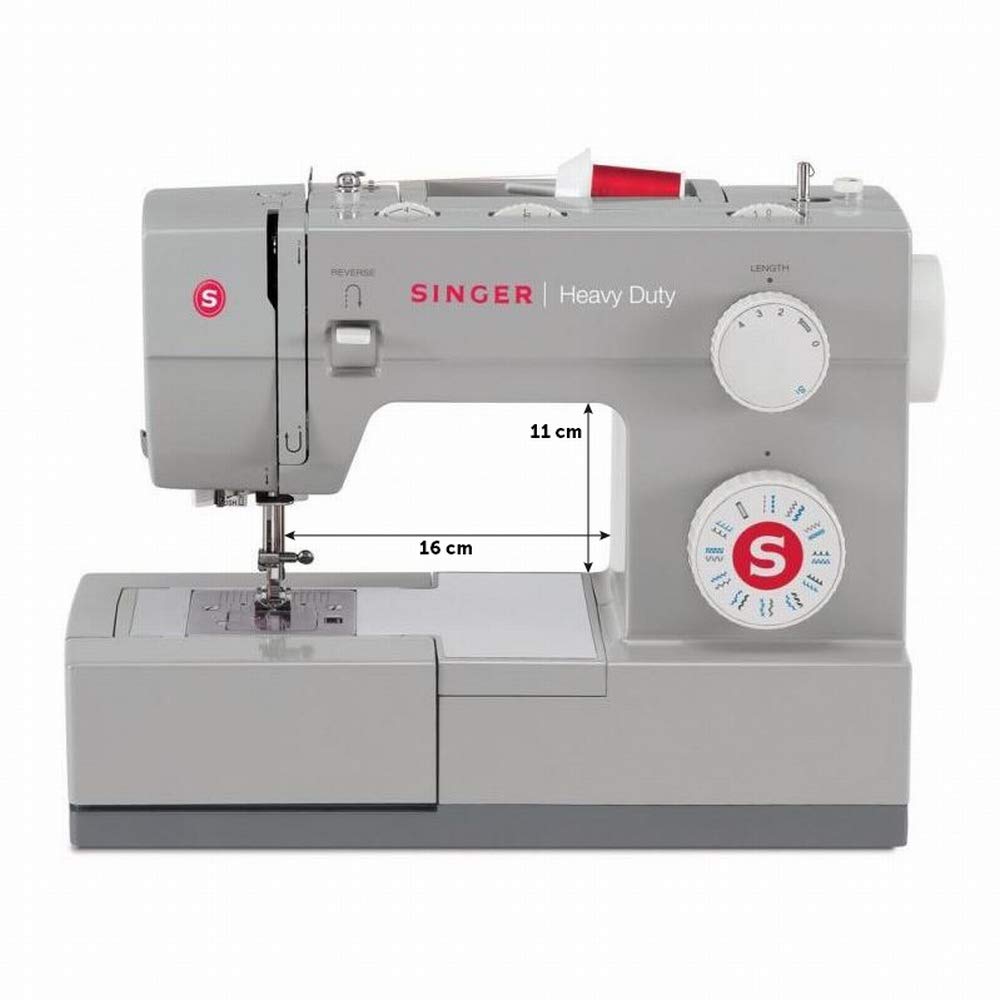
If you already know you’ll be sewing denim, canvas, upholstery fabric, bags or multiple layers, the Singer Heavy Duty 4423 is the beginner machine to look at. It’s built around a heavy duty metal interior frame with a stainless steel bedplate, and it has a powerful motor that sews up to 1,100 stitches per minute. That frame is the key thing. It keeps everything rigid and aligned, which means fewer skipped stitches and more stability when you’re pushing thick fabric through.
Despite the name, it’s a very approachable machine. There are 23 built-in stitches, made up of 6 basic, 4 stretch and 12 decorative stitches plus a 1-step buttonhole, all chosen with simple dials. You also get an automatic needle threader, a top drop-in bobbin and a drop feed. It’s one of the most popular sewing machines in the UK, and you’ll see it recommended by sewing shops to beginners and experienced sewers alike.
The trade-offs are speed and price. 1,100 stitches per minute is fast, and some beginners find it a bit lively untill they get the hang of controlling the pedal, so start slowly. It’s also the most expensive machine here at around £279 to £299, though it’s often discounted and bundled with extras like extension tables or accessory kits. If you want one machine that’ll handle almost anything, it’s worth the extra.
Check today’s price on Amazon →
What to Look For in a Beginner Sewing Machine
The biggest mistake I see people make is buying on stitch count. Boxes shout about 100, 200 or even 600 stitches, but the truth is that straight stitch, zigzag, a stretch stitch and a buttonhole cover the vast majority of beginner projects. Anything between 14 and 40 stitches is plenty. More stitches usually just means more to learn and more money spent on things you’ll never use.
The features that genuinely make a difference are a needle threader, a drop-in bobbin (so you can see your thread level), adjustable stitch length, a free arm for sleeves and hems, and a buttonhole function. A 1-step buttonhole is easier than a 4-step one, but a 4-step is perfectly manageable once you’ve done a few. If you can, choose a machine from Brother, Janome or Singer. Spare parts, accessories, servicing and online tutorials are all far easier to find for the big brands.
One thing I’d steer clear of is the £30 to £50 mini sewing machines you’ll find in supermarkets and online marketplaces. They’re fine for a child’s first go or very occasional repairs, but they tend to struggle with anything thicker than cotton, and I’ve heard plenty of stories of people being put off sewing altogether because their first machine kept jamming. It’s a bit embarassing to admit how often I’ve seen that happen with craft gifts in general. A proper beginner machine at £90 or more is a far better investment.
Mechanical or Computerised?
Mechanical machines use dials and levers to select stitches. They’re simple, durable, cheaper to repair and, for most beginners, the safest choice. Every machine on this list except the Brother FS40s is mechanical, and that’s deliberate.
Computerised machines use buttons and a screen, and they add conveniences like 1-step buttonholes, automatic needle threaders, needle up/down and start/stop buttons. They make sense if you want those features or plan to move into quilting and decorative work fairly quickly. Just be aware that repairs can cost more, and that a cheap computerised machine is rarely better than a good mechanical one.
How to Get the Best Price on a Sewing Machine
Sewing machine prices move more than most people realise. The same model can vary by £30 to £80 depending on where you buy it and when. Black Friday and the January sales are reliably the best times, and specialist sewing dealers often bundle free accessory kits, extended warranties or extension tables, which can be worth more than a small price cut. Always compare the full package, not just the headline price.
It’s also worth thinking about where you buy. Big retailers and Amazon are often cheapest, while specialist sewing shops tend to offer better after-sales support, servicing and advice, which can be invaluable for a beginner. Check our Black Friday art and craft deals, our daily deals page and our biggest price drops before you buy.
And once you’ve got your machine, there’s a whole world to explore. Online course platforms are a brilliant way to learn — our comparison of Domestika vs Skillshare covers both, and both have sewing and textile classes. If you end up making things to sell, our guides to Etsy vs Shopify and Printful vs Printify are worth a read.
Frequently Asked Questions
How much should I spend on a beginner sewing machine?
For most beginners, somewhere between £90 and £250 is the sweet spot. Under £90 you’re usually into mini machines that are frustrating to learn on, and over £300 you’re paying for features a beginner won’t use yet.
Is a mechanical or computerised sewing machine better for beginners?
A good mechanical machine is the safest choice for most beginners because it’s simple, durable and cheaper to repair. A computerised machine makes sense if you want features like a one-step buttonhole, an automatic needle threader and a start/stop button.
How many stitches does a beginner need?
Far fewer than the box suggests. Straight stitch, zigzag, a stretch stitch and a buttonhole cover the vast majority of beginner projects. Anything between 14 and 40 stitches is plenty.
Are cheap mini sewing machines worth it?
Usually not for learning. They’re fine for a child’s first go or very occasional quick repairs, but they tend to struggle with anything thicker than cotton and can put people off sewing altogether.
When is the best time to buy a sewing machine in the UK?
Black Friday and the January sales are usually the best times, along with spring when new sewing TV series tend to spark demand and retailers run promotions. Prices on popular models can move by £30 to £80, so it’s always worth comparing before you buy.
My Verdict
For most beginners, the Janome J3-18 is the one I’d buy. It’s reliable, easy to learn on, has the needle threader that makes life so much easier, and you won’t outgrow it quickly. If budget is tight, the Brother LS14s is a genuinely good starter for under £100. If you want the convenience of a computerised machine, the Brother FS40s is excellent value, and if you know you’ll be sewing heavy fabrics, go straight for the Singer Heavy Duty 4423.
Whichever you choose, compare prices before you buy. At Discount Art Supplies we track deals from UK retailers every day, so you’ll always know when a good machine drops to a great price.