Last updated: April 2026
This is probably the question I get asked more than any other from artists who want to sell their work online. Etsy or Shopify? And I completely understand why it’s confusing — they both let you sell things, they both have their advocates, and most of the comparison articles out there are either written by people who don’t really understand the art market or they’re so balanced they’re completely useless.
So here’s my take after 16 years in digital marketing, a decade inside the UK art supplies industry and watching hundreds of artists navigate exactly this decision. I’ll give you the straight version.
The honest answer is that this is the wrong question. You shouldn’t be choosing between Etsy and Shopify. But we’ll get to that.
The Fundamental Difference
Before we get into fees and features, you need to understand what these two platforms actually are — because they’re fundamentally different things.
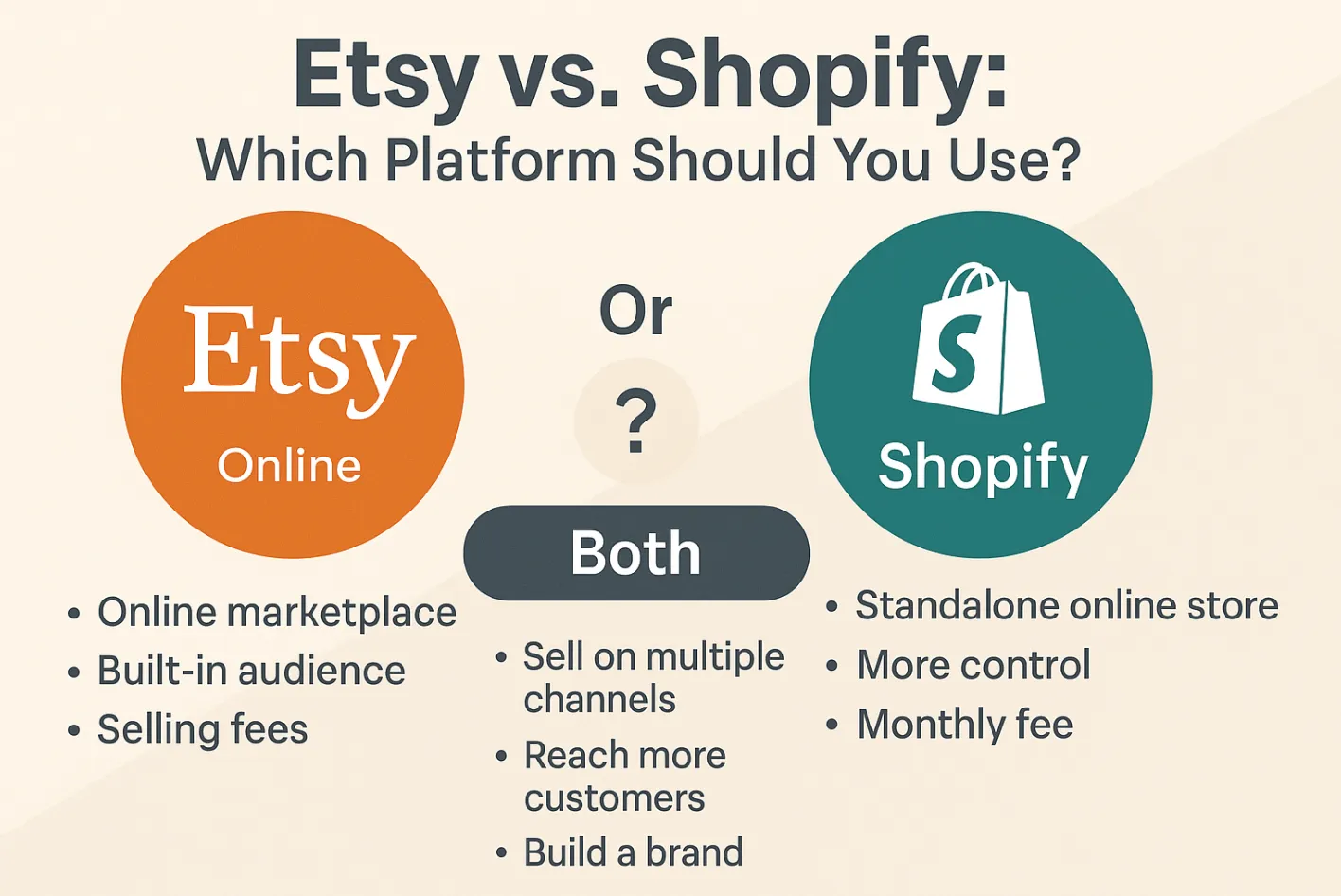
Etsy is a marketplace. You’re setting up a stall in a busy market. Millions of buyers are already walking around that market every day. You benefit from their foot traffic. But you’re also competing with every other stall in the market, you’re playing by the market’s rules, and the market takes a significant cut of every sale you make.
Shopify is a platform. You’re building your own shop on your own street. You decide everything — the design, the prices, the policies, the customer experience. But you have to drive every single person through your door yourself. The street doesn’t come with foot traffic.
Once you understand that distinction, most of the other decisions follow naturally.
The Etsy Fee Reality for UK Artists in 2026
Most articles about Etsy fees show you the headline numbers and stop there. The reality for UK sellers is considerably messier and worth understanding properly before you list anything.
Here’s what Etsy actually takes from UK sellers in 2026 on every sale:
| Fee Type | Rate | Notes |
|---|---|---|
| Listing fee | £0.15 per listing | Every 4 months or until sold |
| Transaction fee | 6.5% of total sale | Includes shipping — this catches people out |
| Payment processing | 4% + £0.20 | UK rate for Etsy Payments |
| Regulatory operating fee | 0.32% | UK specific charge |
| VAT on fees | 20% | Applied to all fees if you’re not VAT registered |
| Offsite Ads fee | 15% (or 12% over £8,280/year) | Mandatory if eligible, on Etsy-promoted sales |
Add those up on a real sale. Say you sell an original painting for £150 with £10 shipping. Your total order value is £160. Etsy takes:
- Transaction fee: £10.40 (6.5% of £160)
- Payment processing: £6.60 (4% of £160 + £0.20)
- Regulatory fee: £0.51
- Listing fee: £0.15
- Total: approximately £17.66 — over 11% of the sale
And if that sale came through an Offsite Ad you’d pay an additional 15% on top — taking Etsy’s total cut to over 26% of the sale price. On a £150 painting that’s £39 going to Etsy before you’ve covered a single material cost.
That’s not me being dramatic. That’s the actual maths. The listing fee of £0.15 gets all the attention because it’s the number Etsy puts in the headline. The reality is considerably more expensive.
The Shopify Fee Reality for UK Artists
Shopify is structured completely differently. You pay a fixed monthly fee regardless of how much or how little you sell, and if you use Shopify Payments there are no transaction fees at all.
| Plan | Monthly Cost | Transaction Fee |
|---|---|---|
| Basic Shopify | £25/month | 0% with Shopify Payments |
| Shopify | £65/month | 0% with Shopify Payments |
The maths on that same £160 sale through Shopify with Shopify Payments: £0 in transaction fees. You’re paying £25 a month as a flat subscription which covers unlimited sales.
Break-even point: if you’re selling more than roughly £250 a month on Etsy (where Etsy’s fees exceed £25), Shopify’s fixed cost model starts to make financial sense — before you even factor in the control and ownership advantages.
The caveat is that Shopify comes with no built-in audience. That £25 a month buys you a platform, not customers. Generating those customers is entirely your responsibility.
The Traffic Question — Where Etsy Really Wins
Here’s where I have to be genuinely fair to Etsy, because the fee comparison above can make it look like an obvious loser. It isn’t.
Etsy has over 90 million active buyers globally. They are actively searching for handmade, original and unique items — which is exactly what most artists are selling. The discoverability on Etsy for the right type of art and craft product is genuinely powerful, particularly when you’re starting out with no existing audience.
On Shopify you could have the most beautiful store in the world and sell nothing for months if you haven’t built an audience through social media, email marketing or SEO. That’s the reality. Shopify doesn’t send you customers. You have to find them yourself.
If you’re a new artist with no following, no email list and no marketing budget, Etsy’s built-in traffic is a genuinely valuable asset that offsets the higher fees.
The Ownership Problem with Etsy
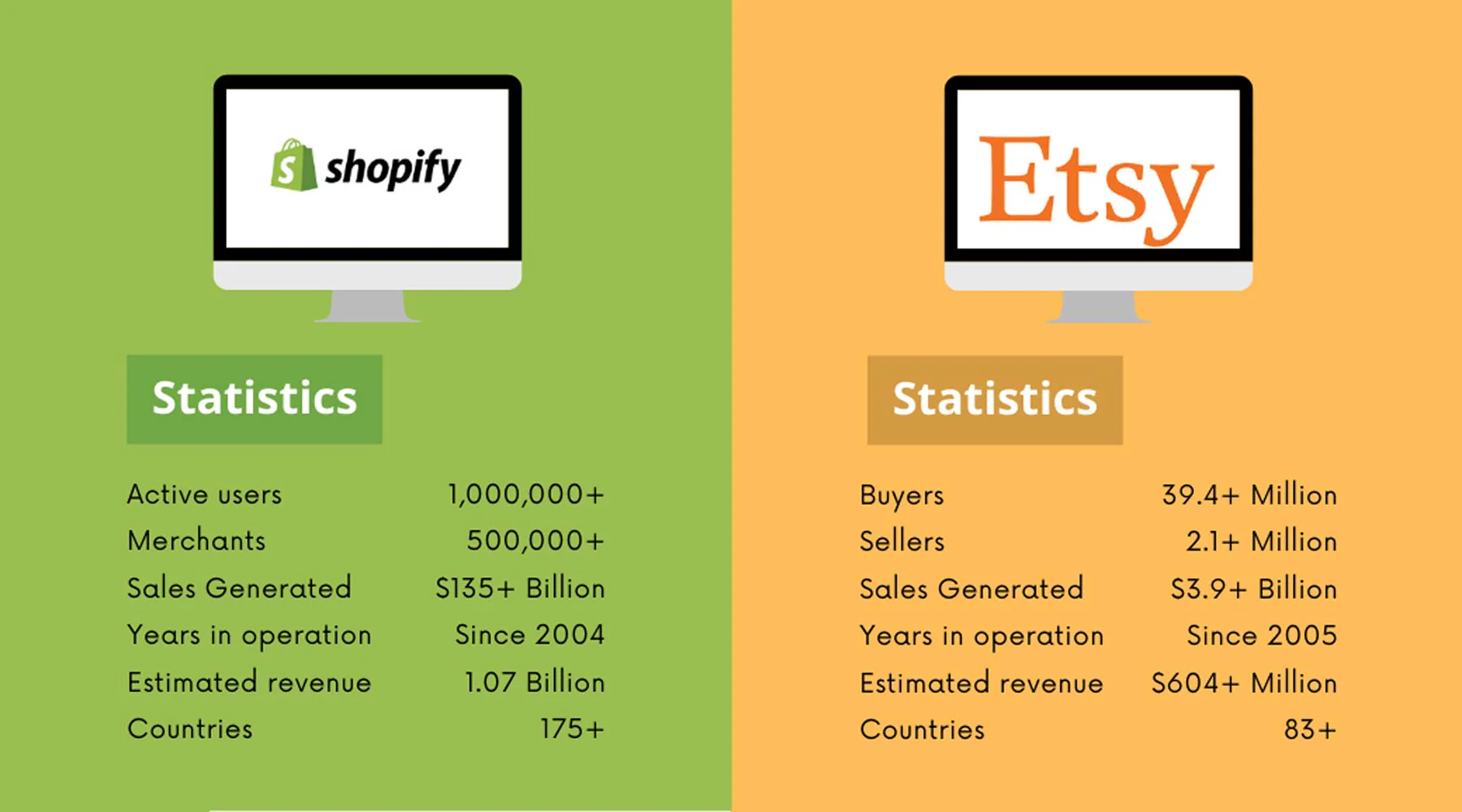
This is the thing that doesn’t come up enough in Etsy vs Shopify conversations and it matters enormously for long term business building.
On Etsy, you don’t own your customers. Etsy does. You can’t email your buyers directly, you can’t see their email addresses, you can’t build a relationship outside of the Etsy platform. If Etsy changes its algorithm tomorrow and your shop drops out of search results, you have no way to reach the people who’ve bought from you before. Your entire business sits on a platform you have zero control over.
I’ve spent 16 years watching what happens when businesses build entirely on platforms they don’t own. I built a community of 25,000 email subscribers at ARTdiscount and watched it generate £400,000 a year in attributed revenue — because those were our customers, not the platform’s. When you own the customer relationship, you own the business.
On Shopify, every customer is yours. You get their email address. You can market to them directly. You can build a repeat purchase relationship. Over time that customer list becomes your most valuable business asset.
The Full Comparison
| Etsy | Shopify | |
|---|---|---|
| Monthly cost | Free (but fees per sale) | From £25/month |
| Fees per sale | ~11-26% of sale value | 0% with Shopify Payments |
| Built-in audience | ✅ 90 million active buyers | ❌ You generate all traffic |
| Own your customers | ❌ Etsy owns the data | ✅ Full customer ownership |
| Brand control | ❌ Limited — Etsy’s branding | ✅ Full control |
| Setup ease | ✅ Very easy — live in minutes | ⚠️ More setup required |
| Print on demand | ⚠️ Works but clunky | ✅ Seamless with Printful/Printify |
| SEO potential | ⚠️ Limited to Etsy search | ✅ Full Google SEO potential |
| Long term scalability | ⚠️ Fees grow with sales | ✅ Fixed cost scales well |
The Answer Most Articles Won’t Give You
I said at the start that this is the wrong question. Here’s what I mean.
The most succesful artists I’ve seen selling online don’t choose between Etsy and Shopify. They use both simultaneously and they use them for different things.
Etsy for discoverability. Use Etsy’s built-in audience to find new customers. Let people discover you through Etsy search. Make sales. Build reviews. Get cash flowing.
Shopify as your owned home base. Build your own store where you control everything. Every customer you bring to Shopify is yours permanently. Your email list, your brand, your relationship.
The strategic move is to use Etsy as a top of funnel — it introduces your work to buyers who wouldn’t otherwise find you — and then migrate those buyers toward your own Shopify store over time where you keep 100% of the margin and own the relationship.
You can even do this subtly — include a card with every Etsy order that directs buyers to your website for future purchases, where they’ll often find a slightly wider range or exclusive items not on Etsy. Over time, your best customers migrate to your own platform.
Who Should Start With Just Etsy
If you have no existing audience, no marketing budget and you’ve never sold online before — start with Etsy. It’s lower friction, lower upfront cost and the built-in traffic gives you the best chance of making your first sales quickly. Use those first sales to learn what your customers want, build your reviews and generate cash flow.
Then add Shopify when you’re consistently making sales and you understand your customer well enough to start driving your own traffic.
Who Should Start With Shopify
If you already have a social media following, an email list, or any kind of existing audience — go straight to Shopify. You already have the traffic. You don’t need Etsy’s marketplace to find customers because you already have customers. Every sale you make on Shopify keeps significantly more money in your pocket than the equivalent sale on Etsy.
And if you’re planning to use print on demand — which I’d encourage every artist to consider — Shopify’s integration with Printful and Printify is considerably more seamless than Etsy’s.
The Verdict
Etsy gets you started. Shopify builds a business.
Use Etsy for discoverability while you’re building your audience. Use Shopify as your long term owned platform where you control everything and keep more of your money. Run them in parallel if you can manage both.
But whatever you do — build your email list from day one. Whether your sales come through Etsy or Shopify or both, the email list you build is the one asset that belongs entirely to you regardless of what any platform decides to do with their algorithm tomorrow.
If you want to understand the full Shopify setup process for UK artists, we’ve written a detailed Shopify review here. And if you’re weighing up Shopify against Squarespace, our Squarespace review covers that comparison in detail too.
→ Try Shopify Free → Open an Etsy Shop
Disclosure: This article contains affiliate links. If you sign up to Shopify via our link we may earn a commission at no extra cost to you. We only recommend platforms we’d genuinely point an artist friend toward.