Written by Paul Worrall
Nancy went through a phase earlier this year of wanting to make “proper jewellery, not the plastic bead kind” — which is how I ended up learning far more about UV resin than I ever expected to. It’s a genuinely different product to the epoxy resin I’ve written about before, and it solves a different problem, so I wanted to cover it properly rather than lumping it in with everything else.
I’m Paul Worrall. I spent nearly a decade running digital marketing for ARTdiscount, one of the UK’s largest online art retailers, and I now run Discount Art Supplies — a price comparison platform used by over 41,000 UK artists and crafters every week. If you’ve already read my Best Epoxy Resin guide, this is the sibling piece — smaller projects, faster cure, completely different working process.
Quick Picks
|
UV Resin vs Epoxy Resin: What’s Actually Different
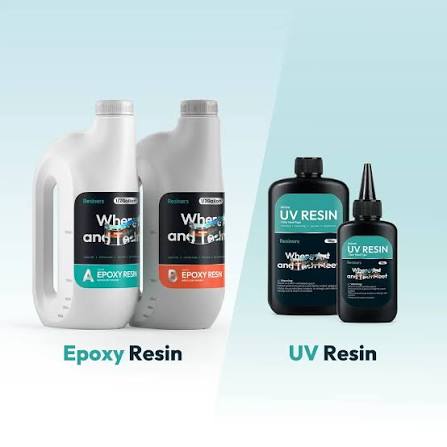
The big difference is right there in the name. Epoxy resin is a two-part mix — resin and hardener, combined by hand, curing slowly over 24-72 hours through a chemical reaction. UV resin is single-component, straight out of the bottle, and cures in one to three minutes under a UV or LED lamp. No measuring, no mixing ratios, no worrying about getting the chemistry wrong, which makes it a genuinely more forgiving material for anyone starting out.
The trade-off is depth and volume. UV resin only cures properly where the light can actually reach it, so it’s not suited to deep pours or anything much thicker than about 2-3mm per layer — that’s epoxy’s job, and I go into that properly in the epoxy guide. For jewellery, bezels, charms and thin coatings, though, UV resin is faster, easier and significently less wasteful, since you’re only activating what you need rather than mixing a full batch every time.
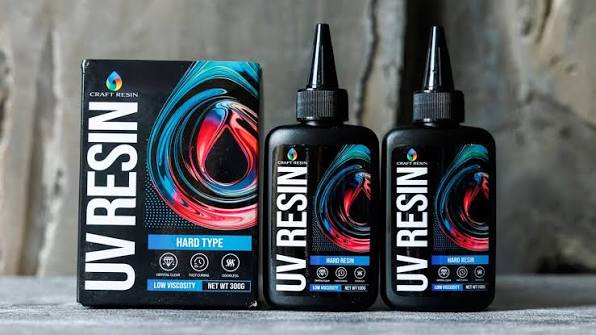
Craft Resin UV Resin
This is the one I’d point most people toward first. The finish is genuinely crystal clear straight out of the bottle, cures in one to three minutes under their branded lamp, and holds up well against yellowing over time, which is a real problem with some of the cheaper unbranded UV resins sold on marketplace sites. Consistancy is thick enough to control on bezel work without running everywhere, which matters more than it sounds once you’re working on something the size of an earring.
It’s not the cheapest option on the shelf, and for very high-volume production work the cost per piece adds up faster than some of the budget alternatives. For anyone making jewellery regularly rather than as an occasional project, though, the consistency and reliability genuinely justify the price difference.
Mouldd UV Resin Kit
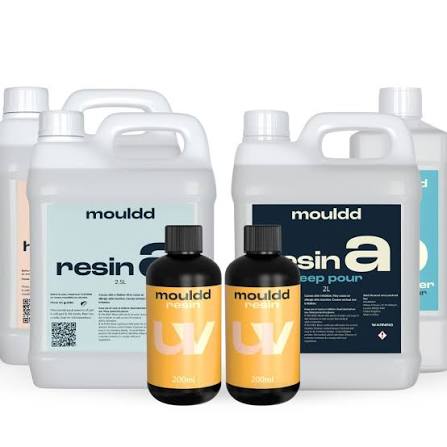
The starter kit I’d actually recommend if you don’t already own a UV lamp, since it comes with one included rather than leaving you to source one separately, which trips up a lot of first-timers who buy resin without realising sunlight alone won’t reliably cure it indoors. Food safe, tested to FDA standard, and cures in around two minutes under the included 36W lamp — genuinely everything a beginner needs in one box.
Where it falls a bit short is scale — this is built for occasional jewellery projects, not for anyone planning to produce and sell pieces regularly, where a dedicated higher-output lamp and a larger resin bottle will work out cheaper per piece. As an entry point it’s hard to fault though, and it’s exactly what I’d have bought if I’d known what I was looking for when Nancy first asked.
Padico UV-LED Resin
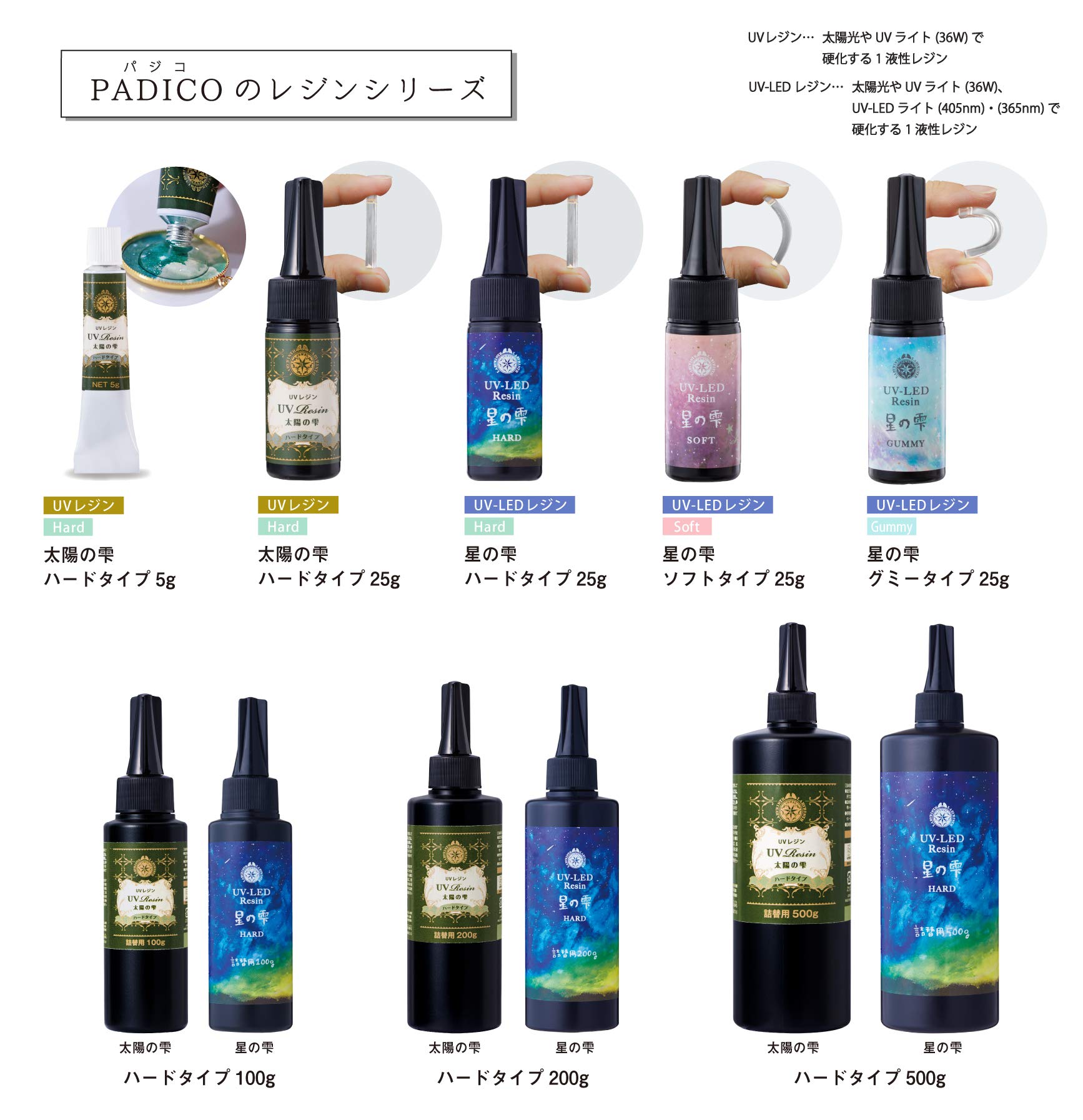
A Japanese brand that’s become genuinely well regarded among more serious jewellery makers for its clarity and control on fine detail work — charms, small bezels, layered pieces where you’re building up thin coats rather than a single pour. The hard-cure formula holds a sharp edge better than some of the softer UV resins on the market, which matters if you’re doing anything with defined shapes rather than just doming a flat surface.
It comes in smaller bottle sizes than most UK-made alternatives, so it works out more expensive per gram, and it’s imported rather than stocked as widely, meaning prices and availability vary more between UK retailers than most products on this list. Worth the extra cost specifically for detail work; probably not the one to buy in bulk for general crafting.
Apex Resin UV
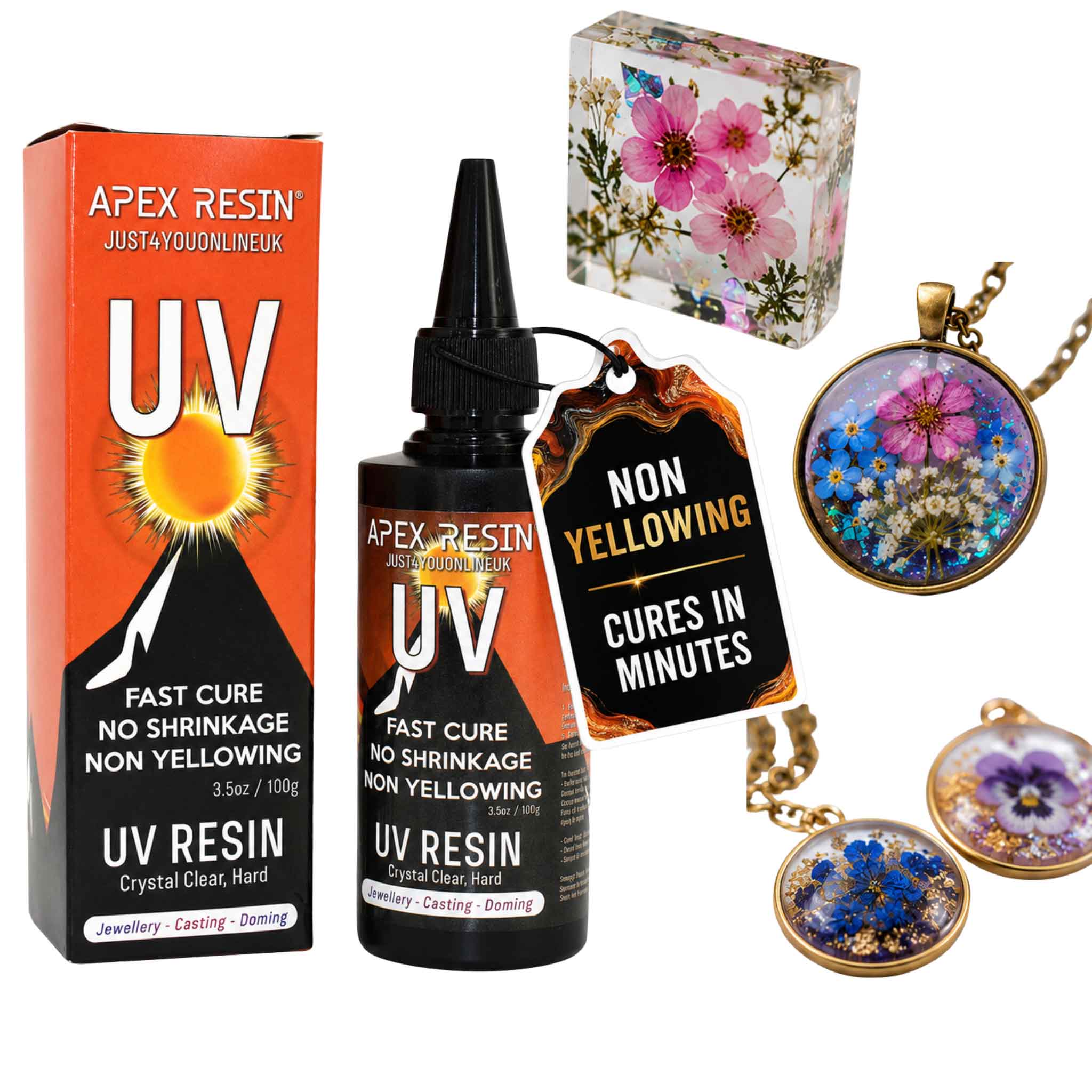
Slightly different niche to the others here — genuinely strong for bonding, small castings and repair work as much as pure jewellery, curable under UV lamp or even natural sunlight if you’re patient enough. Scratch resistant once cured, minimal shrinkage, and no measuring involved, which makes it importent for anyone doing quick fixes or small doming jobs rather than full jewellery production runs.
It’s a genuinely versatile product but that versatility means it’s not quite as specialised for fine jewellery detail as the Padico range above — a reasonable general-purpose choice rather than the specific tool for one job.
Do You Need a Special Lamp?
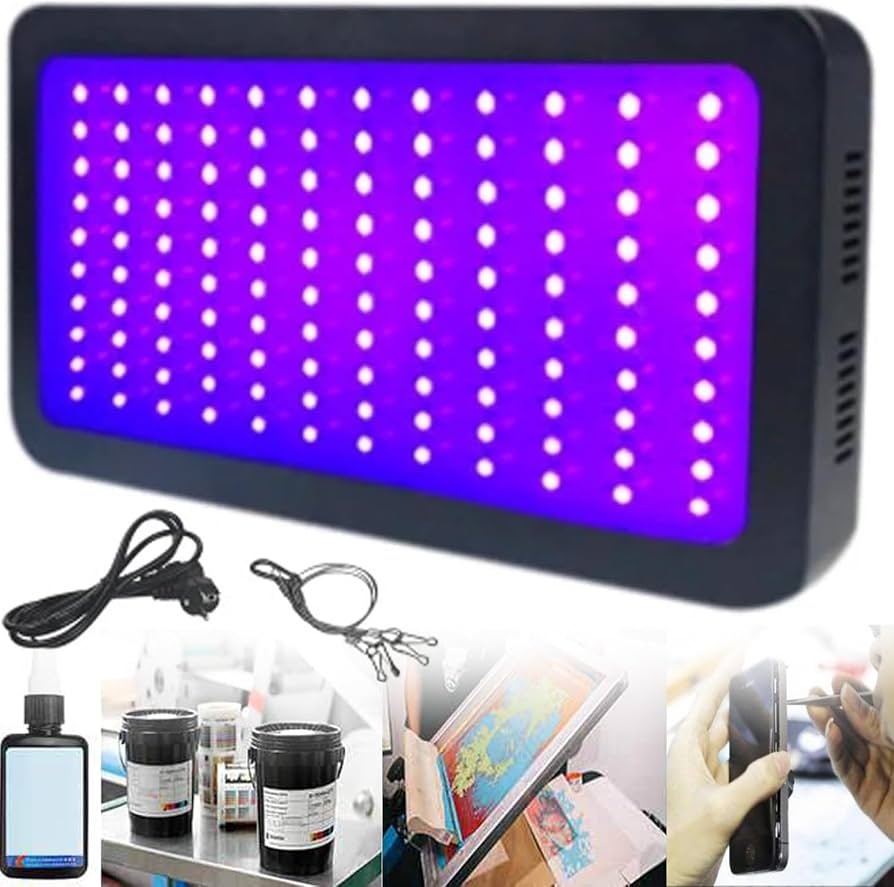
For anything you actually want to rely on, yes — a proper UV or LED curing lamp, not just a sunny windowsill. Sunlight contains UV light and will eventually cure most UV resins, but unpredictably and far more slowly, and UK weather makes it a genuinely unreliable method most of the year. A basic 24-36W lamp is inexpensive and gives you a consistant one-to-three-minute cure regardless of the weather outside, which is the whole point of choosing UV resin over epoxy in the first place.
FAQ
Is UV resin safe to use at home?
Most reputable UV resins are low odour and safe when used as directed, but gloves and a ventilated space are still worth using, and cured resin should always be checked for food-safe certification specifically if it’s going anywhere near something that will touch skin or mouths.
Can I use UV resin for anything other than jewellery?
Yes — small castings, sealing, bonding, and coating flat surfaces all work well with UV resin. It’s the depth limitation that rules it out for anything like a table top or deep pour, where epoxy remains the right choice.
Why hasn’t my UV resin cured properly?
Almost always either the layer was too thick for the light to fully penetrate, or the lamp wattage was too low for the volume of resin. Thin layers and a proper lamp solve the vast majority of curing problems people run into.
Prices on UV resin vary more between UK retailers than you’d expect, especially on the branded kits, so it’s worth a quick check before buying. At Discount Art Supplies we compare prices across all the major UK art and craft retailers in real time, so you can find the best current deal before you buy.