I’ll be upfront about something before we get into this. I spent just under ten years working as a digital marketing manager for one of the UK’s biggest online art supplies retailers. I was there when Daler Rowney products were being ordered by the pallet. I’ve seen the sales data, I’ve read the customer reviews at scale, and I’ve watched artists argue passionately about System 3 in our Facebook community of 14,000 people. So when I say this is an honest review — I mean it.
This isn’t a review written by someone who bought one tube off Amazon and filmed themselves squeezing it onto a palette. I’ve got context. I’ve got 16 years in digital marketing — mostly inside the art and e-commerce world — and I’ve got a nine-year-old called Zach and a six-year-old called Nancy who between them have probably got through more Daler Rowney paint than most adults I know. My wife Lucy can confirm that there are System 3 fingerprints on at least two walls of our house. So yes — we’ve tested it at home too.
👉 Looking for the best price on System 3? Compare System 3 prices across UK retailers on Discount Art Supplies before you buy.
What Is Daler Rowney System 3?
System 3 is Daler Rowney’s mid-range acrylic paint line — positioned above their student-grade Georgian range but sitting comfortably below professional-grade options like their Cryla line. It’s aimed squarely at hobbyist and improving artists who want decent quality without paying professional prices.
It’s made in the UK, which matters to a lot of the artists I’ve spoken to over the years, and it’s been around long enough to have a genuine reputation — good and bad — rather than just being a brand that exists on a shelf.
You can buy it in 75ml and 150ml tubes and pots, which already gives it an advantage over some budget ranges that only come in fiddly small tubes. For anyone painting at any kind of scale — even just A3 canvases regularly — that matters.
Who Is System 3 Actually For?
This is the question I wish more reviews answered honestly.
System 3 is not for professional artists doing large-scale gallery work who need absolute colour consistency between batches. It’s also not really aimed at complete beginners who’ll get through four tubes in a lifetime — for that, something like Reeves or even a craft acrylic will do fine and cost less.
It’s for the artist who has got past the beginner stage, knows what they like, paints regularly, and wants results that feel rewarding without spending £8–12 per tube. That’s a huge chunk of the UK hobbyist market. I know because I spent years marketing to them.
In our Facebook community — mostly UK-based hobbyist artists — System 3 came up constantly. It was the brand people graduated to when they wanted something better than their starter kit, and the brand they stuck with when they couldn’t justify — or didn’t need — professional grade. That loyalty tells you something real.
Colour Range
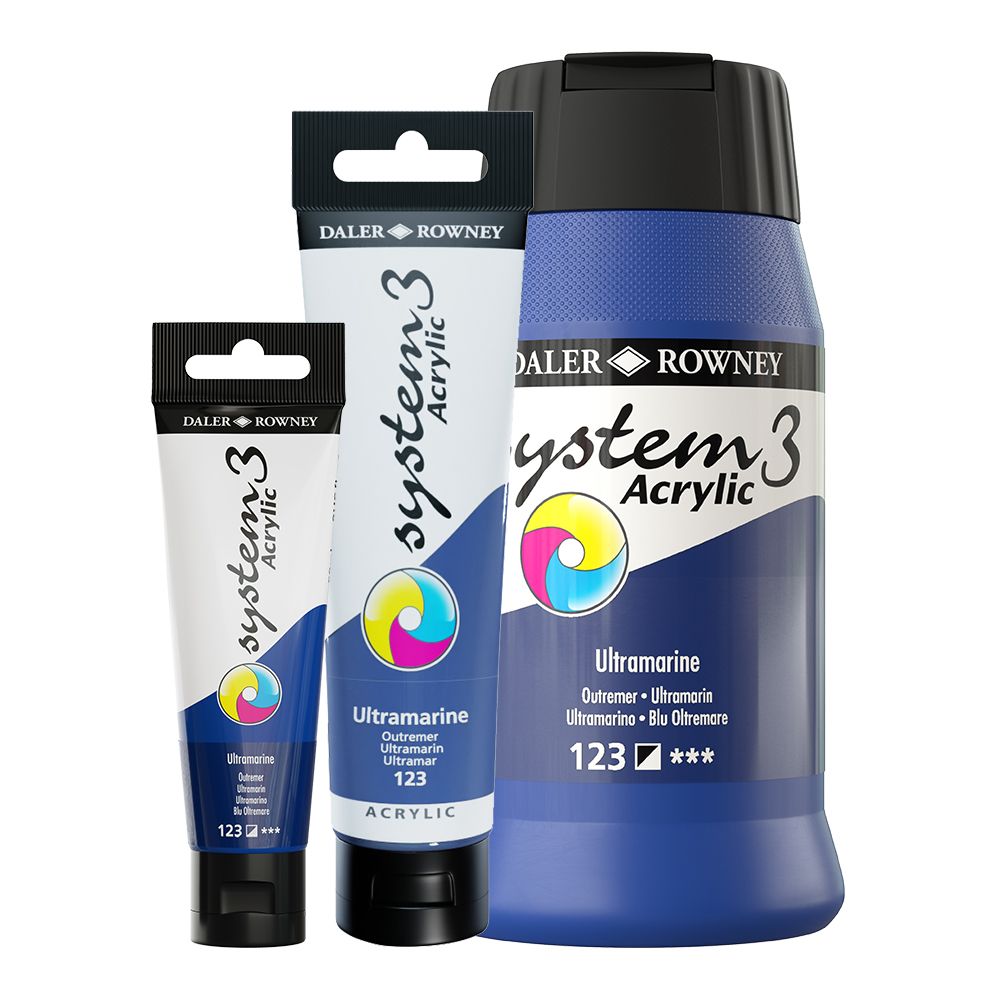
System 3 covers all the essentials — earth tones, primaries, and a good selection of specialty colours.
System 3 has a solid colour range — around 60+ colours depending on the season and what’s in stock. The range covers all the basics you’d expect: titanium white, mars black, the primary set, earth tones, and a good selection of more specific pigments for artists who know what they’re doing with colour mixing.
A few observations from years of watching what actually sells:
- The earth tones are consistently popular — burnt sienna, raw umber, yellow ochre. Good pigment load, consistent between tubes.
- The fluorescents and specialty colours are more variable in quality. Some are great, some feel thin. Worth testing individually rather than buying a full set if you need specific ones.
- Titanium White in System 3 is genuinely good for the price point. Opaque, strong, useful for mixing. This matters more than people realise — a bad white ruins your whole workflow.
You can browse the full System 3 colour range and compare UK prices here — we track prices across the main retailers so you’re not overpaying.
Consistency and Pigment Load
Here’s where I’ll give you something most reviews don’t: the honest version of “it depends.”
System 3 is what the industry calls a student-to-mid grade paint. That means the pigment load — the amount of actual pigment relative to filler and binder — varies more between colours than in professional ranges. Some colours are excellent. Some are noticeably weaker and need more layers to achieve opacity.
In practice: the darker, more opaque colours (black, dark blues, earth tones) tend to be more pigment-dense and perform well. The lighter, brighter colours (yellows, some reds, lighter greens) can feel more translucent and need building up. This isn’t unique to System 3 — it’s true across most paint ranges at this price point. But it’s worth knowing so you’re not disappointed when your Cadmium Yellow Hue needs four coats to cover a dark underpainting.
Compared to Winsor & Newton Galeria — the other obvious competitor in this bracket — System 3 holds up very well. The consistency is good, it doesn’t dry too fast on the palette, and it mixes predictably. Those are the things that actually matter when you’re mid-session.
Drying Time
Acrylic drying time is always a balancing act. Too fast and you can’t blend. Too slow and you’re waiting around.
System 3 dries at a fairly standard acrylic pace — faster than oils, obviously, but not annoyingly quick. In a UK climate (where most of my audience is painting in slightly chilly spare rooms and conservatories), it handles well. You’ve got a reasonable working window to blend on the canvas before it skins over. Zach has started doing proper paintings now at nine rather than just covering everything in one colour, and even he hasn’t complained about it drying too fast — which, given his patience levels, is genuinely high praise.
If you want to extend that working time, a small amount of retarder medium does the job. Daler Rowney make their own System 3 retarder, which is convenient and works well — no compatibility issues. Compare prices on System 3 mediums here.
The Pots vs Tubes Debate
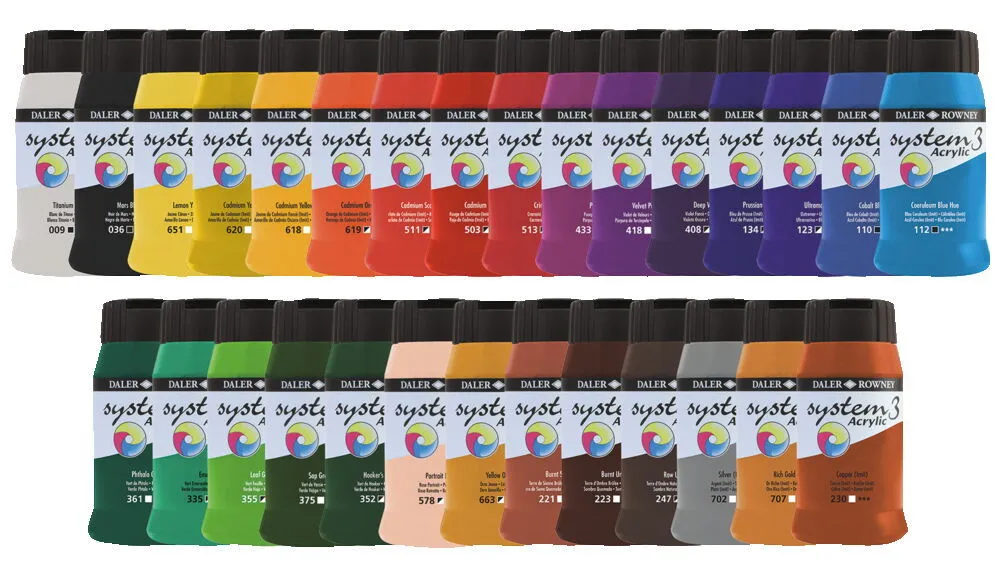
System 3 comes in both tubes and wide-neck pots — each better suited to different ways of working.
System 3 is one of the few ranges that sells in both tubes and wide-neck pots, and this is worth talking about because it genuinely changes how you work.
Tubes are better if you’re mixing on a palette, working smaller, and want more control over how much you use. Less waste, easier to store.
Pots are brilliant if you’re working large, doing backgrounds, or teach classes. The 150ml and 250ml pots in particular are genuinely great value for covering large areas without going through tubes constantly.
I’d suggest buying your background colours and colours you use in large quantities (white, black, your primary workhorse tones) in pots, and keeping the more specific or expensive pigments in tubes. It’s how most seasoned painters approach it, and your wallet will thank you. Check our paint and medium deals — we often find the pots at a meaningful discount versus buying direct.
Value for Money
This is what Discount Art Supplies is built on — helping artists spend their money better — so let me give you the practical breakdown.
A 75ml tube of System 3 typically lands between £4.50–£6.50 depending on the colour and where you buy it. For comparison, Winsor & Newton Professional comes in at £10–£18 per 37ml tube. That’s not an unfair comparison — they’re genuinely different products — but it illustrates that System 3 gives you a lot of paint for the money.
For most hobbyist artists painting regularly, System 3 represents the sweet spot. You’re not burning money on a range that’s going to frustrate you, and you’re not overpaying for professional grade performance you don’t yet need — or genuinely need — for what you’re making.
If you’re a painter who sells work or exhibits, you might want to move up. If you’re painting for the love of it — which is most of us, let’s be honest — System 3 is more than capable of producing work you’re genuinely proud of. Keep an eye on our paints and mediums deals page for the best current prices across UK stockists.
A Quick Note on Buying Smart
One thing I’d always recommend: don’t buy System 3 (or any acrylic paint) in a full starter set if you can avoid it. Sets always come with colours that look good on paper but that you’ll never use. Buy your primary colours individually, a good white and black, and add to your range as you work out what you actually reach for. You’ll waste a lot less money that way.
It’s the same advice I used to give to the 25,000 people on the ARTdiscount email list, and it’s still true now. Nancy picks colours based purely on which ones she likes the name of — “Burnt Sienna” is apparently a winner — which is honestly not the worst strategy for a six-year-old.
When you’re ready to shop, use our System 3 price comparison to make sure you’re getting the best deal available in the UK right now.
My Honest Verdict
Daler Rowney System 3 is a solid, reliable, genuinely good mid-range acrylic. It’s not perfect — some colours are stronger than others, and if you need absolute professional consistency it’s not the range for you. But for the vast majority of UK hobbyist and improving artists, it does exactly what it promises at a price that doesn’t sting.
I’d buy it. I’d recommend it. And I’d buy it in the larger pots for anything you go through quickly.
If you’re trying to figure out where art fits into your broader creative life — whether that’s selling prints, setting up a portfolio site, or getting your work out there — have a read of some of our other guides below.
🎨 Ready to buy? Compare the best UK prices on Daler Rowney System 3 — or browse all of our paint and medium deals for more savings.