Written by Paul Worrall
Good reference photos make a huge difference to your art. They help you get proportions, light and detail right, and they let you paint things you can’t easily set up yourself, such as a tiger, a mountain range or a model holding a tricky pose. The good news is that you don’t need to pay for them. There are plenty of excellent free reference photo sites for artists, as long as you know where to look and what you’re allowed to do with the images. This guide covers the best free sources, organised by subject, plus the copyright basics every artist should know before painting from someone else’s photo.
Drawing From Reference: Quick Picks
Best sketchbook: A4 hardback sketchbook
Best pencils: Graphite sketching pencil set
Best for viewing references: Adjustable tablet stand
Best for digital drawing: Drawing tablet
Best for composition: Artist’s viewfinder
The Best Free Reference Photo Sites for Artists
These are the best all-round sources, with huge libraries covering almost every subject. Sites and licences can change, so always check a site’s current terms before you use an image, especially if you plan to sell your work.
Pixabay. One of the biggest free image libraries, with millions of photos covering people, animals, landscapes, flowers and objects. The Pixabay licence allows free use, including commercial use, without attribution, and lets you modify the images. It’s an excellent first stop for almost any subject.
Unsplash. Known for high-quality, beautifully lit photography, which makes it particularly good for landscapes, portraits and moody scenes. The Unsplash licence allows free commercial use, with no attribution required, although crediting the photographer is appreciated.
Pexels. Another large library of free photos, with a good mix of people, nature and everyday scenes, all searchable by keyword. Like Pixabay and Unsplash, Pexels allows free use, including commercial use, without attribution.
Paint My Photo. A community site built specifically for artists, where photographers share their images for others to paint and draw. You’ll need to create a free account to search and download, but because the photos are shared for artists, it’s a friendly place to find references and see what others have made from them.
Morguefile. A long-running free photo archive with hundreds of thousands of images for inspiration and reference. It uses its own licence, so read the terms, but it’s a useful extra source when the bigger sites don’t have what you need.
Museum open-access collections. For still life, master studies and historical subjects, many major museums have released images of public domain artworks for free use. The Metropolitan Museum of Art’s Open Access collection is one of the best known. Copying old masters is one of the oldest ways to learn, and these collections make it free.
Free Portrait Reference Photos
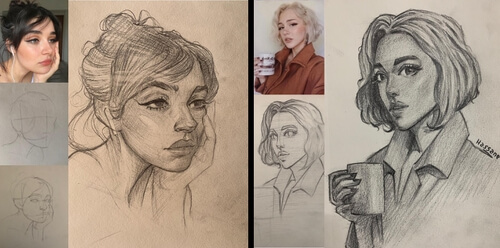
Portraits are one of the most-searched reference subjects, because getting faces right is hard and a good photo helps enormously. Unsplash and Pexels are particularly strong for portraits, with lots of well-lit photos of faces from different angles and in different lighting. Search for terms like “portrait side light”, “face profile” or “elderly portrait” to find images with interesting light and character.
When choosing a portrait reference, look for clear, directional light that creates strong shadows, as flat front lighting makes faces much harder to model convincingly. And remember that photos of identifiable people come with extra considerations, which I cover in the copyright section below.
Free Figure and Pose Reference for Artists
For figure drawing and gesture practice, there are brilliant free tools designed specifically for artists, many with built-in timers to help you practise quick poses.
Line of Action. A favourite for timed figure drawing, with sessions from 30 seconds to 10 minutes or a custom time, plus a class mode that moves from quick warm-ups to longer poses. As well as figures, it covers animals, hands and feet, faces, still life and environments, and it has forums for critique and advice.
SketchDaily. Another excellent timed reference tool, with poses from 30 seconds to an hour, and filters for gender, clothing, pose type and view. It also covers hands, feet, animals and plants.
Posemaniacs. Thousands of 3D anatomy models showing muscles without skin, which you can rotate, zoom and relight. It’s ideal for understanding how the body works underneath, which makes your figure drawing far more convincing.
Adorkastock. Focuses on diverse pose references, including models with disabilities, models of colour and plus-size models. All models are clothed, which makes it useful for teachers. Most material is free.
Timed gesture drawing is one of the quickest ways to improve. Thirty-second poses force you to capture movement rather than detail, and doing a few minutes every day builds your confidence and your tecnique fast.
Free Animal and Wildlife Reference Photos
Wildlife is a subject where reference photos are almost essential, because animals rarely sit still. Pixabay, Unsplash and Pexels all have large collections of animal and wildlife photos, from pets to big cats, birds and marine life. Search for the specific animal plus terms like “close up” or “portrait” for detailed images, or “in motion” for action poses.
Line of Action and SketchDaily also include animal reference in their timed sessions, which is great for practising quick animal sketches. If you’re painting pets, the best references are often your own. Take lots of photos in good natural light, at the animal’s eye level rather than from above.
Free Landscape Reference Photos
For landscapes, Unsplash is hard to beat for dramatic skies, mountains, coastlines and atmospheric light, and Pixabay and Pexels add plenty more. Search for specific places or features, such as “Lake District”, “Cornwall coast” or “canal boat”, to find British scenes. Better still, take your own photos on walks and days out, because a scene you’ve actually stood in is always easier to paint convincingly.
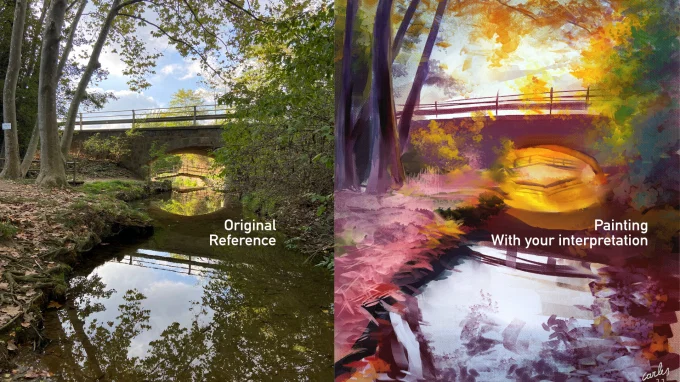
When painting a landscape from a photo, don’t feel you have to copy it exactly. Many of the best landscape paintings simplify the scene, move elements around, or combine several references. Use the photo for information about light, colour and structure, but make the composition your own. An artist’s viewfinder is a handy tool for finding a stronger composition within a busy photo.
Free Flower and Still Life Reference Photos
Flowers are well covered on all the big free sites, and Pixabay in particular has huge collections of individual blooms, bouquets and botanical close-ups, ideal for botanical art and watercolour practice. For still life, museum open-access collections are a goldmine for studying how great painters arranged objects and handled light, while Line of Action includes still life in its timed sessions.
That said, still life is one subject where it’s worth setting up your own whenever you can. A few objects on a table with a single lamp gives you a real, three-dimensional reference that teaches you far more about light and form than any photo.
Can You Use Free Reference Photos and Sell Your Art?
This is the question that worries artists most, and it’s worth understanding the basics. Please note that this is general information, not legal advice. If you’re unsure about a specific use, check the licence carefully or ask the photographer.
Free doesn’t mean no rules. Free images are still covered by a licence, and the licence tells you what you can and can’t do. Always read it before you use an image for anything you plan to sell.
The big sites are generous. Pixabay, Unsplash and Pexels all allow free commercial use without attribution and let you modify the images. That’s why they’re popular with artists. What they don’t allow is selling the photos themselves, unchanged, so you can’t simply print a downloaded photo and sell it as your own work.
People and trademarks need extra care. Photos of identifiable people come with restrictions. For example, you shouldn’t use them in a way that implies the person endorses something, or in an offensive context. Logos and trademarks in photos can also cause problems if you use them commercially without permission.
Make it your own. The safest and most creative approach is to use reference photos as information rather than copying them exactly. Change the composition, combine references, alter the lighting or colours, and bring your own interpretation. That’s better practice artistically, and it puts you on much firmer ground when you sell.
When in doubt, ask or credit. If you love a particular photographer’s image and want to paint it closely, it’s polite, and often appreciated, to ask permission or credit them, even when the licence doesn’t strictly require it. There’s little arguement against doing the decent thing.
Tips for Drawing and Painting From Reference Photos
Use the biggest, clearest image you can. Viewing your reference on a tablet or laptop lets you zoom in on details, and an adjustable stand keeps it at eye level next to your easel or sketchbook. Watch out for the ways cameras distort reality: photos can flatten depth, exaggerate perspective close to the lens and lose detail in shadows and highlights, so use your judgement rather than copying every flaw. And try to work from life too whenever you can. Reference photos are brilliant, but drawing from real objects, people and places trains your eye in a way photos can’t.
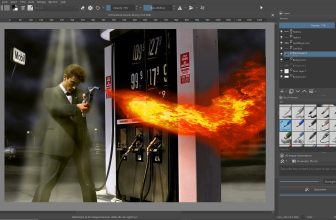
If you’re building your drawing kit, my guide to the best sketching pencils is a good place to start, and if you’re drawing digitally from references, my Krita review covers a brilliant free painting program.
Check sketching pencils on AmazonCompare sketchbook prices
Frequently Asked Questions
Where can I find free reference photos for artists? Pixabay, Unsplash and Pexels have huge free libraries, while Paint My Photo is built specifically for artists. For figure drawing, Line of Action and SketchDaily offer free timed pose reference.
Can I sell art made from free reference photos? Often yes. Pixabay, Unsplash and Pexels allow free commercial use and modification, but you can’t sell the photos themselves unchanged. Always check the licence, take extra care with identifiable people and trademarks, and make the artwork your own.
What are the best free sites for figure drawing reference? Line of Action and SketchDaily are excellent for timed figure and gesture practice, Posemaniacs is great for anatomy, and Adorkastock offers diverse, clothed pose reference.
Where can I find free portrait reference photos? Unsplash and Pexels have large collections of well-lit portrait photos. Look for images with clear, directional light, as it makes faces easier to model.
Do I need to credit the photographer? Pixabay, Unsplash and Pexels don’t require attribution, but crediting the photographer is appreciated. Other sites have their own rules, so check each licence.
Bookmark this page and come back whenever you need inspiration. And if you’d like a steady stream of art supply deals to go with your new references, join the newsletter or our Facebook group of 15,000+ artists.