
There is a conversation I keep having with artists that I find genuinely frustrating to witness. They spend months on a painting — weeks on the composition, days on the colour mixing, hours on the detail — and then they stick it in a £9.99 frame from a supermarket and wonder why it doesn’t look right on the wall. Or worse, they leave it unframed entirely because the whole framing thing feels complicated and expensive and they don’t know where to start.
I grew up in Blackpool, where the light off the Irish Sea has a particular quality that makes you appreciate how much presentation matters to how something looks. My mum had a print of a Lowry she’d had framed properly — proper mount, proper glass — and next to it on the same wall she had a couple of things in cheap frames. The difference in how they read as objects was stark, even to me as a kid who didn’t know anything about art. The framed one looked like something worth having. The others looked like they were waiting to be taken down.
I’ve been in the UK art industry long enough now to have strong opinions about framing. This is everything I’d want an artist to know before they frame their first piece for sale or exhibition.
Why Framing Matters More Than Most Artists Think
Framing isn’t just presentation — it’s preservation. The wrong frame, the wrong mount board, the wrong glass, the wrong backing can actively damage your work over years and decades. Acid migration from cheap mount board, UV light breaking down pigments through standard glass, humidity trapped against the work by non-breathable backing — these are real, documented ways that badly framed artwork deteriorates.
For work you’re selling to collectors or showing in exhibitions, the framing is also a commercial statement. A poorly framed piece tells the buyer something about the artist’s relationship with their own work. A beautifully framed piece communicates confidence, professionalism and care. When someone is deciding whether to spend £300 or £3,000 on an original painting, the framing contributes to that decision whether you acknowledge it or not.
And for your own work — the pieces you live with at home — a proper frame transforms a painting from something leaning against a wall into something that genuinely belongs on it. I’m thinking of a small watercolour one of my kids did a couple of years ago that spent six months rolled in a tube before we got it properly framed. It’s now on the wall in our living room in Poulton and it looks genuinely lovely. The frame didn’t improve the painting — it just gave it the context it deserved.
The Anatomy of a Proper Frame
Before deciding how to frame your work, it’s worth understanding what a frame actually consists of — because each element affects both the appearance and the preservation of your art.
The moulding — the outer frame itself. Available in wood, aluminium, resin and various composites. Wood is traditional and versatile. Aluminium is clean and contemporary. Both are valid depending on the work. The moulding you choose should complement the artwork without competing with it — a heavily ornate gilt frame on a contemporary abstract is a conversation, and not always a harmonious one.
The mount — the card border between the frame and the artwork. Also called a mat in American framing terminology. The mount serves multiple functions: it adds visual breathing space around the artwork, it prevents the glazing from touching the surface of the work (crucial for works on paper), and when made from the right materials it provides a physical barrier against acid migration. For conservation purposes your mount board must be acid-free — anything less risks permanently damaging works on paper over time.
The glazing — the glass or acrylic that protects the front of the work. Standard picture glass offers no UV protection. For original artwork you want conservation glass (70% UV filtering) or museum glass (99% UV filtering). The difference in price is meaningful; the difference in protection is significant. Anti-reflection glass is worth considering for pieces that will hang in rooms with bright natural light.
The backing board — behind the artwork. Should be acid-free foam board or conservation board for works on paper. MDF and standard hardboard off-gas chemicals that can migrate into the work over time.
The hanging hardware — D-rings, mirror plates, wire. Often an afterthought but worth getting right — particularly for larger pieces where the hardware needs to be genuinely secure.
Conservation Framing — When You Need It
Conservation framing uses acid-free materials throughout and UV-filtering glazing. It’s the standard expected for original works going into galleries, exhibitions or serious private collections. If you’re selling original paintings or works on paper to buyers who care about the longevity of what they’re purchasing, conservation framing is the minimum you should be offering.
It costs more than standard framing — sometimes significantly more — but for original work the investment is justified. The last thing you want is a collector returning to you in ten years with a faded, acid-stained piece asking questions.
For prints and reproductions conservation framing is still a good idea but the stakes are lower — reproductions can always be reprinted if the worst happens. For originals there is no such safety net.
DIY Framing vs Professional Framing vs Online Framing
This is the decision most artists get stuck on and the honest answer is it depends on what you’re framing and what it’s for.
DIY framing makes sense for practice work, personal pieces and situations where budget is genuinely tight. The learning curve is real — cutting mounts accurately requires a proper mount cutter, cutting glass requires practice and the right tools, and achieving the clean, tight corners of a professional frame is harder than it looks. But it’s absolutely learnable and for artists who frame a lot of work it pays for itself.
Professional high street framing is the gold standard for original work going to exhibition or to important collectors. A qualified framer — look for Fine Art Trade Guild membership as a quality indicator — will use conservation materials, cut mounts to exactly the right dimensions and produce a result that no online service can quite replicate. It’s expensive but for your best work it’s the right choice.
Online framing has transformed the economics of framing for artists in the last decade. Several UK companies now offer genuinely excellent quality at prices well below the high street, with custom sizing, mount options and fast turnaround. For prints, limited editions and work that doesn’t require the full conservation treatment, online framing is excellent value and the quality has improved dramatically. The rest of this article covers the best UK options.
Best UK Online Framing Companies
⚡ Can’t be bothered reading the whole list?
Our top pick for UK artists is Frames.co.uk — Manchester-made, over 33 years experience, sample frames available before you commit, and consistently competitive pricing. If you just need a great frame fast, start here.
🏆 Visit Frames.co.uk — Our Top Pick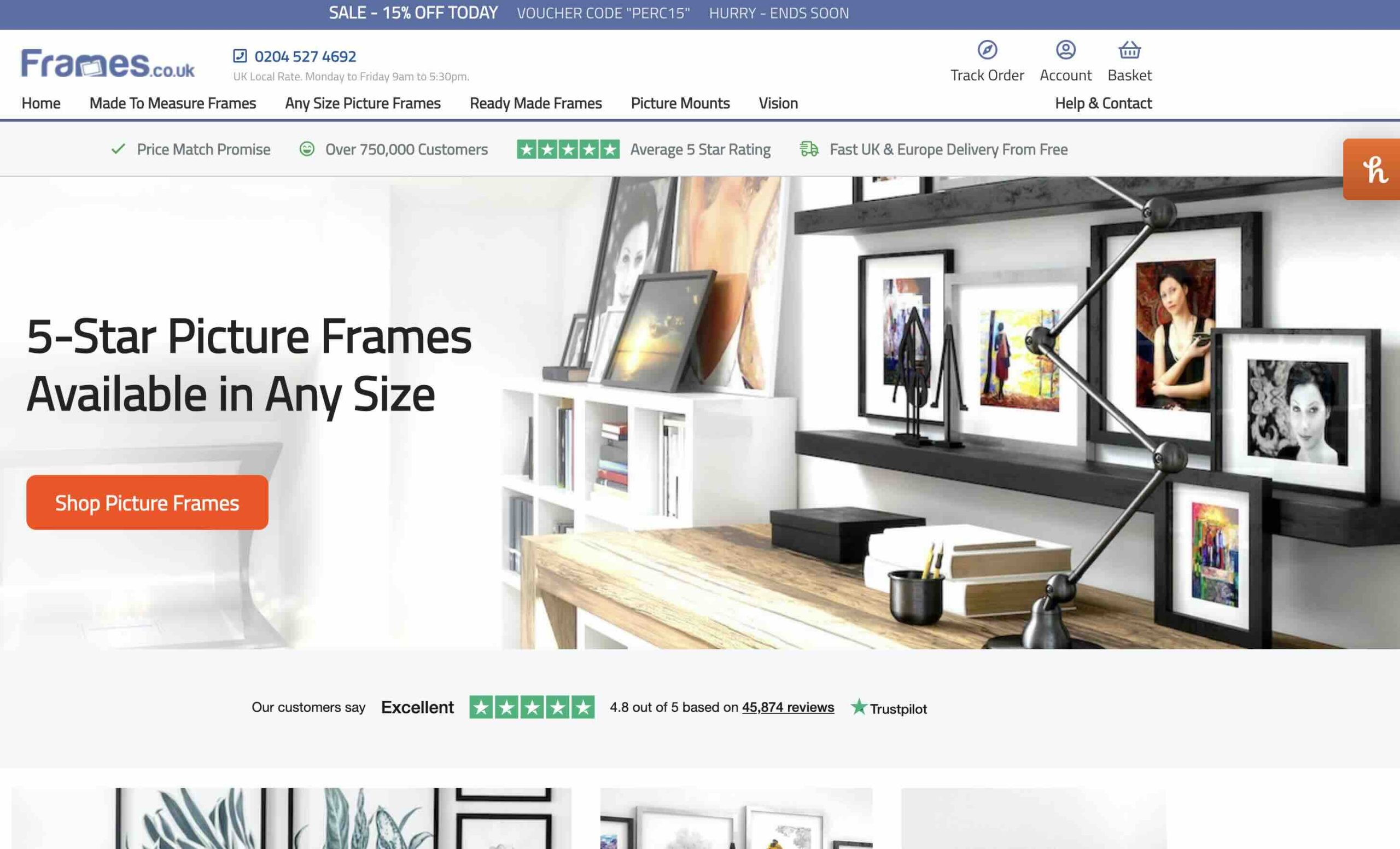
1. Frames.co.uk — Our Top Pick 🏆
Made in Manchester — specifically Sale, Cheshire — Frames.co.uk has been manufacturing picture frames for over 33 years and the experience shows in the quality. They offer sample frames before you commit to a full order which is a genuinely useful service if you’re unsure about colour or finish — a level of customer confidence that cheaper online operations simply don’t offer.
Up to 55% off high street prices, free delivery over £50, and a team of experienced framers available by phone Monday to Friday. The combination of competitive pricing and proper telephone support makes them particularly good for artists who want to talk through framing options before ordering. There’s something reassuring about a framing company that will actually pick up the phone. In sixteen years in this industry I’ve found that the businesses that invest in proper customer service are almost always the ones producing the best product too.
For artists ordering regularly, the pricing and quality consistency make Frames.co.uk the most reliable choice across the full range of framing requirements — prints, originals, canvas boards, and everything in between.

2. eFrame
eFrame is the biggest name in UK online framing and for good reason. Over 800,000 customers, made-to-measure frames manufactured in their own UK factory, delivered in 2-4 working days. The range of frame styles is enormous — hundreds of options in wood and aluminium across every colour and finish you can think of.
What sets eFrame apart is the online configurator — genuinely easy to use, lets you specify exact dimensions and preview the finished result. They save up to 60% versus high street framing on comparable products which makes the economics compelling for artists framing multiple pieces.
They also offer a business service for artists and galleries with improved pricing on volume orders — worth investigating if you’re framing regularly for exhibitions or commissions.
3. EasyFrame
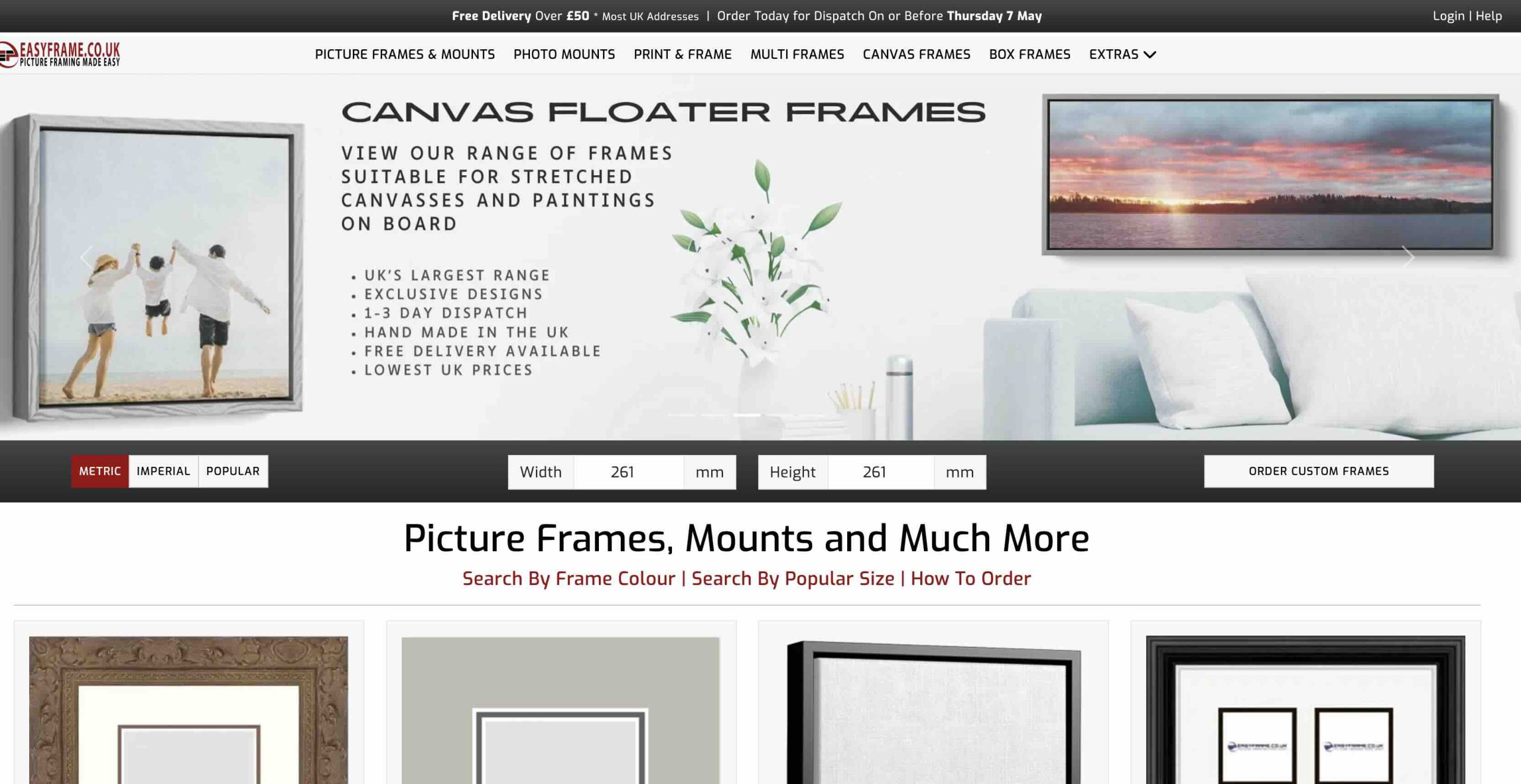
EasyFrame stocks over 500 frame styles and is particularly strong on specialist options — canvas floater frames, inset frames for board paintings, St Ives frames specifically designed for canvas boards. If you paint on canvas or board and want a contemporary floating presentation, EasyFrame’s range is among the best available online.
They also offer a digital print and frame service — upload your image, specify your requirements and receive a printed, mounted and framed piece. Useful for artists wanting to offer framed prints without handling the fulfilment themselves.
The multi-aperture mount options are extensive — up to 64 apertures — which is unusually broad for an online framer and useful for exhibition displays or portfolio presentations.
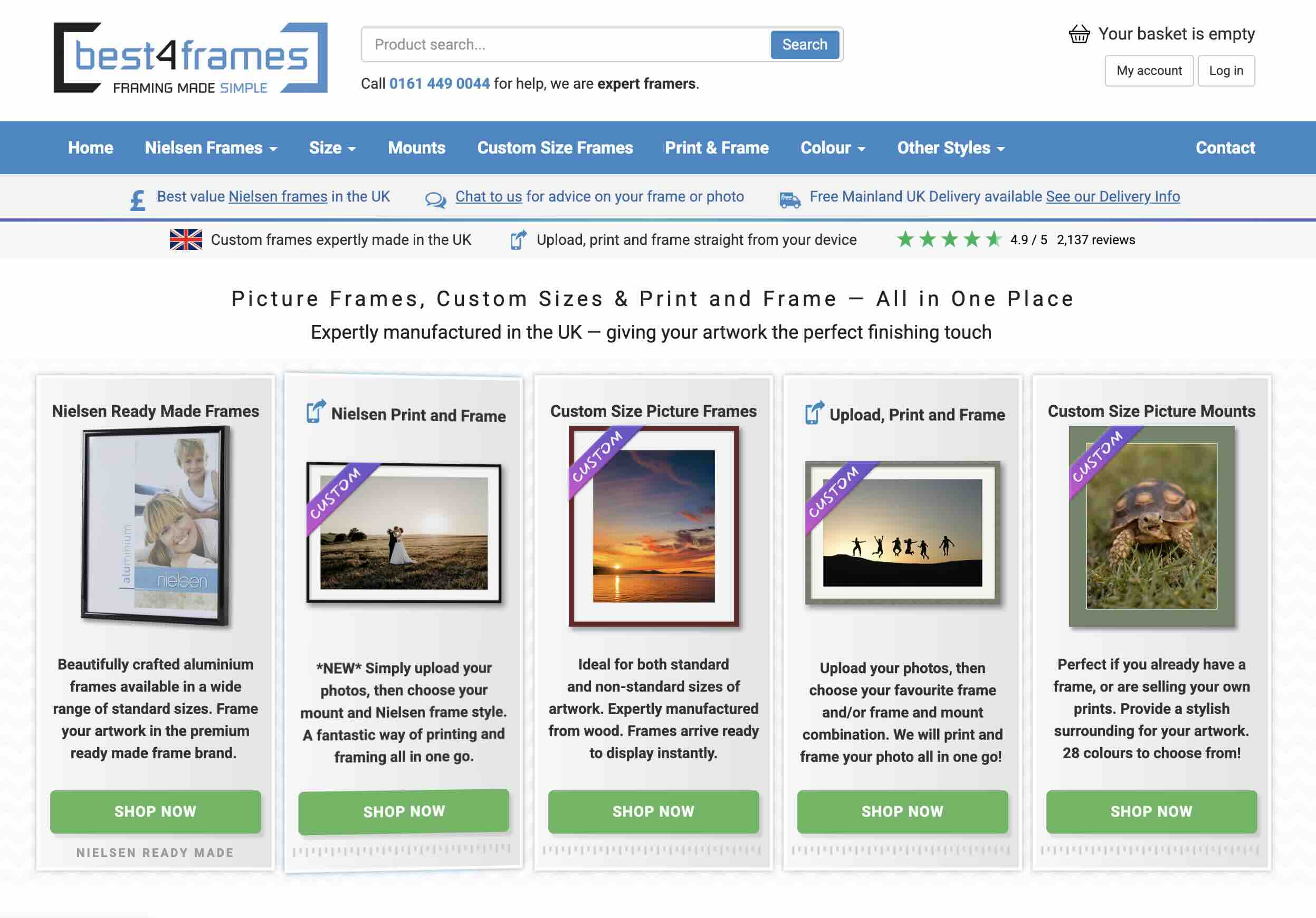
4. Best4Frames
Best4Frames specialise in Nielsen aluminium frames — the professional standard for contemporary art presentation, particularly photography and digital prints. If you work in a contemporary style and want the clean, minimal look of an aluminium frame, Best4Frames is the most comprehensive UK source for the Nielsen range.
Their print and frame service — upload your image, choose your frame and mount — is well executed and the Nielsen frame quality is genuinely excellent. Widely used by photographers and digital artists who want a professional presentation without the high street markup.

5. Picture Frames Express
Manufactured in Coventry, Picture Frames Express offers made-to-measure frames with the option of delivery within 24 hours of dispatch — which is impressive for custom sizing. The range covers wood and aluminium in a good selection of finishes and they offer multi-aperture options alongside standard framing.
They’ve worked with The Stephen Wiltshire Gallery among others which gives some indication of the professional quality level. Useful for artists who need quick turnaround on exhibition framing.
→ Visit Picture Frames Express
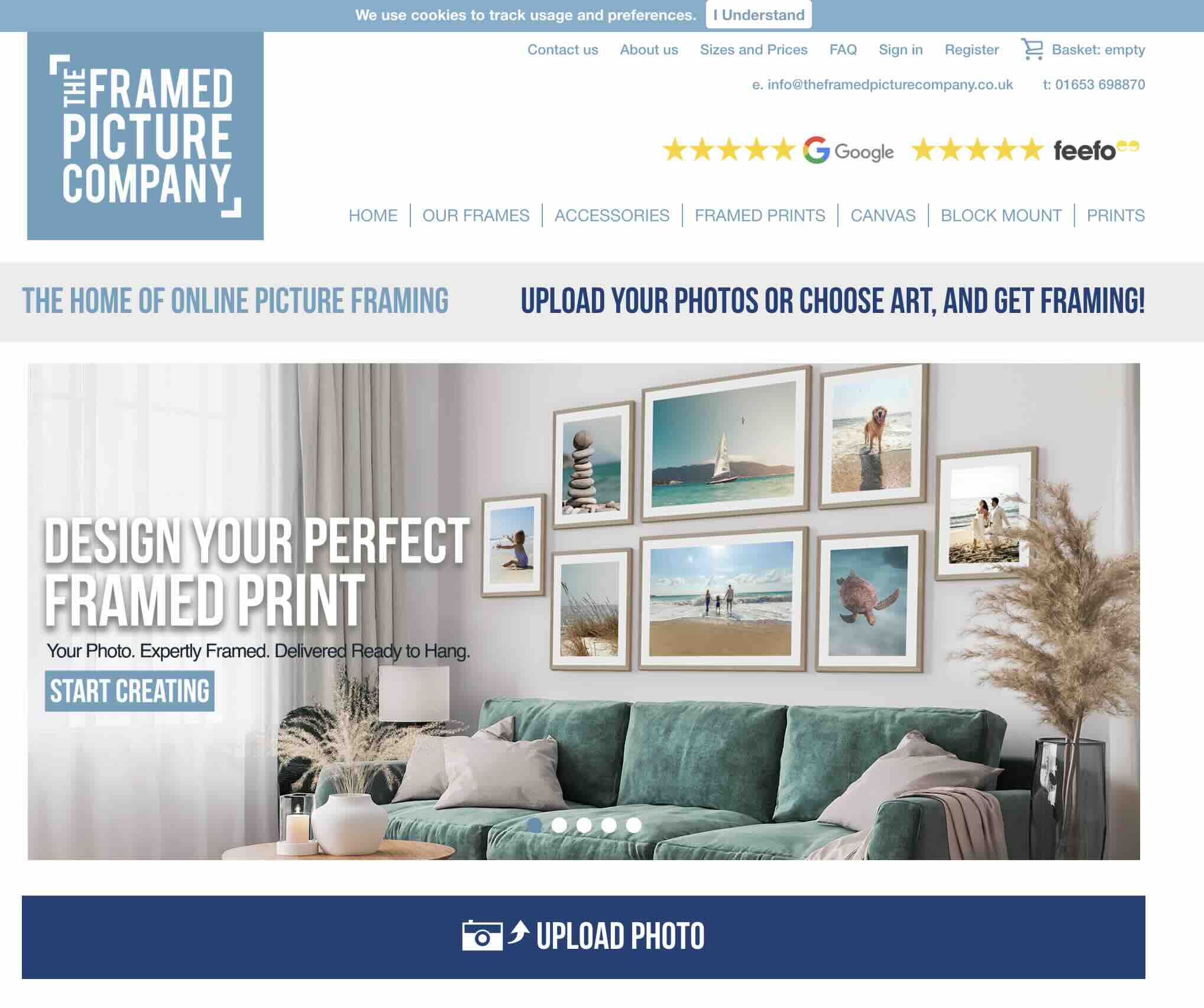
6. The Framed Picture Company
Based in Malton, North Yorkshire, The Framed Picture Company are Fine Art Trade Guild members and Guild Commended Framers — serious credentials that matter when you’re framing original work. Everything is handmade to order by their team, all frames arrive ready to hang with appropriate hardware included.
The North Yorkshire location gives me a certain regional satisfaction as someone from the North West — there’s something right about fine art framing being taken seriously in a part of England with a long tradition of producing serious artists. The quality reflects the craft approach.
→ Visit The Framed Picture Company

7. Kwik Picture Framing
Bradford-based with over 40 years of experience, Kwik Picture Framing offers the full range of framing services including specialist conservation framing, canvas stretching and custom mount cutting for trade customers. Particularly strong on 3D and memorabilia framing if you work in mixed media or sculptural practice.
The trade pricing for wholesale frames in standard colours is worth investigating for artists who frame in volume — black, white, gold, silver, oak, grey and mahogany available at bulk supply pricing.
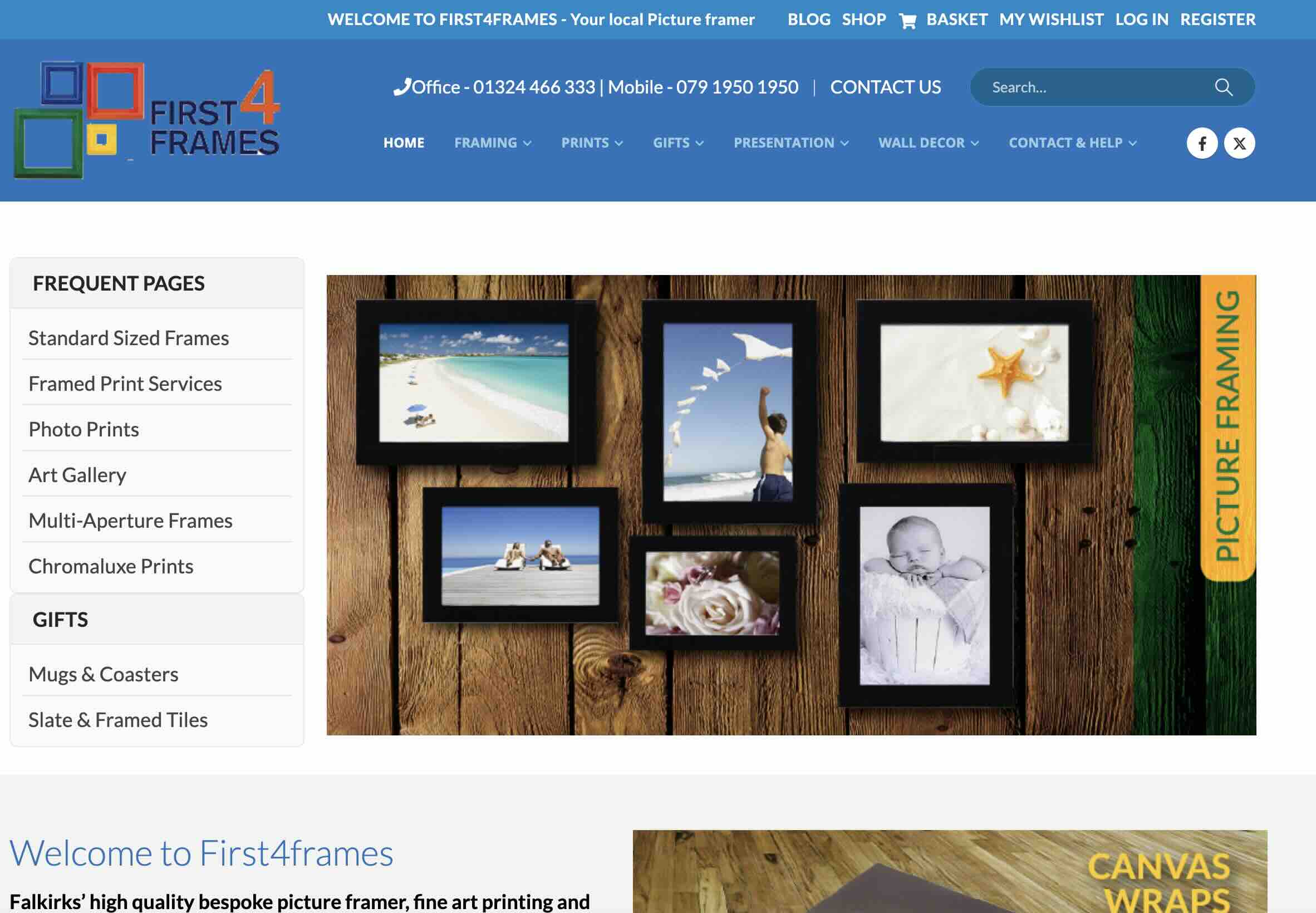
8. First 4 Frames
First 4 Frames have been operating for over 20 years and are particularly focused on the intersection of giclée printing and bespoke framing — making them a natural choice for artists who produce high quality fine art prints and want them presented to gallery standard. Fine Art Trade Guild members with consistently strong Trustpilot reviews.
If you’re producing limited edition prints and want a supplier who understands the giclée process as well as the framing, First 4 Frames is worth serious consideration. For more on giclée printing as a medium, Printed.com is one of our recommended UK print partners — read our guide to see how their giclée printing service works.
Quick Comparison
| Company | Best For | Location | Turnaround |
|---|---|---|---|
| Frames.co.uk 🏆 | Our top pick — quality, support, value | Sale, Manchester | Varies |
| eFrame | All round, best value | UK factory | 2-4 days |
| EasyFrame | Canvas/board paintings, floaters | UK | Varies |
| Best4Frames | Nielsen aluminium, photography | UK | Varies |
| Picture Frames Express | Fast turnaround | Coventry | 24hrs from dispatch |
| The Framed Picture Company | Conservation, guild quality | Malton, Yorkshire | 5 working days |
| Kwik Picture Framing | Trade/wholesale, 3D framing | Bradford | Varies |
| First 4 Frames | Giclée prints, fine art | UK | Varies |
Framing for Exhibition — What Galleries Expect
If you’re framing work for a gallery exhibition there are usually specific requirements and it’s worth asking before you spend money on framing that doesn’t meet them. Common gallery requirements include:
D-rings rather than sawtooth hangers — most galleries hang work on a professional picture hanging system that requires D-rings at specific heights. Check the gallery’s requirements before framing.
Consistent framing across a body of work — galleries generally expect a cohesive presentation. If you’re showing ten pieces they should be framed consistently, not in ten different styles.
Conservation standard materials — any gallery taking work seriously will expect acid-free mounts and UV glass as a minimum.
No reflective glazing — some galleries specifically request non-reflective glass because of their lighting setups. Again, ask before you frame.
If you’re thinking about getting your work into galleries and want to understand the full picture of how to present and sell your art professionally, we have guides on Etsy vs Shopify for UK artists and why Shopify works well for artists selling online that cover the commercial side of getting your work in front of buyers.
Framing Your Prints for Sale
If you sell prints — whether through your own Shopify store or through print on demand via Printful or Printify — the framing question is slightly different. Most print buyers are happy to frame their own prints, particularly at lower price points. The convention in the print market is to sell unframed with the dimensions clearly stated so buyers can source their own frame.
Where offering framed prints makes sense is at the higher end of the print market — limited editions, giclée prints, work being sold as a more premium product. In those cases partnering with a framing company like Frames.co.uk or First 4 Frames to handle fulfilment can meaningfully increase your average order value. Our Printed.com review also covers their framed print service if you want a single supplier for both printing and framing.
Questions about framing your work? Drop them in our Facebook community of 15,000 UK artists — framing decisions are one of the most common things artists ask about and there’s always someone in the group with useful experience to share.