
Written by Paul Worrall
The hardest part of a first painting is rarely the painting. It’s staring at a blank canvas with no idea what to put on it. Most beginners don’t need a masterpiece in mind, they need a simple subject that teaches one useful skill and looks good enough to be proud of. That’s what this list is for: easy acrylic painting ideas, each one built around something small you can learn, with the supplies you’ll need.
I’m Paul Worrall. I spent nearly a decade running digital marketing for ARTdiscount, one of the UK’s larger online art retailers, and I now run Discount Art Supplies — a price comparison platform used by over 28,000 UK artists every week. Acrylics are one of the most-read topics on the site, and they’re a forgiving place to start, which is why I’d steer most beginners towards them.
Quick Picks — A Beginner’s Starter Kit
- Paint: Beginner Acrylic Paint Set
- Surface: Canvas Boards Multipack
- Brushes: Acrylic Brush Set
- Small projects: Mini Canvases Pack
- Longer working time: Stay-Wet Palette
Before you start: three things that make acrylics easier
Acrylic paint is water-based and dries quickly, which is a gift for layering and a trap for blending. Three habits help. First, work with the paint you need rather than squeezing out half the tube, because it dries on the palette faster than you expect. A stay-wet palette, or a little retarder mixed in, buys you more time on blending projects. Second, remember that colours can dry slightly lighter or darker than they looked wet, so judge a colour once it’s dry. Third, let each layer dry before adding details on top, or the colours will drag and muddy. If you’re still choosing paint, our guide to the best acrylic paints in the UK is a good place to start.
🛒 Buy a Beginner Acrylic Paint Set on Amazon 🔍 Compare Prices
Easy acrylic canvas painting ideas
1. Sunset sky with a silhouette
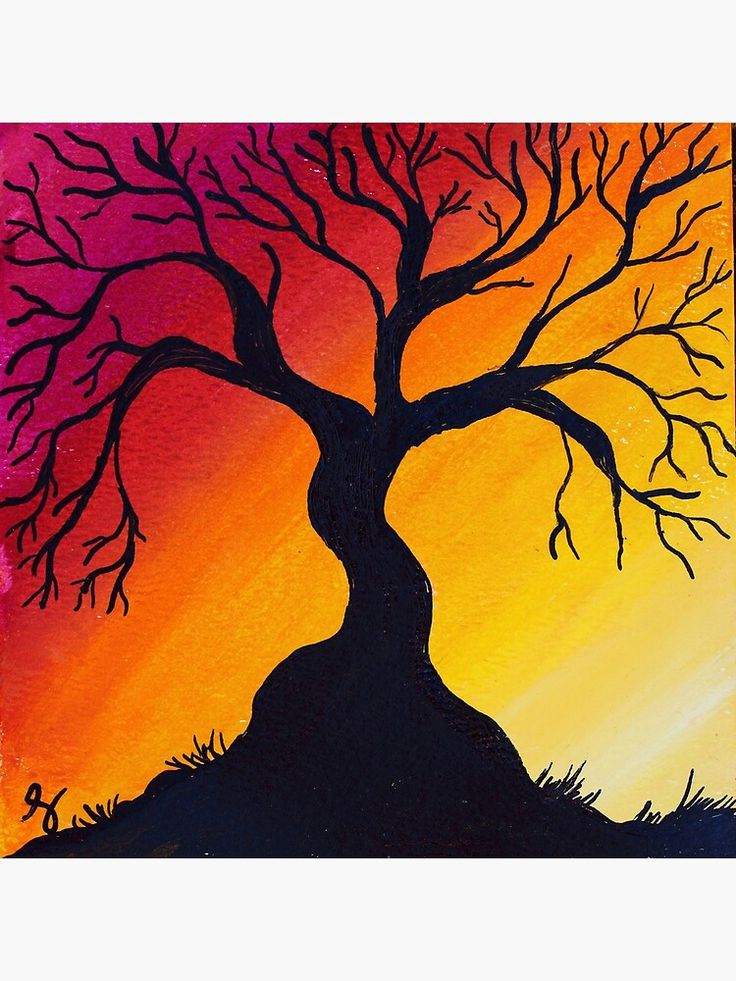
This is the classic first project, and for good reason. You blend a few colours into a glowing sky, then finish with a flat black silhouette in front: a tree, a palm, a hill, or a figure. It teaches blending, which is the most useful skill in acrylics, and the silhouette needs no detail at all. Paint the lightest colour near the horizon, blend upwards into deeper tones while the paint is still wet, and add the silhouette once the sky has dried.
2. Layered hills and landscapes
Landscapes look harder than they are. Paint your furthest hills first in a pale, cool colour, then add each nearer layer slightly darker and warmer. That simple rule of lighter and cooler in the distance creates convincing depth with no drawing skill at all, and it uses the same colour thinking we cover in our colour theory guide.
3. Abstract colour blocks
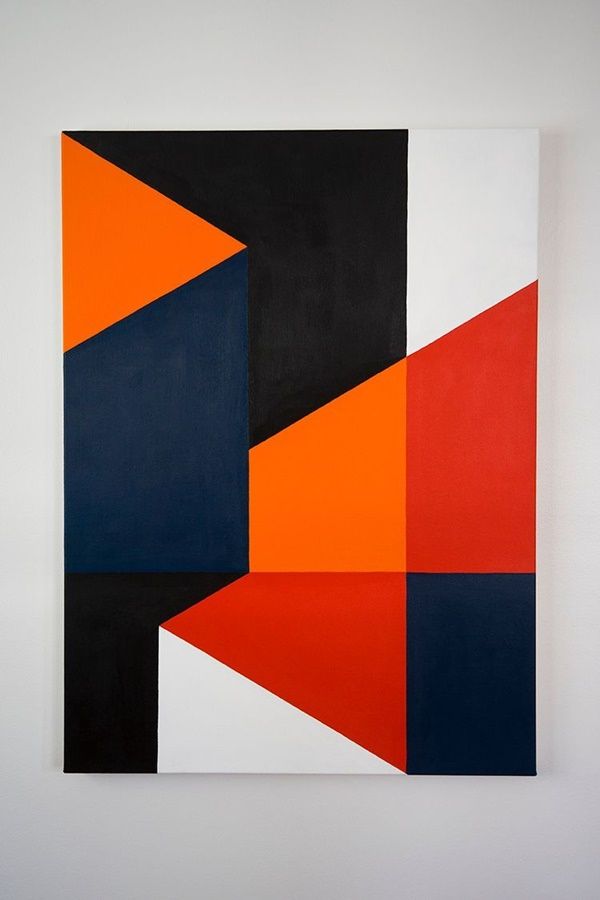
Abstract painting is a good first step if you’re nervous about getting things “wrong”, because nothing has to look like anything. Pick three or four colours that sit well together, block them across the canvas, and add a contrasting accent. For crisp stripes and straight edges, low-tack tape helps, and our guide to masking tape for painting covers which kinds suit artwork.
4. Dot painting
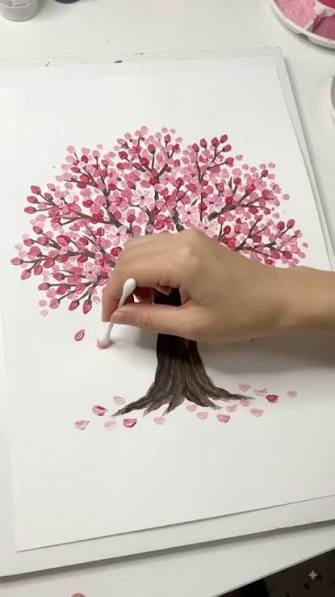
Dot painting is relaxing and almost impossible to get wrong. Use a cotton bud or the back end of a paintbrush to build up a flower, a mandala or a simple pattern in tiny dots. It’s a good way to practise colour choices and it needs no brush control, which makes it a nice one to do alongside children.
🛒 Buy Canvas Boards on Amazon 🔍 Compare Prices
Flower and animal painting ideas
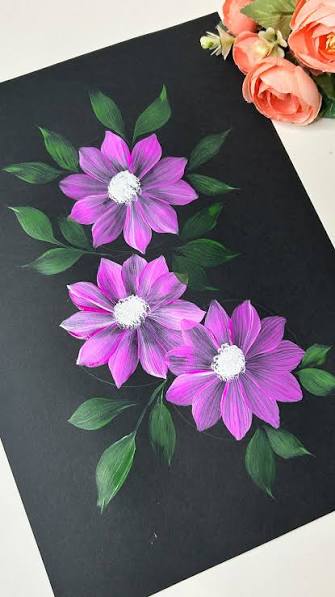
Flowers work well for beginners when you simplify them. Paint a bold background first, then use big, chunky petal shapes and a contrasting centre rather than trying to render every detail. Tulips, daisies and sunflowers all suit this approach. For animals, silhouettes against a bright wash are the easiest route, and a cat, a fox or a bird in profile reads instantly even with no fine detail. When you’re ready to add whiskers or fur texture, a small round brush and a little patience will go a long way.
🛒 Buy an Acrylic Brush Set on Amazon 🔍 Compare Prices
Seasonal and Christmas acrylic painting ideas
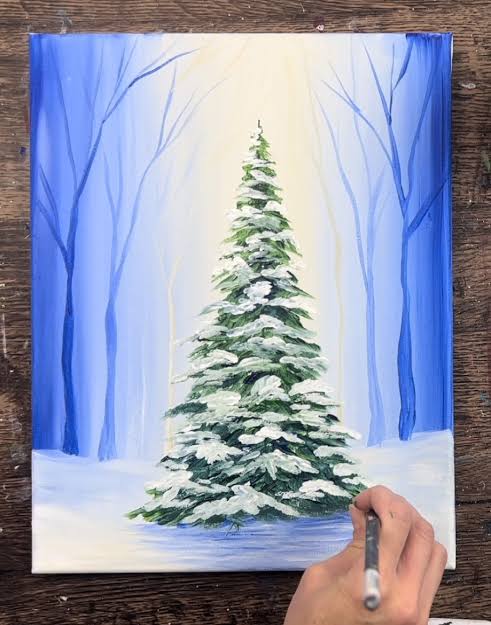
Seasonal projects are a gift for beginners, because the subjects are simple and familiar. For Christmas, a snowy fir tree against a deep blue sky, painted with white dots for falling snow, is quick and effective. Small canvases or painted cards make lovely handmade gifts. For autumn, warm leaves and pumpkins on a dark background look striking with only a few colours, and for spring, Easter eggs and pastel flowers suit light, soft washes. Seasonal terms come around fast, so if you want something ready for the festive period, start now.
Small acrylic projects: mini canvases, rocks and more
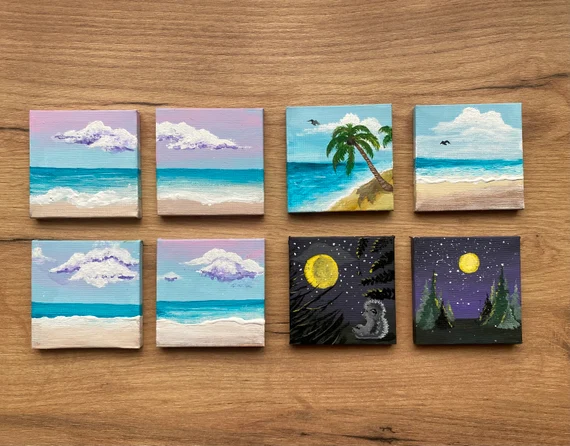
Small surfaces take the pressure off. A mini canvas costs very little, finishes quickly and lets you try an idea without committing to a large piece. They’re also perfect for practising: you can paint a whole row in a session, each one testing a different colour mix or technique. Acrylic also works on rocks and wood, and if you want a finished piece to last, our guide on how to seal acrylic paint on wood covers sealing it properly. And if you’d rather outline and add detail with a pen than a brush, our guide to the best pens for drawing and illustration covers acrylic paint pens.
🛒 Buy Mini Canvases on Amazon 🔍 Compare Prices
What about acrylic pouring?
Acrylic pouring, where you pour thinned paint across a canvas and let it flow, is a popular technique in its own right, but it needs extra mediums and a different approach to the projects above. I’d learn the basics on a brush first, then treat pouring as a separate next step.
20 more acrylic painting ideas to try
If you want a quick prompt when you sit down to paint, here are some more starting points, all simple enough for a first or second attempt:
- A single big flower filling the whole canvas
- Layered mountains fading into the distance
- A moon over a dark sky with a few stars
- A row of simple coloured doors or houses
- Rainbow stripes with masking tape for crisp edges
- A cat or dog silhouette against a bright wash
- A palm tree silhouette at sunset
- Autumn leaves in warm reds and oranges
- A snowy tree scene with white dots for snowfall
- A pumpkin on a dark background
- A bowl of fruit using three or four colours
- A sea horizon with dry-brushed white waves
- A tree with fingerprint leaves
- A bold abstract using only black, white and one bright colour
- A pink and orange sky over still water
- A simple cactus in a pot
- A starry night inspired sky with swirling blues
- A row of tulips with blocky petals
- A lighthouse on a rocky headland
- Colour-mixing grids that double as practice and wall art
Mistakes that put beginners off
A few things catch almost everyone. Trying to acheive a perfect result on the first go is the big one, so treat early paintings as practice and expect some to be wierd. Another is working too slowly on a blend, which is where a stay-wet palette helps. And finally, don’t panic if a painting looks messy halfway through; plenty of paintings go through an awkward stage and pull together at the end, or the “mistakes” dissapear under the next layer.
FAQ
What should a beginner paint with acrylics?
Start with simple subjects built from big shapes and flat or blended colour, such as a sunset sky with a silhouette, an abstract made of colour blocks, layered hills, or a dot-painted flower. These projects teach blending and layering without needing fine detail.
How long does acrylic paint take to dry?
Acrylics generally feel dry within about 15 to 30 minutes, though thick layers take longer. That speed is useful for layering, but it also means you need to blend quickly. A retarder or a stay-wet palette can slow things down if you need more working time.
Do I need to prime a canvas for acrylics?
Most pre-stretched canvases and canvas boards are sold already primed, so you can usually paint straight onto them. If you’re using bare wood, board or unprimed canvas, prime it with gesso first so the surface takes the paint evenly.
What colours should a beginner buy?
A small set is plenty: a red, a yellow, a blue, plus white and black. You can mix most other colours from those. Choosing a warm and a cool version of each primary gives you cleaner mixes, which our colour theory guide explains in more detail.
Pick one idea from this list, gather a few basic supplies, and just start. The first painting will teach you more than any amount of reading about it. As always, check Discount Art Supplies before you buy — we compare prices across major UK retailers in real time, so you’re getting the best deal going.