Written by Paul Worrall
I’ve been in the UK art supplies industry for sixteen years. I spent nearly a decade running digital marketing for ARTdiscount, one of the UK’s largest online art retailers, and I now run Discount Art Supplies — a price comparison and deals platform with 20,000 email subscribers and a community of 36,000 UK artists. In that time I’ve watched hundreds of artists try to sell their work online. I’ve seen what works, what doesn’t, and what people wish someone had told them before they started.
This is the guide I’d have wanted when I started. It’s long because the topic is genuinely complex and anyone who tells you otherwise is either oversimplifying or trying to sell you a course. I’ll cover everything — third party platforms, building your own website, SEO, email marketing, paid advertising, print on demand, social media, and the uncomfortable truths that most guides leave out.
My background is worth stating upfront so you know where this advice comes from. I’ve personally built and managed e-commerce operations on Magento, WordPress, and Shopify. I’ve managed email marketing at scale using Klaviyo — building automated email sequences that generated over £400,000 in annual attributed revenue at ARTdiscount. I’ve run Google Ads campaigns with £150k+ annual budgets, managed Meta advertising, built SEO strategies from scratch, and scaled D2C channels from zero to £700k annual revenue. I am not writing this from theory. Every piece of advice in here comes from doing it, often getting it wrong first, and working out what actually works through trial and experience.
There’s no single right answer. The right approach depends on what you make, who you’re making it for, and how much time and money you have to invest. But by the end of this you’ll have a clear enough picture to make intelligent decisions rather than just following whatever advice you stumbled across on Instagram.
Part One — Understanding the Landscape
Before deciding how to sell your art online you need to understand what you’re selling and who you’re selling it to. These sound like obvious questions but most artists skip them and go straight to “which platform should I use?” — which is like picking a vehicle before you know where you’re going.
What are you actually selling? This matters more than most artists realise. Original paintings, limited edition prints, open edition prints, digital downloads, commissioned work, art supplies, tutorials, courses — each of these has a different optimal sales model, different margins, different audiences, and different platforms that serve them well. A watercolour artist selling originals needs a different approach to a surface pattern designer selling digital downloads, even though both would describe themselves as “selling art online”.
Who is your buyer? Demographics, interests, income level, where they spend their time online. The person who buys original oil paintings for their home is a different person from the one who buys graphic art prints for their studio flat. Both are valid audiences. Both require different approaches. Understanding yours specifically will save you months of misdirected effort.
What’s your price point? This determines almost everything about your sales model. A £15 print requires a completely different approach to a £1,500 original. High-volume, low-price work suits marketplaces and print on demand. Low-volume, high-price work requires trust, personal connection, and usually direct relationships with buyers.
Be honest with yourself about these three things before you read another word of this guide. It will make everything that follows more useful.
Part Two — Third Party Platforms
Third party platforms are the fastest way to get your work in front of buyers without building anything yourself. You’re borrowing someone else’s traffic, someone else’s trust, and someone else’s infrastructure — in exchange for a cut of your revenue. The platforms vary enormously in how that trade-off works, so let’s go through the main options honestly.
Etsy
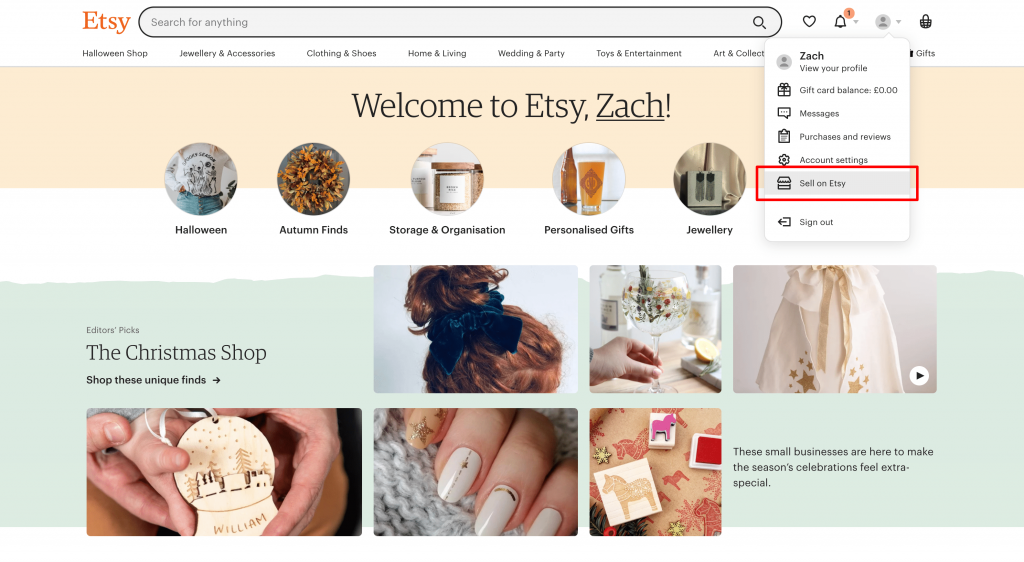
Etsy is where most artists start and, for many, where they stay. It’s the world’s largest marketplace for handmade, vintage, and creative goods — with over 90 million active buyers. For UK artists, the audience is real and buying. The platform’s existing trust with consumers means your first sale can come without you having established any reputation of your own.
The fee structure: £0.16 listing fee per item, 6.5% transaction fee, 4% + £0.20 payment processing. On a £100 sale that’s roughly £11 gone before postage. On a £20 print it’s closer to £2.50. Factor this into your pricing from day one — too many artists set prices based on production cost plus a margin and then discover the platform fees make it unviable.
Etsy’s search algorithm rewards listings with strong titles, accurate tags, competitive pricing, good photography, and — critically — sales history. A new shop with no sales history competes against established shops with thousands of reviews and years of data behind them. This is the fundamental challenge of Etsy for new sellers. You need sales to rank. You need to rank to get sales. Breaking that cycle usually requires either running Etsy Ads initially, promoting externally, or a significant amount of patience and iteration.
The honest Etsy picture in 2026: the platform has become considerably more competitive than it was five years ago. The flood of print on demand sellers, AI-generated art, and dropshipped products has diluted the marketplace and frustrated buyers and genuine makers alike. That said, for original handmade work and genuine craft, Etsy still delivers buyers. The artists succeeding on it are the ones who treat their Etsy SEO as seriously as their artwork — titles, tags, descriptions optimised with the same care as their creative process.
Read our full Etsy vs Shopify comparison for UK artists before deciding whether Etsy alone is the right long-term home for your work.
Redbubble
Redbubble is the largest print on demand marketplace in the world — 17 million monthly visitors, over 700,000 artists. You upload your artwork, they print it on t-shirts, phone cases, stickers, art prints, homeware, and more when someone orders. You earn a markup above their base price. No inventory, no fulfilment, no customer service.
The upside: genuinely passive income once you have designs live. The downside: discoverability is hard, the marketplace is saturated, and AI-generated designs have made it significantly harder for original artists to stand out. Artists with 20 designs earn almost nothing. Artists with 200-500+ designs, properly optimised, can generate a meaningful supplementary income.
Best for: illustrators, graphic artists, anyone whose work has niche or subculture appeal. The sticker category in particular performs well for artists whose work lends itself to it. Read our detailed Redbubble vs Society6 comparison for the full picture.
Society6
Society6 is Redbubble’s main competitor — more curated, more focused on premium home decor and wall art, 10% fixed commission on most products with artists setting their own price on art prints. The audience is smaller but more design-conscious. If your work has strong interior design application, Society6’s product range — furniture, rugs, tapestries, alongside the standard prints and homeware — gives you routes to market that Redbubble doesn’t.
Folksy
Folksy is the UK’s Etsy alternative — exclusively for UK makers selling handmade and designed goods. It’s considerably smaller than Etsy in terms of traffic but the audience is specifically UK-focused and the competition is substantially lower. For UK artists selling original work or small-batch prints, Folksy is worth listing on alongside Etsy — the incremental effort is minimal once you have your product photography and descriptions ready.
Not On The High Street
Not On The High Street (NOTHS) operates differently from Etsy and Folksy — it’s a curated marketplace where sellers apply to join rather than signing up freely. If you’re accepted you’re joining a premium-positioned platform with a predominantly gift-buying audience. The commission is 25% which is significantly higher than Etsy, but the average order values tend to be higher and the buyers are more committed to spending. Worth applying to if your work has gift appeal — personalised pieces, prints with seasonal relevance, premium homeware.
Amazon Handmade
Amazon Handmade gives UK artists access to Amazon’s extraordinary traffic — the world’s most trusted e-commerce platform — with a 15% referral fee. The upside is obvious: Amazon’s buyers trust it implicitly and buy from it habitually. The downside is that Amazon’s environment can feel uncomfortable for art and handmade goods — the platform is built for commodities, not creativity, and the aesthetic of your shop is severely limited.
Worth considering for artists whose work has mainstream appeal and who are comfortable navigating Amazon’s seller environment. Not particularly suited to fine art or premium original work where the buying relationship matters as much as the product.
Part Three — Building Your Own Website
Every artist who gets serious about selling online eventually asks the same question: should I build my own website? The answer is almost always yes — but not necessarily instead of the platforms above. Alongside them.
Your own website gives you complete control. Your branding, your customer relationships, your data, your margins. No platform fees eating into your revenue. No algorithm deciding whether your work gets shown to buyers. No risk of your shop being suspended because of a policy change you didn’t notice. The trade-off is that you’re responsible for generating your own traffic rather than borrowing the platform’s.
The question is which platform to build on. Here are the main options for UK artists honestly assessed.
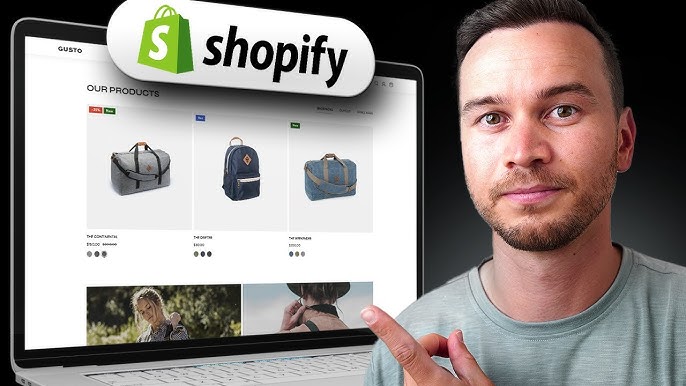
Shopify
Shopify is the most powerful e-commerce platform available and the one I’d recommend to any artist who’s serious about building an independent online business. I spent years working with Shopify at ARTdiscount — we used it to scale a D2C channel from zero to £700k annual revenue — and the platform’s capabilties for a serious retail operation are genuinely impressive.
Plans start from £25 per month. The interface is clean and manageable without being a developer. The theme ecosystem covers everything from minimal gallery-style presentation to full-featured retail. Payment processing is built in. Inventory management, shipping, discounts, abandoned cart recovery — it’s all there.
Shopify makes most sense if you’re selling in volume — multiple products, multiple price points, expecting to grow. For an artist with five originals and a handful of prints, the monthly fee might be disproportionate to the revenue at the start. But as your product range and traffic grow, Shopify scales with you in a way that simpler options don’t.
Read our full Shopify for UK artists guide before signing up.
Squarespace
Squarespace is the most design-forward of the mainstream website builders — the templates are genuinely beautiful, the portfolio presentation tools are excellent, and the interface is accessible to non-technical users. For artists who want a website that looks like a proper gallery rather than a generic online shop, Squarespace is consistently the most visually impressive out of the box.
The e-commerce functionality is solid if not as deep as Shopify — you can sell physical products, digital downloads, and services without difficulty. Where it falls short compared to Shopify is in scalability and the depth of shipping and inventory features for artists managing large product catalogues. For artists with a focused range, Squarespace is excellent. For artists managing 100+ products with complex variants, Shopify is the better choice.
Read our Squarespace for UK artists review for a full breakdown.
Wix
Wix gives you the most design freedom of any mainstream website builder — drag anything anywhere, total layout control. For artists who have a clear vision of exactly how they want their site to look and don’t want to be constrained by template structures, Wix delivers on that promise. The trade-off is that absolute freedom can lead to absolute chaos if you don’t have a strong design sense, and the SEO tools are less mature than Squarespace or a WordPress/Shopify setup.
Read our brutally honest Wix review for UK artists.
WordPress + WooCommerce
WordPress with WooCommerce is what I use for Discount Art Supplies — and it’s genuinely the most powerful option available if you’re willing to learn it. You get everything Shopify and Squarespace offer, plus the ability to customise and extend however you like — something the hosted platforms simply won’t let you do.
I’ve used WordPress for years across multiple projects — Discount Art Supplies, DiscountArtSupplies itself, and various other builds. The learning curve is real and steeper than the hosted platforms. But the control you get in return is extraordinary — you own everything, you can install any plugin you want, and the SEO capabilities with plugins like Rank Math or Yoast SEO are genuinely excellent.
Before I moved operations to WordPress I spent time on Magento — which is the enterprise-grade e-commerce platform used by large retailers. Magento is extraordinarily powerful and extraordinarily complex. For an independent artist it is almost certainly overkill and the developer costs to set it up properly are significant. I mention it because it comes up in conversations sometimes and the answer is almost always: not unless you have a serious technical team behind you and a revenue level that justifies the investment. WordPress and Shopify cover the vast majority of what artists actually need.
For hosting WordPress, SiteGround, Kinsta, and WP Engine are all solid choices for UK artists. Speed and uptime matter for both user experience and SEO — don’t cut corners on hosting.
Format and Pixpa — Portfolio Specialists
If portfolio presentation matters as much as selling — which it does for fine artists, photographers, and illustrators whose work needs to be shown at its best — Format and Pixpa are worth considering. Both are designed specifically for creative professionals, with portfolio-first templates and basic e-commerce built in. Not the right choice if you’re building a serious online shop, but excellent if your website’s primary purpose is showing your work professionally with the ability to sell on the side. Read our Format vs Pixpa comparison for artists.
Part Four — Print on Demand
Print on demand has transformed the economics of selling art reproductions. Instead of ordering a print run, holding inventory, and hoping to sell through it — you list your designs, and prints are produced one at a time when someone orders. No upfront cost. No inventory risk. No warehouse.
The two main models are the marketplace model (Redbubble, Society6 — covered above) and the fulfilment model, where you run your own shop and use a print on demand company to fulfil orders on your behalf.
Printful
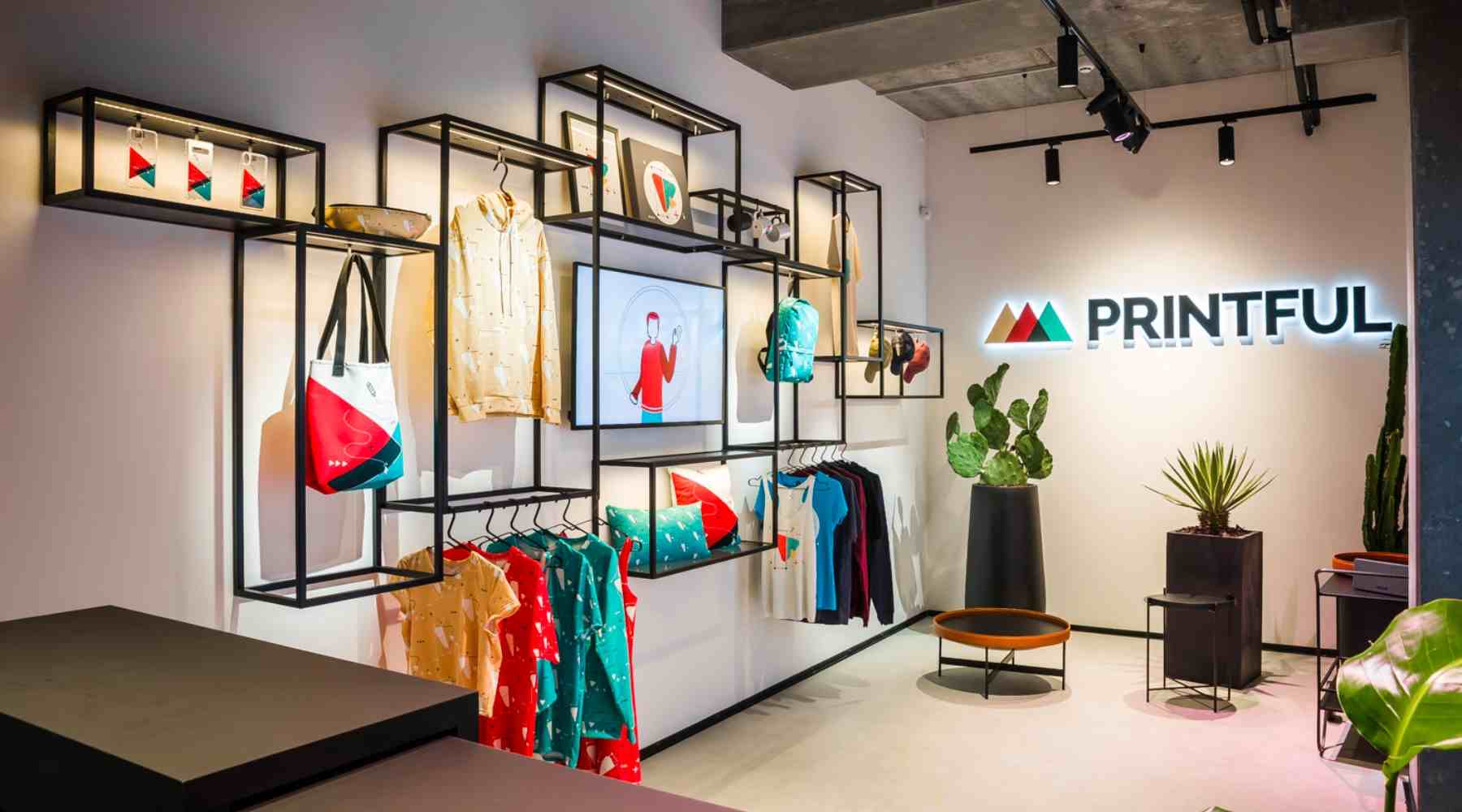
Printful is the market leader in print on demand fulfilment. You connect Printful to your Shopify, Etsy, WooCommerce or other store, upload your designs, and when someone orders Printful prints and ships the product directly to your customer. Your branding on the packaging. Your customer relationship. Printful’s production quality.
The EU fulfilment centre means UK orders ship quickly and avoid customs complications. The product range is extensive — art prints, canvas prints, framed prints, t-shirts, hoodies, tote bags, mugs, phone cases, and much more. The print quality on art prints in particular is excellent — the giclée quality available on Printful’s premium paper options is genuinely suitable for selling as fine art reproductions.
Printify
Printify connects you to a network of print providers rather than operating its own production. This gives you access to a wider range of products and potentially better pricing on specific items — but quality varies between providers. For artists who want competitive pricing on a wide product range and are willing to test providers, Printify is worth exploring. For artists who want consistent quality above all else, Printful’s own-production model has an edge.
Read our detailed Printful vs Printify comparison for UK artists before deciding.
Loxley Colour
Loxley Colour is a UK-based professional print lab used extensively by photographers and fine artists. Not a consumer-facing marketplace but a trade printing service — you order prints, they ship to you, you sell and ship to your customers. The quality is exceptional — among the best fine art printing available in the UK. Worth knowing about for artists who sell high-value prints and want direct quality control over the finished product before it reaches their customer.
Part Five — SEO (Search Engine Optimisation)
SEO is the most misunderstood and most underinvested area for artists selling online. Most artists treat it as an afterthought — something they’ll think about eventually. The ones making the most money online have usually made it the priority.
Let me be direct about what SEO means in practice: it means writing content that answers the questions your potential buyers are typing into Google, and doing it better than everyone else who’s trying to answer the same questions. That’s it. The technical details matter but they’re secondary to this fundamental principle.
I’ve built Discount Art Supplies to a DR38 domain ranking on page one of Google for dozens of commercial art supplies keywords — and the single biggest driver of that has been consistently writing useful content that matches what people are actually searching for. Not tricks. Not hacks. Content.
Keyword Research — The Foundation
Before writing anything, understand what your potential buyers are searching for. Tools like Ahrefs (which I use daily for Discount Art Supplies), SEMrush, or the free Google Keyword Planner tell you what people search for and how often. Google Search Console — which is completely free and should be set up on every website — shows you exactly what keywords your site is already ranking for and how many people are clicking through to you. I check Search Console every morning. It’s the most honest picture of how your SEO is actually performing.
You’re looking for keywords with genuine search volume that you have a realistic chance of ranking for. A new site can’t compete for “buy art online UK” — that’s dominated by established retailers with DR70+ domains. But “buy original watercolour landscapes Yorkshire” is a completely different competitive landscape where a well-written, properly optimised page on a newer site can rank on page one. Start specific. Build authority. Work your way toward the broader terms over time.
For an artist selling original watercolour paintings, the relevant searches might be: “buy watercolour paintings UK”, “original watercolour landscapes for sale”, “watercolour art prints UK”, “commission a watercolour portrait”. Each of those is a different search with a different intent and requires different content to rank for.
Your Website’s SEO Foundation
Every page on your website needs a clear focus keyword, a title tag that includes it, a meta description that compels the click, and content that genuinely serves the person searching. Image alt text matters. Page loading speed matters. Mobile optimisation matters. Internal linking between your pages matters.
For artists on Shopify or Squarespace these fundamentals are manageable without being a developer. For artists on WordPress, a plugin like Rank Math or Yoast SEO walks you through the basics on every page and post. For more advanced technical SEO auditing — finding broken links, redirect issues, and crawl errors — Screaming Frog SEO Spider is the industry standard tool and free for sites under 500 URLs.
Content Marketing — The Long Game
The single most effective SEO strategy for artists is also the one that takes the longest to pay off: writing genuinely useful content about your medium, your materials, your process, and your subject matter. Blog posts, guides, tutorials, reviews — content that answers the questions your potential buyers and fellow artists are asking.
A watercolour artist who writes a genuinely useful guide to “the best watercolour paper for beginners UK” attracts readers who are interested in watercolour. Some of those readers will also be interested in buying original watercolour art. The content builds trust. The trust converts to sales over time.
This is exactly the model I use at Discount Art Supplies — and it works. The key is consistency and patience. SEO compounds. An article you write today might not rank meaningfully for six months. In twelve months it might be driving 500 visitors per month. In three years it might be your most valuable marketing asset. The artists who give up after six months never find out what could have happened if they’d stayed consistent.
Local SEO for Artists
If you have a studio, run workshops, or sell locally as well as online, local SEO is worth attention. A properly optimised Google Business Profile — with accurate address, opening hours, photos, and regular posts — can drive significant foot traffic and local commissions. Search for your own name and business name regularly to understand what buyers see when they look for you.
Part Six — Email Marketing
Email marketing is the most underused and most underrated tool available to artists selling online. I say this from direct experience — the email list at Discount Art Supplies has 20,000 subscribers with a 40-50% open rate and 25% click-through rate. A single weekly email send drives hundreds of affiliate clicks and meaningful revenue. For an artist with a small but genuinely engaged list, the same dynamics apply.
The reason email marketing works so well for artists is trust. Someone who has given you their email address has already said they’re interested in what you do. They’ve opted in. They’re not a random social media follower who might have liked a post and forgotten you exist — they’ve made a deliberate decision to stay connected.
Building Your List
Your email list should be treated as your most valuable marketing asset. Social media platforms change their algorithms, reduce organic reach, and occasionally cease to exist. Your email list belongs to you.
Every touchpoint should invite people onto your list. Your website — a clearly positioned signup form, ideally with an incentive. Your Etsy shop description. Your social media bios. In person at markets and exhibitions. The incentive can be as simple as “be the first to know about new work and exclusive offers” — or more substantial, like a free digital download, a discount code, or early access to new releases.
What to Send
Most artists overthink this. Your subscribers followed you because they like your work. They want to know what you’re making, what you’re thinking about, what new work is available. Behind-the-scenes content, work in progress, the story behind a piece, a new collection launch, a limited edition announcement — all of these are genuinely interesting to an engaged list of people who care about your art.
Commercial emails — sales, offers, new product launches — should sit alongside personal content rather than replacing it. The artists with the highest-converting email lists treat their subscribers as a community rather than a mailing list. They share process, they share inspiration, they share the human side of making. And when they have something to sell, the relationship they’ve built means people are receptive to hearing about it.
Choosing an Email Platform
For artists starting out, Mailchimp is free up to 500 subscribers and genuinely easy to use — the drag and drop email builder is accessible without any technical knowledge and the free tier is generous enough to get started properly. As your list grows and your e-commerce operation becomes more sophisticated, Klaviyo offers considerably more powerful automation and segmentation tools.
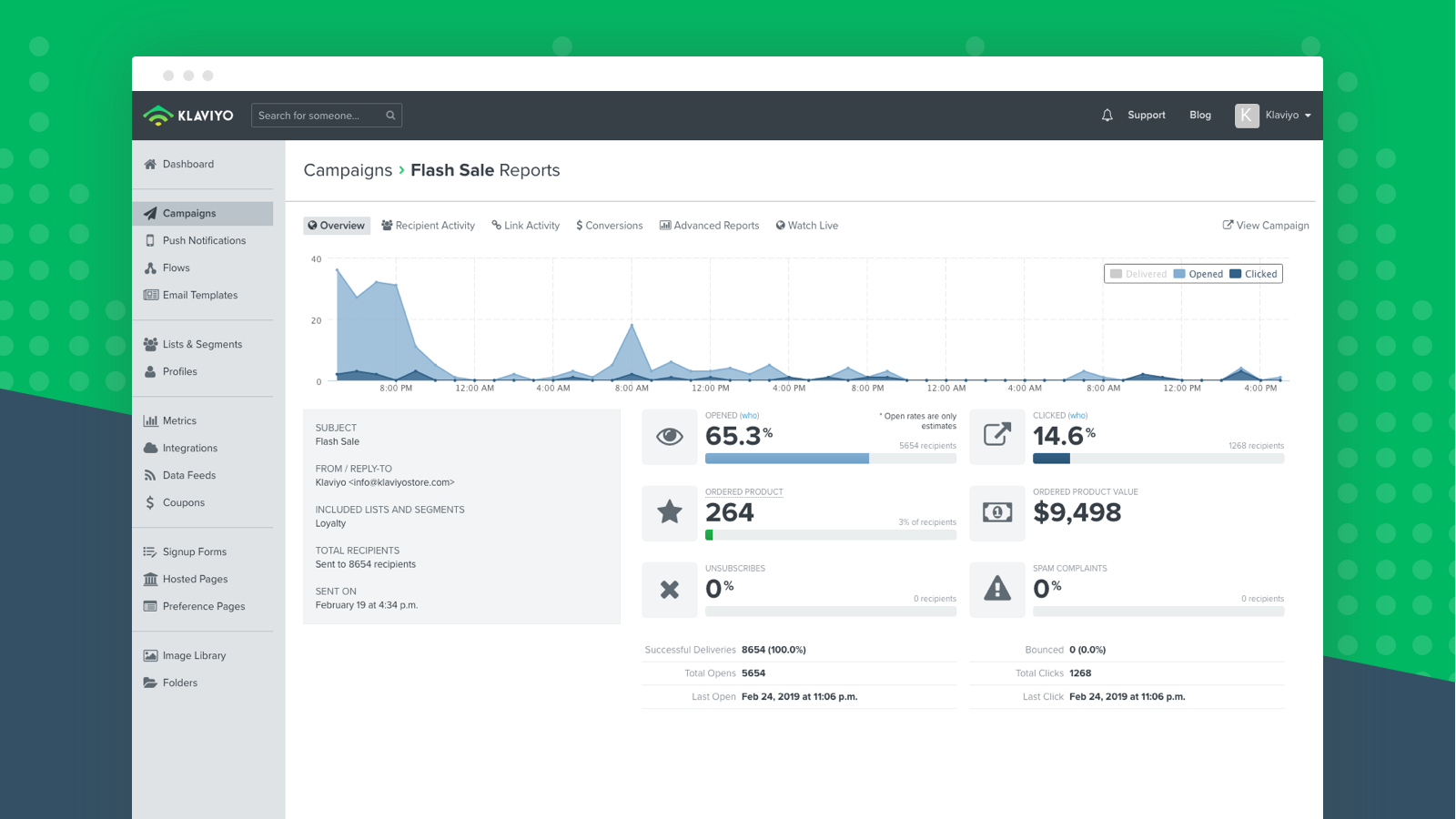
I used Klaviyo extensively at ARTdiscount and it’s genuinely extraordinary as a marketing automation platform. The ability to segment your list by purchase history, browse behaviour, product categories viewed, and engagement level — and then trigger automated sequences based on any of those signals — is the kind of capability that used to require enterprise-level marketing teams. The automated retention ecosystem I built at ARTdiscount using Klaviyo generated over £400,000 in annual atributed revenue. That’s not a guess — that’s what the atribution showed. If you’re on Shopify and taking email seriously, Klaviyo is the right tool once you’re past the early stages.
For Discount Art Supplies I use Brevo (formerly Sendinblue) — which offers an excellent balance of features and cost at mid-scale. The current list is 20,000 subscribers with 40-50% open rates. Brevo handles that volume at a sensible price and the deliverability is excellent.
Other platforms worth knowing: ActiveCampaign for more complex automation workflows, MailerLite as a Mailchimp alternative with a generous free tier, and ConvertKit which is specifically designed for creators and has a strong following among artists and makers who want simplicity alongside solid automation.
Read our comparison of Mailchimp vs Klaviyo for artists before deciding which platform to build on.
Automation — Making Email Work While You Paint
The most powerful feature of any email platform is automation. A welcome sequence — a series of emails that go out automatically when someone joins your list — is the single highest-ROI thing most artists could set up this week. Three to five emails over two weeks: who you are, what you make, why it matters, what’s available, how to buy. Set it up once and it runs forever, welcoming every new subscriber with the context they need to become a customer.
Abandon cart emails — automated messages to people who put something in your basket and didn’t complete their purchase — recover a meaningful percentage of lost sales on autopilot. If you’re on Shopify with Klaviyo integration, this alone can add 5-10% to your monthly revenue. For connecting different tools together — your email platform to your e-commerce store to your social channels — Zapier and Make (formerly Integromat) let you build automated workflows without writing a single line of code.
Part Seven — Social Media
Social media is where most artists spend the most time and where many get the least commercial return. That’s not a reason to avoid it — it’s a reason to be strategic about it.
Instagram remains the dominant platform for visual artists. The audience for art content is large and genuinely engaged — people discover artists on Instagram every day and become collectors. The challenge is the algorithm, which has become increasingly difficult for organic reach as Meta has pushed creators toward paid promotion and Reels content.
The artists who perform best on Instagram in 2026 are those who show their process — Reels of their work in progress consistently outperform static posts of finished pieces. Behind the scenes content, studio tours, materials closeups, time-lapse painting — all of this performs better than “buy my print” posts because the algorithm rewards content that keeps people on the platform.
Instagram Shopping — connecting your Shopify or other store to your Instagram account — lets you tag products in your posts and stories, creating a direct route from discovery to purchase. Worth setting up once you have your own store.
TikTok
TikTok has become genuinely significant for artists — the platform’s algorithm is uniquely capable of showing your content to people who’ve never heard of you, which makes it the most powerful organic discovery platform currently available. Artists have gone from zero to tens of thousands of followers with a single video that caught the algorithm’s attention.
The content that works: process videos, satisfying paint mixing, dramatic before-and-after reveals, commentary on art world topics, behind-the-scenes studio content. The format that works: short, punchy, music-driven in the first few seconds, hook in the opening frame. It’s a different skill set from making art but learnable and worth the investement — TikTok has a free creator portal with analytics and scheduling tools built in for artists willing to try it.
Pinterest is significantly underused by artists and significantly underestimated as a traffic driver. Pinterest is a visual search engine — people use it to find art, home decor inspiration, gift ideas, and style references. Pins have a long shelf life compared to Instagram posts — a well-optimised Pinterest post can drive traffic for years, not hours.
For artists whose work has interior design appeal — landscapes, botanicals, abstracts, figurative work — Pinterest is worth serious investment. The audience is specifically looking for art to put on their walls and gifts to buy people. That’s a buyer intent that Instagram and TikTok don’t match.
Facebook organic reach has declined significantly but the platform is still worth attention for two reasons. Facebook Groups — niche communities of people with shared interests — remain genuinely active and engaged. Being a valuable, visible participant in relevant art groups builds awareness and trust. And Facebook Marketplace can be a surprisingly effective channel for selling original work locally, particularly at lower price points.
Part Eight — Paid Advertising
Paid advertising gets a mixed reputation among artists. Some swear by it. Others have burned through money with nothing to show for it. The difference is usually whether you understand enough about your audience and your margins to run ads profitably — or whether you’re just spending money and hoping for the best.
The honest truth: paid advertising is not a shortcut to sales if your fundamentals aren’t right. If your website doesn’t convert, if your photography is weak, if your pricing isn’t competitive, if your product isn’t suited to the platform you’re advertising on — paid ads will accelerate your losses rather than generate profit. Get the organic foundations right first. Then use paid advertising to amplify what’s already working.
Meta Ads (Facebook and Instagram)
Meta Ads Manager gives you access to the most sophisticated audience targeting available anywhere. You can reach people by age, location, interests, income level, purchasing behaviour, and hundreds of other parameters. For artists, the most useful targeting options are interest-based — reaching people who follow specific artists, who are interested in interior design, who buy original art, who engage with art content.
The format that works best for artists on Meta: video content showing the creative process, leading to a finished piece, with a clear call to action. Static images of finished work perform less well than process content because process content stops the scroll in a way that a finished product shot doesn’t.
Budget realistically: £5-10 per day will teach you what works and what doesn’t. Don’t spend thousands before you understand what’s converting. Test audiences, test creatives, test offers. Meta’s algorithm needs time and data to optimise — give a new ad set at least two weeks before judging it.
Google Ads
Google Ads puts your work in front of people who are already searching for what you sell — which makes the intent far stronger than on social media. Someone searching “buy original watercolour painting UK” is significantly further along the buying journey than someone who happens to see your Instagram post.
Search ads make sense for artists with clear, searchable products — portraits, wedding gifts, landscape paintings, pet portraits. Shopping ads — where your products appear visually in Google’s search results — work well for artists with an established product catalogue on Shopify or WooCommerce.
Google Ads has a steeper learning curve than Meta and the costs per click can be higher. But the commercial intent of the audience means conversion rates are often better. Worth learning if your products have clear search demand.
Etsy Ads
If you’re selling on Etsy, Etsy’s own advertising platform is worth experimenting with — particularly in the early days when you need sales history to build organic ranking. Etsy Ads are relatively straightforward — you set a daily budget and Etsy promotes your listings to relevant searchers within the platform. The disadvantage is you’re paying to promote work on a platform that’s already taking 6.5% of your sales. The advantage is the intent is highly qualified — these are people already on Etsy actively looking to buy.
Part Nine — Commissions and Direct Sales
Don’t overlook the most direct route to selling your work: people asking you to make something specifically for them. Commissioned work cuts out every platform and every algorithm and goes directly from artist to buyer with maximum margin on both sides — the buyer gets exactly what they want, you get paid to make something to brief.
Building a commission enquiry pipeline requires clarity about what you offer, a clear process for how commissions work — tools like HoneyBook or simply a well-structured enquiry form on your Shopify or Squarespace site handle this well, a pricing structure that reflects your time accurately, and examples of previous commissioned work that demonstrate what buyers can expect.
Many artists significantly undercharge for commissioned work — either from uncertainty about their own value or from fear of pricing themselves out of the market. The practical reality is that the buyers who hire artists for commissions are usually less price-sensitive than marketplace buyers, because they specifically want something made for them and have already decided to invest in that. Price accordingly.
Part Ten — Art Fairs and Hybrid Strategies
Online selling doesn’t have to mean exclusively online. Many of the most commercially successful independent artists operate a hybrid model — online presence building awareness and driving enquiries, supplemented by physical markets, fairs, and exhibitions where the in-person connection makes sales that online channels would struggle to close.
In the UK the art fair calendar is extensive — from major events like the London Art Fair to regional open studio weekends, local craft markets, and specialist genre fairs. The value of physical selling goes beyond the revenue from the event itself: it builds local awareness, gives you real feedback from real buyers, generates content for your social channels, and — if you capture email addresses at the event — grows your Mailchimp or Klaviyo list with warm, converted contacts.
Part Eleven — The Honest Truth About Timescales and Expectations
I want to be direct about this because most of the guides you’ll find online either skip this entirely or frame it with relentless optimism that doesn’t serve you well.
Selling art online is slow. Building an audience takes time. Building trust takes time. SEO takes time. Email list growth takes time. The artists who succeed at it are almost universally the ones who stayed consistent for long enough to let the compounding effect kick in. The ones who quit — and they are the majority — usually do so about three to six months before things would have started to move.
Realistic expectations: six to twelve months before you see consistent, meaningful sales from your own website. Two to three years before online sales represent a significant income. Five plus years if you’re building toward replacing a full-time salary.
I’ve been building Discount Art Supplies since 2022 — four years of daily work, posting deals every single day, growing the email list, building the domain authority. In 2026 the site is starting to generate meaningful affiliate revenue. Four years. And I had sixteen years of industry experience and a professional background in digital marketing before I started. For artists building from scratch without that background, be patient with yourself.
The good news: the internet doesn’t forget. Every piece of content you create, every email you send, every sale you make builds on what came before. The curve is slow at first and then suddenly it isn’t. The artists who understand this and keep building anyway are the ones who eventually look back and wonder how it happened so quickly.
Part Twelve — Tools and Resources Worth Knowing
For Design and Content Creation
Canva for social media graphics, mockups, and marketing materials. Read our Canva Pro review for artists. Adobe Creative Cloud for professional image editing and design. Read our Adobe Creative Cloud for artists review.
For Photography
Good product photography is non-negotiable. Natural light, a decent camera — Jessops is worth checking for affordable camera and lighting kit (or a modern smartphone with a capable camera), a neutral background, and accurate colour representation. Jessops and Amazon are both good sources for affordable photography equipment — lightboxes, tripods, and reflectors that make a significant difference to your product shots without breaking the budget.
For Analytics and Tracking
Google Analytics 4 (free) for your website — tracks sessions, users, conversions, and behaviour on your site. Google Search Console (free) for understanding what keywords you’re ranking for and what organic search traffic you’re getting. Google Tag Manager (free) for managing all your tracking scripts and conversion events in one place without needing a developer every time.
I implemented a full GA4 and Google Tag Manager tracking setup at Drainage Experts — building custom conversion events that showed exactly which campaigns were generating quality leads versus junk enquiries. That attribution work reduced cost per acquisition by 18% whilst increasing qualified lead volume. The same principels apply to art sales — if you can’t see which traffic source is driving your actual purchases you can’t make intelligent decisions about where to invest your time and money.
For heatmaps and user behaviour — how people actually move around your website — Hotjar and Microsoft Clarity (free) are both excellent. Clarity in particular is genuinely impressive for a free tool — session recordings, heatmaps, and scroll depth analysis that tells you exactly where people are dropping off your pages.
For Art Supplies — Getting the Best Price
The art supplies you use to make your work matter — and paying more than you need to for them reduces your margins unnecessarily. Discount Art Supplies compares prices across Jacksons Art, Cass Art, Great Art, Amazon and more in real time — so you always know you’re buying your materials at the best current UK price.
Summary — Where to Start
If you’ve read this far and feel slightly overwhelmed, that’s understandable. It’s a lot. Here’s a simplified starting point based on where you are.
If you’re just starting out and have no online presence: Open an Etsy shop and a Redbubble account simultaneously. Get your work online and start learning how buyers respond to it. Don’t worry about your own website yet — validate the demand first.
If you’re getting Etsy sales and want to grow: Build your own website on Shopify or Squarespace. Start an email list immediately — Mailchimp is free to start. Post consistently on one social platform — whether that’s Instagram, TikTok, or Pinterest — the one your audience actually uses, not necessarily the one you prefer. Start learning basic SEO — Ahrefs has a free keyword research tool worth bookmarking.
If you have a website and an email list: Focus on growing both. More content for SEO. More touchpoints to grow the list. Experiment with paid advertising once you have a product and a page that’s already converting organically. Consider print on demand via Printful or Printify to add passive income alongside your originals.
If you’re doing all of the above: Look at what’s working and do more of it. Double down on what’s working. Set up automations where you can — Zapier handles most of the connections between your tools without touching code. And keep making good work — because without that, none of the rest of it matters.
Questions about selling your art online? Drop them in our Facebook community of 36,000 UK artists — selling strategies, platform experiences, and honest income conversations happen there every week.
More Guides for UK Artists
- Etsy vs Shopify for UK Artists — Full Comparison
- Why Shopify Is a Great Platform for UK Artists
- Squarespace for Artists UK — Honest Review
- Wix for Artists UK — Brutally Honest Review
- Redbubble vs Society6 for UK Artists
- Printful vs Printify — Which Is Best for UK Artists?
- Big Cartel for Artists — Is It Still Worth Using?
- Mailchimp vs Klaviyo — Best Email Marketing for Artists
- Canva Pro for Artists — Is the Upgrade Worth It?
- Adobe Creative Cloud for Artists — Is It Worth It?
- Format vs Pixpa for Artists
- How to Frame Your Art — The Complete Guide